Showing posts with label Arnold Schwarzenegger. Show all posts

Sunday, June 12, 2022

If It Bleeds, We Can Kill It: Predator at 35

In the summer of 1987, Predator was the ultimate rumble in the jungle. Hard hitting pulp sci-fi guided by the sure hand of director John McTiernan, Predator surrounded peak '80s Arnold Schwarzenegger with a crew of guys - Carl Weathers, Jesse Ventura, Bill Duke and Sonny Landham - who might not have been able to match him muscle for muscle but were still convincingly tough. Shane Black and Richard Chaves filling out the rest of the team, not so much, but you gotta have a couple of normal dudes in there.

Released on June 12th, 1987, the story of Predator, with its screenplay penned by brothers Jim and John Thomas, put a team of bad asses deep in a Central American jungle where they unexpectedly found themselves up against a star-spawned adversary so proficient it could take 'em out one by one as easily as Jason slaughtering his way through a bunch of camp counselors. If you think of Predator as essentially a sci-fi slasher, with its mounting body count (and shots from the killer's POV) and its series of gory, creative deaths (far bloodier than the late '80s Friday sequels were allowed to be), then Schwarzenegger's cigar chomping Dutch is its Final Girl. 

He's the last survivor who has to prove himself to be pluckier and more resourceful than all the characters that have fallen before him in one final, do or die battle. 

In true Final Girl fashion, Schwarzenegger's Dutch gears up for his third act showdown by elaborately booby trapping the jungle in a way that would make Nightmare on Elm Street's Nancy Thompson proud. In the end, both of them are operating from the same playbook. Nancy sets up Freddy to take a sledgehammer to the gut while Dutch tricks the Predator into getting a log dropped on his head. 

When it was released in 1988, McTiernan's Die Hard was praised for subverting the macho cliches of '80s action cinema, with Bruce Willis' John McClane painfully bleeding his way through his face offs with Hans Gruber and his band of terrorists rather than breezing through them but I say McTiernan had already been breaking down those cliches in Predator. The whole movie is about how empty and ineffectual macho bullshit is. One by one these tough guys get taken out as their advanced weapons prove to be completely useless and most of them don't go out stoically but instead die screaming. Predator is very clear about the fact that none of the stuff that usually wins the day in action movies counts for shit. 

After having Dutch's team in full swagger mode in the first act, having them spouting lines like "I ain't got time to bleed," McTiernan takes the wind out of all their smirking machismo by having the Predator make quick work of them. 

Predator is typically perceived as a celebration of male bravado but it is not that at all. McTiernan ruthlessly torpedoes the cartoonish bluster of these characters. Jesse Ventura's Mac gets his chest blown out before he even has a chance to give the Predator a taste of Old Painless. When Sonny Landham's Billy decides to stand alone in a mano a mano confrontation between himself and the Predator, McTiernan doesn't even honor this encounter by showing it. Instead all we get is Billy's off-camera scream. That jacked arm of Carl Weather's Dillon that greets Dutch's handshake? It ends up dismembered, lying on the floor of the jungle, firing off rounds into the dirt. And although Dutch ultimately does win, he isn't wrapped in glory at the end. Instead he's covered in ash. 

As designed by FX legend Stan Winston (and as worn by Kevin Peter Hall both here and in Predator 2), the Predator suit proved to be instantly iconic. I wouldn't have thought that dreadlocks would look right on an alien but as soon as you see the Predator you know that Winston's instincts were spot on, right down to him wisely incorporating his buddy James Cameron's casual mention that he always thought it'd be cool to see a creature with mandibles. When James Cameron says "Hey, you know what'd be cool?" it definitely pays to listen. 

Given how well McTiernan set this franchise up for success, I think it's crazy that he never returned to the series. I mean, if Ridley Scott could come back and do a couple more Aliens, why not McTiernan on Predator? Maybe the ultimate answer to that is, well, he went to jail but to that I say "yeah but he got out" and, you know, a lot of stuff can be overlooked for the sake of the Predator.
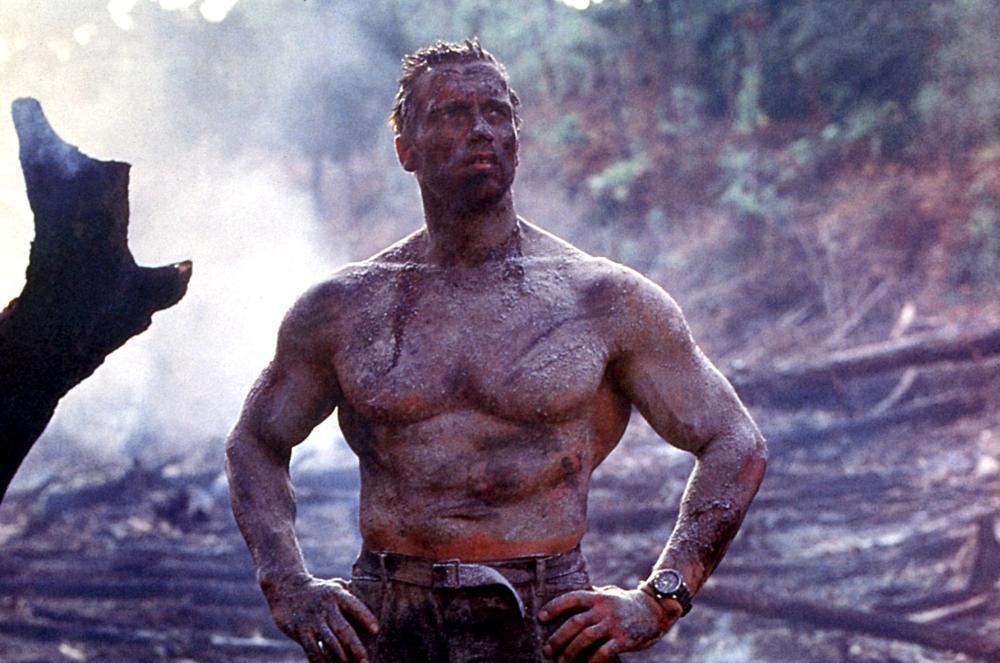
I think it's interesting, too, that Schwarzenegger never came back. This could have been his franchise, if he wanted it to be. It was definitely his name that sold the original but he just moved on and ultimately I think that was to the series' benefit. Even though it's easy to imagine all kinds of sequel scenarios in which Dutch returns and has to gather another group of guys to take out more Predators or he starts working with the government to advise them on combating this alien threat or even to have Dutch really go on the offensive and lead a Space Force back to the Predator's home world, Schwarzenegger was out after the first film and I think that only helped the Predator franchise to thrive. 
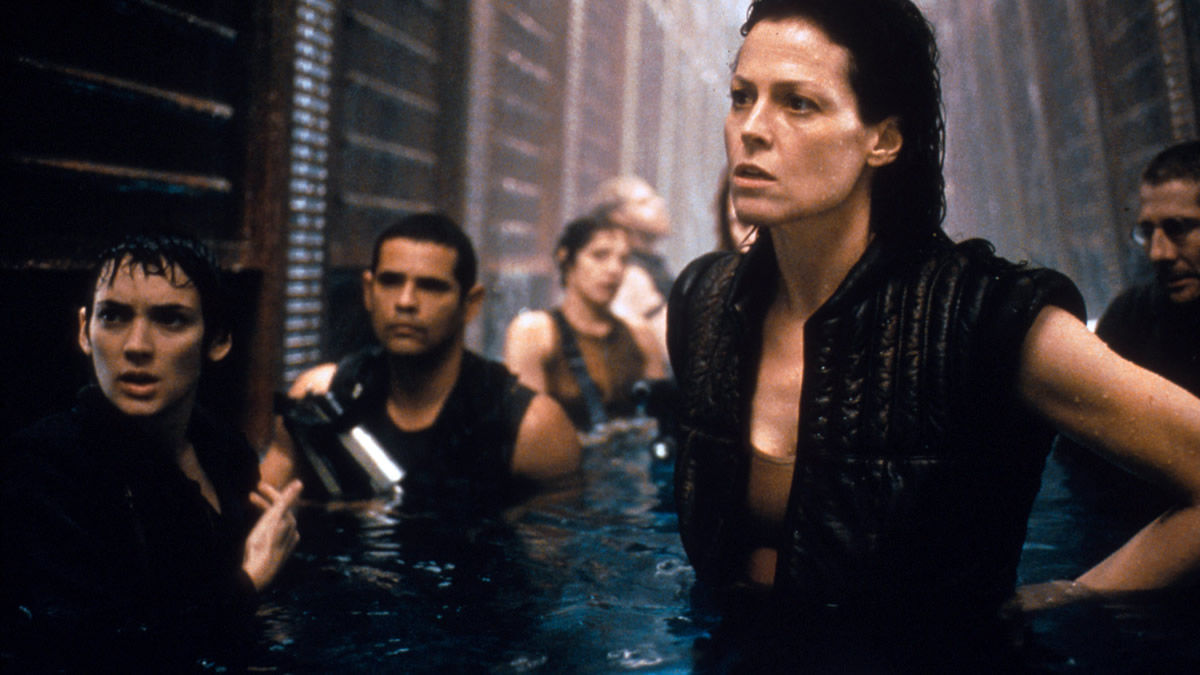
The biggest problem with the Alien series is that they kept Sigourney Weaver around way too long. Coming back for Aliens, fine, but after that they should have moved on. The studio and the producers got hung up on the idea that Sigourney was what was driving the franchise, not the concept of the Aliens themselves and that ultimately hurt the series. With Predator, the Predators have always been the star. Going back to the idea of the first movie being a sci-fi slasher, the Predator sequels have been like Friday the 13th's in which every movie presents a fresh slate of victims for the Predators to eliminate in gruesome fashion. With the Predator, it's all about the hunt and the sequels, despite taking place in different environments (or even different time periods), have all followed the formula of Predator vs. Prey that the original established so perfectly.  

So Happy 35th, Predator. You're one classic motherfucker! 

Saturday, May 14, 2022

What Is Best In Life? Conan at 40

When director Richard Donner was making Superman: The Movie, "verisimilitude," meaning the appearance of being true or real, was the watchword that he issued to every department, intending to ground his adaptation of the Man of Steel in reality as much as possible. As far as we know, writer/director John Milius never uttered that particular word in connection with his adaptation of Robert E. Howard's sword slinging pulp hero Conan the Barbarian but his goals were very much in sync with Donner's as his sword and sorcery epic feels rooted firmly in reality. Abetted by the production design of Ron Cobb (Alien), which imbues the walls and pillars of every tower and temple with the stamp of authenticity, Milius' depiction of Howard's fabled Hyborian Age feels taken from the pages of history more than it does pure myth making.

Released on May 14th, 1982, Conan the Barbarian was not officially considered to be a comic book adaptation but yet Conan had been a long running hit in the pages of Marvel Comics since 1970, headlining the main ongoing title of Conan the Barbarian as well as appearing in black and white magazines Savage Tales and The Savage Sword of Conan. Fans who had never read the original Conan tales from Howard, discovered a love of the Cimmerian through the popular adventures published by Marvel, which had been penned primarily by writer Roy Thomas and illustrated by the esteemed likes of Barry Smith and John Buscema. 

That Milius took his adaptation seriously wasn't just a validation of the pulp fiction it was sourced from but it also helped make the case that comic book material did not need to be a send up in order to appeal to a wider audience. In 1980, Flash Gordon had been an exercise in pure camp (an excellent one that came to be appreciated in time but was widely disparaged by fans then for its arch silliness) and with that film's producer, Dino DeLaurentiis, overseeing Conan, fans had some worries that the same fate might befall their favorite Barbarian so the earnest approach that Milius insisted on was a relief. The fact that Milius opened Conan with a Nietzsche quote confirmed within the first frames that he wasn't going to be playing this material for laughs. And there's no mistaking Basil Poledouris' stirring score as befitting anything other than an authentically epic adventure.

Today, it's hard to imagine that it was initially considered to be something of a gamble to pin this movie's success on whether former body builder Arnold Schwarzenegger could act because all the classic Conan lines here only sound right coming out of Schwarzenegger's mouth. When anyone quotes this movie, they are obliged to deliver those lines with their best Ah-nold impression. It's the only way to say them. For such a big movie, with so much riding on its success, the cast of Conan the Barbarian is an interesting mix of skilled vets like James Earl Jones and Max Von Sydow and largely untrained novices like Schwarzenegger, Sandahl Bergman and champion surfer Gerry Lopez, a buddy of Milius' whose lines were ultimately re-dubbed in post-production by stage actor Sab Shimono. But the mix works. All the components feel linked by Milius' vision. Everybody looks so right and seems completely irreplaceable in their role, even when their role is largely silent, like Valerie Quennessen as King Osric's daughter.

Critical response to Conan the Barbarian at the time was not overly enthusiastic, with much disdain expressed for Milius' violent epic. The most famous criticism being from Time Magazine critic Richard Schickel who described it as "a psychopathic Star Wars." As much as that wasn't meant as a compliment, any '80s teen at the time could have told you it only made Conan sound more metal. Universal should have used that quote in the TV spots. 


Heading into the summer of '82, Universal Studios boldly trumpeted their upcoming slate of films, courtesy of a classy two page ad in the spring issues of genre magazines like Cinefantastique and Twilight Zone that spotlighted everything from Cat People to John Carpenter's The Thing to Conan to The Dark Crystal, dubbing them "the future classics." As each of these films came out, though, only to - for the most part - crash and burn on top of being critically trashed, Universal's confidence looked a little premature. Eventually, the summer of '82 would come to be recognized as the Greatest Nerd Summer Ever but the perception at the time was that these films and many other would-be hits had fallen on their faces. Out of the six movies that Universal hyped, only E.T. had been an immediate critical and commercial success. The others would have to wait years for their reputations to improve.

 Unlike some of the others, though, Conan could at least claim to have been a box office success. It actually did perform well enough to make a profit for Universal, if not nearly on the level that, say, E.T. did. The fact is, as fondly recalled as the sword and sorcery fad of the early '80s is by Gen-X nerds who were there for it, it was a trend that never actually caught on, despite how hard studios kept trying to make it happen. The Sword and the Sorcerer, Beastmaster, Excalibur, Dragonslayer, Krull, you name it, it tanked. Conan was by far the biggest success of the bunch and even that was more muted than Universal had hoped for. But Crom cares not for these things. 

Even though Conan the Barbarian ended with the tantalizing promise of more tales to be told, things didn't quite pan out that way, with only one more sequel, 1984's Conan the Destroyer, being made, sans Milius' involvement, before Schwarzenegger moved on to other things. Milius has said that Conan was meant to be the start of a trilogy, which I'm sure would have been great, but I think Oliver Stone, who had penned the initial screenplay that Milius rewrote, really had the correct idea for the series when he said years later that "...The draft I wrote, Conan, the first one, I always undertook it as one of twelve. You know, I was thinking of like twelve movies. But unfortunately, I feel the producers of the movie misunderstood the real goal and that they sold it short. You know, Arnold should have come back every year or two years like James Bond, and done one."

But that, as they say, is another story.