Showing posts with label Summer of '82. Show all posts

Saturday, August 13, 2022

A New Dimension in Terror: Friday the 13th Part III at 40

Some horror icons arrive on screen fully formed, whether it be The Creature from the Black Lagoon, the Xenomorph from Alien or Michael Myers. But Jason Voorhees is one icon that took some workshopping before he fully came together. Only glimpsed as child in 1980's Friday the 13th, he graduated to being a fully grown backwoods psycho the following year in Part 2 but the sack over his head that he wore in that first sequel, fashionable as it was, didn't feel like a look that was worth hanging on to. With its unintentional similarity to the recently released The Elephant Man (1980) as well as its callback to the killer of The Town that Dreaded Sundown (1976), it had a second hand feel to it. It wasn't anything that was unique to Jason. But when audiences saw him don a hockey mask in Friday the 13th Part III, the reaction was a collective cry of "That's it!" 

Whether the character would have taken off in the way he did or have experienced the same kind of longevity without the addition of the hockey mask is a question that can never be truly answered but I think it's safe to say that it didn't hurt. That mask gave Jason a look that instantly clicked with people as much as the signature sounds of composer Harry Manfredini's Friday score had. You put both of those things together and you're really off to the races. Of course, the big selling point of the Friday movies early on wasn't even Jason so much as it was the series' spectacular splatter FX. Who was doing the killing was incidental. All that mattered to audiences was that they got to see throats slashed, axes buried in skulls and heads liberated from their bodies. 

Moving Jason up from his last minute shock appearance in Alice Hardy's dream to being a living adult dwelling in the woods near Camp Crystal Lake was definitely not a case of the people involved with the series brainstorming about how to continue the story from the original and saying "Oh! You know what would make perfect sense?" No, just the opposite. The only way Jason showing up as a living adult in Part 2 even starts to work is if the Jason we saw lunging out of the lake at the end of the original is only in Alice's dream. No one particularly wants that to be the case, of course. Fans want to think of that as the real Jason as well but having it as a dream was how director Sean Cunningham and writer Victor Miller originally meant that scene to be understood and that's how it has to be if we've got Jason running around as a grown ass dude in Part 2. No, even then it still doesn't come close to explaining everything but it at least gets you, well, someplace. It's a start, is what I'm saying.

As ridiculous and illogical as it was to have Jason be re-introduced, sans explanation, from a kid that died in 1957 to a living adult, it was in step with Friday's old school exploitation M.O. of always following the money. It didn't matter that Jason attacking Alice at the end of Friday the 13th had just been a dream. The character had made such an indelible impact with that final jump scare that out Carrie'd Carrie that clearly any sequel would have to feature him - even though doing so made as much sense as if there had been a Carrie 2 immediately after the original and it had centered on a zombie Carrie who had literally crawled out of the grave seeking revenge. All the Friday folk knew was that Jason's appearance had sent audiences out of the theater buzzing so they wanted to keep cashing in on that response, again and again. 

It speaks (positively, I say) to the relaxed attitude of audiences in the '80s that the appearance of adult Jason in Part 2 was so readily accepted, no questions asked - even though some very obvious questions could have been raised. Like, why wasn't Jason's body ever recovered from the lake in 1957? He wasn't swept into the ocean, for God's sake. How lazy is everyone in Crystal Lake that they wouldn't drag the lake to recover the body of a child? And if Jason survived his drowning, how did he live in the woods undetected for decades? But everyone was so game for adult Jason that none of that mattered. Don't try and be a brainiac about this crap was the '80s way of thinking. Save your stupid questions for someone who cares.

By 1982, the golden age of the slasher craze was beginning to fade but Friday the 13th had an advantage that movies like Humongous didn't: brand name appeal. If someone was only going to see one slasher movie in a year, they were going to make it a Friday the 13th, not roll the dice on, say, Visiting Hours. And 3D was about to give the series an added leg up on the competition. When you talk about matches made in heaven, you can't get much better than bringing Friday the 13th and 3D together. You've got a series that's already famous for delivering top of the line splatter and now you can promise audiences that the blood will be literally dripping off the screen? Oh hell yes. You didn't have to be William Castle to see how this gimmick was going to pay off huge for Friday the 13th. The movie didn't even have to be good. 


Of course, some said at the time (and even still!) that Part III in fact wasn't good but I say those people don't know how to watch a fucking movie. With Part 2, director Steve Miner had arguably outdone the job that Sean Cunningham did on the original, putting out a more polished film, and his encore with Part III was another thoroughly solid effort. Probably the most difficult thing to convey to people who didn't experience the early Friday's when they came out (I'm talking 1 through 5) is that they were seen as legitimately scary then (something I'm glad the 2009 remake really tried to get back to). These were not perceived as campy or corny in the early '80s, they were movies that audiences went into prepared to gasp and scream at the splatter FX (which might look tame today but were shocking enough at the time to have people turning away from the screen or watching through their fingers) and Miner's two entries did an ace job of delivering the slasher goods. 

Released on August 13th, 1982, Part III paired its 3D excitement with some of the most memorable kills in the entire franchise. You had Andy (Jeffrey Rogers) get a machete to the balls while hand standing down a hall (a kill that all the dudes in my junior high school found to be particularly wince-inducing), Rick (Paul Kratka) had his head crushed so hard that one of his eyes pops out (in 3D, baby!) and bad ass biker Ali (Nick Savage) learned to his chagrin that if you survive one bout with Jason, never challenge him to a Round 2. But arguably the most iconic kill in III is the one where Richard Brooker's Jason is first seen in the mask that he lifted off ill-fated prankster Shelly (Larry Zerner). As Vera (Catherine Parks) fishes Shelly's dropped wallet out of the lake, Jason laconically strolls out onto the dock, wearing that hockey mask, and takes aim with a spear gun, firing it at the camera and hitting Vera squarely in the eye. With that one scene, Jason finally made his definitive entrance. 
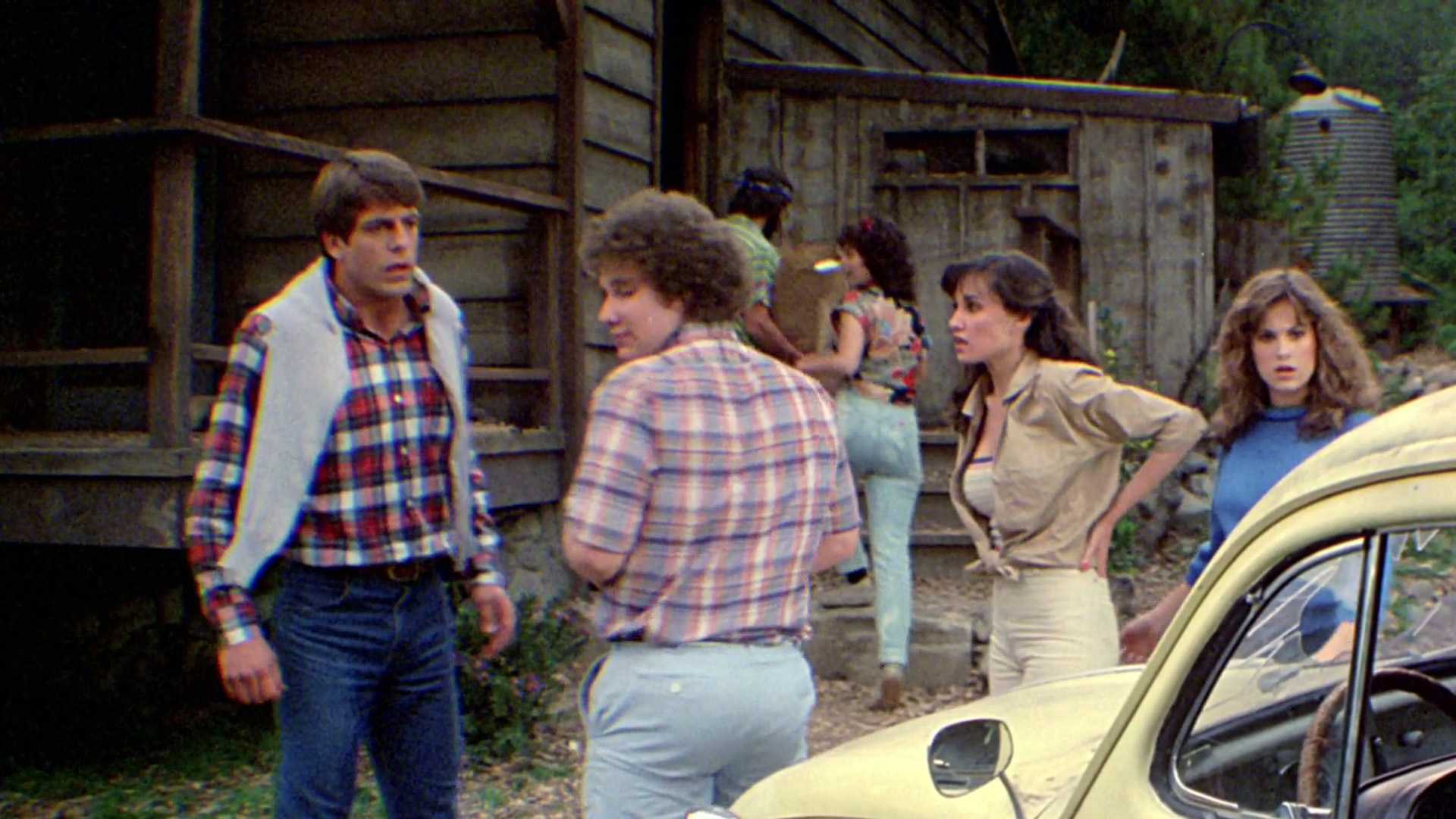
Early on in the development of Part III, Miner had flirted with the idea of continuing the story of Part 2 survivor Ginny Fields (Amy Steel) as she recovered from her ordeal in a mental hospital but Miner and his collaborators decided not to break from the successful Friday formula. So rather than a tale of a survivor coping with their trauma inside the walls of an institution, we get a classic Friday set-up. Final Girl Chris Higgins (Dana Kimmel) goes out to her family's place on Crystal Lake to spend the weekend with her boyfriend Rick and a group of friends, only to have Jason waiting there, ready to pick them off one by one. Had Part III decided to mix things up, even a little, the series might have headed in a more unconventional direction but instead Part III established Friday's pragmatic, if it ain't broke don't fix it approach. 

Even when later entries would introduce a left field element like a telekinetic teen or when they transported the action to an unlikely locale like Manhattan or, um, space, those installments were still rooted in the same body count narrative. Part III could have changed the course of the franchise but instead it insisted that it stay the course. Ultimately this was the smart and correct move.

Credit for the introduction of the iconic hockey mask has being claimed by/assigned to different parties but however Brooker's Jason came to be wearing that familiar face gear, it doesn't really matter. It's not as though it got there through any burst of creative inspiration. It was, ironically given the series' namesake holiday, simply a matter of luck. The idea that audiences would respond to the mask so strongly was impossible for anyone to predict. Movie by movie, Friday the 13th had fallen ass-backwards into its mythology and Part III was where everything finally came together. It was also the moment where Friday the 13th as a series really stepped on the gas just as the Halloween franchise took the foot off theirs. 


Up until Part III, Friday the 13th had been the second place slasher franchise behind Halloween. But in '82, just as Jason found his groove with his snappy makeover, Halloween ditched Michael Myers in favor of Silver Shamrock masks. As much as Season of the Witch has gone on to become a cult favorite, it put Halloween in a hole just months after Part III had been a big summer hit. Serving the fans the slickest slasher spectacle of the early '80s allowed Friday the 13th to surge at the right time. After that, Halloween found itself in the position of playing catch up with Friday the 13th. Jason might not be one for making 5D chess moves but in '82, his 3D moves were enough to make him look like one savvy slasher. 

Thursday, July 14, 2022

Like Tears In Rain: Blade Runner at 40


Even though Blade Runner takes place in the future (well, what was then the future of 2019), it strangely feels more evocative to me of 1982 than any other film from that summer. Other summer of '82 films were set in the actual present day, of course, like Poltergeist and Fast Times at Ridgemont High, and those do have their own nostalgic triggers of dated fashions and era-specific slang but as soon as Blade Runner opens on 2019 Los Angeles, with flames erupting from industrial chimneys into the night sky, I'm not in the future, I'm in the past. It doesn't look like 1982, it doesn't sound like 1982 (Blade Runner composer Vangelis may have had a #1 Billboard hit the previous year with his instrumental title piece for Chariots of Fire but the Top 40 in '82 belonged to the likes of The Human League and Toto), but somehow it is 1982, in all its nerdy glory. 


Over the years, I've never been able to get comfortable with any of the various revised editions of Blade Runner that director Ridley Scott has supervised. While I'm glad he's had the chance to realize the movie to his satisfaction, that initial compromised adaptation of Philip K. Dick's 1968 novel Do Androids Dream of Electric Sleep? is the one I fell in love with. No matter how true to his artistic intent the Director's Cuts are, they just aren't Blade Runner to me. The theatrical cut made such a stamp on me that my mind rejects any move to tamper with it. But when it comes to a movie about the differences between humans and replicants, though, I think it's only appropriate that I shouldn't be able to divorce irrational sentiment from my appreciation for it. I remain emotionally attached to Blade Runner in its original form. 


If I don't hear Harrison Ford's voice over narration, as we first meet his world weary Rick Deckard, saying "They don't advertise for killers in the newspaper. That was my profession. Ex-cop. ex-Blade Runner, ex-killer," I'm checked out.  


Blade Runner is more than a movie, it's a memory and as Blade Runner demonstrates, there is a sanctity to memories. Even artificial ones are worth fighting for. Blade Runner's replicants pine for and cling to pasts that were never really theirs while desiring open-ended futures to call their own. Roy Batty (Rutger Hauer), Pris (Daryl Hannah), Zhora (Joanna Cassidy), Leon (Brion James), and Rachael (Sean Young) long for more than they've been given and that puts them in contrast to the humans of Blade Runner like Deckard or his supervisor, Bryant (M. Emmet Walsh), who have a flat, cynical take on their own existence and don't show any special interest in imparting their lives with meaning (as Deckard says in his voice over: "Sushi, that's what my ex-wife used to call me: cold fish."). The human characters in Blade Runner all take for granted the fact that their lives intrinsically matter by simple dint of biology. No matter how much they might squander their existence there's an authenticity to their being that can't be questioned. Replicants, however, are left longing for validation.  


The lives of replicants are someone's else's daydream, an accumulation of stolen, appropriated details, with fabricated props like photographs to help complete the illusion. The German word fernweh is translated as "an ache for distant places," and the beauty of Blade Runner is that it identifies that distant place as oneself. It is a destination that no replicant can ever quite reach and no human seems to give much thought to. 


Replicants inhabit their manufactured bodies but struggle to instill them with meaning. Tyrell Industries' CEO Eldon Tyrell (Joe Turkel) says to Roy Batty that "the light that burns twice as bright burns half as long" but that is no comfort to a being that simply wants more life because life, even an artificial life, is preferable to nothingness. Humans can comfort themselves with dreams of an afterlife but there is no afterlife for machines. There is only existence or non-existence. Replicants will not meet their loved ones in some celestial palace. Their memories of their parents and siblings aren't real, there is no one waiting to greet them on the The Other Side and Blade Runner evokes that particular, peculiar sadness.


That sort of melancholy wasn't what audiences were craving in the summer of '82, though. The previous summer Harrison Ford had dominated the box office with Raiders of the Lost Ark and when it was released on June 25th, 1982, audiences quickly realized that Blade Runner was not in any way a reprise of Raider's crowd pleasing, cliffhanging thrills. It wasn't even the kind of intense but exhilarating roller coaster ride that Scott's Alien (1979) had been. Instead this big budget sci-fi film was morose and steeped in sadness. The action of Blade Runner was minimal and what little action there was usually ended with Deckard killing a woman. Replicant women, perhaps, but deeply unpleasant just the same. Seeing Ford as Indiana Jones giving Nazi scum what's coming to them in Raiders was one thing but to see him as Deckard shooting a fleeing Zhora in the back was something else. 


When Deckard has the opportunity to take Zhora out, he takes it and as dangerous as she may be, to see Deckard gun her down in such a ruthless (some would say cowardly) way, sending her crashing through sheets of glass to bleed out in the street, is not what audiences either expected or wanted to see from a movie hero. There is no way to spin Deckard's actions as that of a good man and Scott never attempts to (the most bitter sounding words in the entire movie belong to Edward James Olmos when Gaff says to Deckard "You've done a man's job, sir."). When Deckard shoots Pris in J. F. Sebastian's apartment, her violent death throes as her lithe body spasms out on the floor are horrific to watch. That we are never meant to root for Deckard in his mission, that it always is portrayed as nothing but cruel is the main reason why Blade Runner didn't catch on in '82. Americans at the time wanted to feel good about themselves and be sure of their purpose. They didn't want to see protagonists consumed by doubt. To have a movie where the supposed hero could not convince himself that he was in the right was anathema to most Americans in '82.


Man vs. Machine has been a perennial theme of science fiction, from the malevolent HAL 9000 in Stanley Kubrick's 2001: A Space Odyssey (1968) to the deadly, malfunctioning androids of Westworld (1973) to the relentless T-800 in The Terminator (1984) but Blade Runner is the rare instance of the empathy being on the side of the machines. Replicants aren't just physically superior to humans, they possess a sense of morality and a soul that the humans around them lack. 


What even critics at the time had to concede was a triumph for Blade Runner was its groundbreaking look. To regard Blade Runner as purely an achievement of its extraordinary production design, though, is to not understand how well Scott uses all the tools at his disposal. When the design of a film says so much, you can't just glibly wave it off as superficial. The sets are not just simply environments that the characters are standing in and delivering their lines, like the living room of a sitcom. These environments complete these characters. The style is the statement. You can't separate how Blade Runner looks from what it's saying and what it's characters are feeling. 


In the forty years since its release, no other cinematic vision of the future has surpassed Blade Runner. From 1982 on, when filmmakers have set out to imagine the future, Blade Runner has been the default starting point. When the look of a movie is so groundbreaking, so transformative that it influences everything afterwards, there's no denying that you're dealing with a classic. The greatest testimony to Blade Runner may be that it's been the vision of the future for so long, I forget what the future looked like before it. 


After it tanked in theaters, critics likely assumed that we'd soon stop talking about Blade Runner. But it has gone on to defy all expectations by having a life that has stretched well beyond what any would have guessed. Deckard's final words in the theatrical cut to describe Rachael as the pair head off to an unknown future together apply to the surprising longevity of Blade Runner itself. 

It's a movie with no termination date. 

Saturday, June 25, 2022

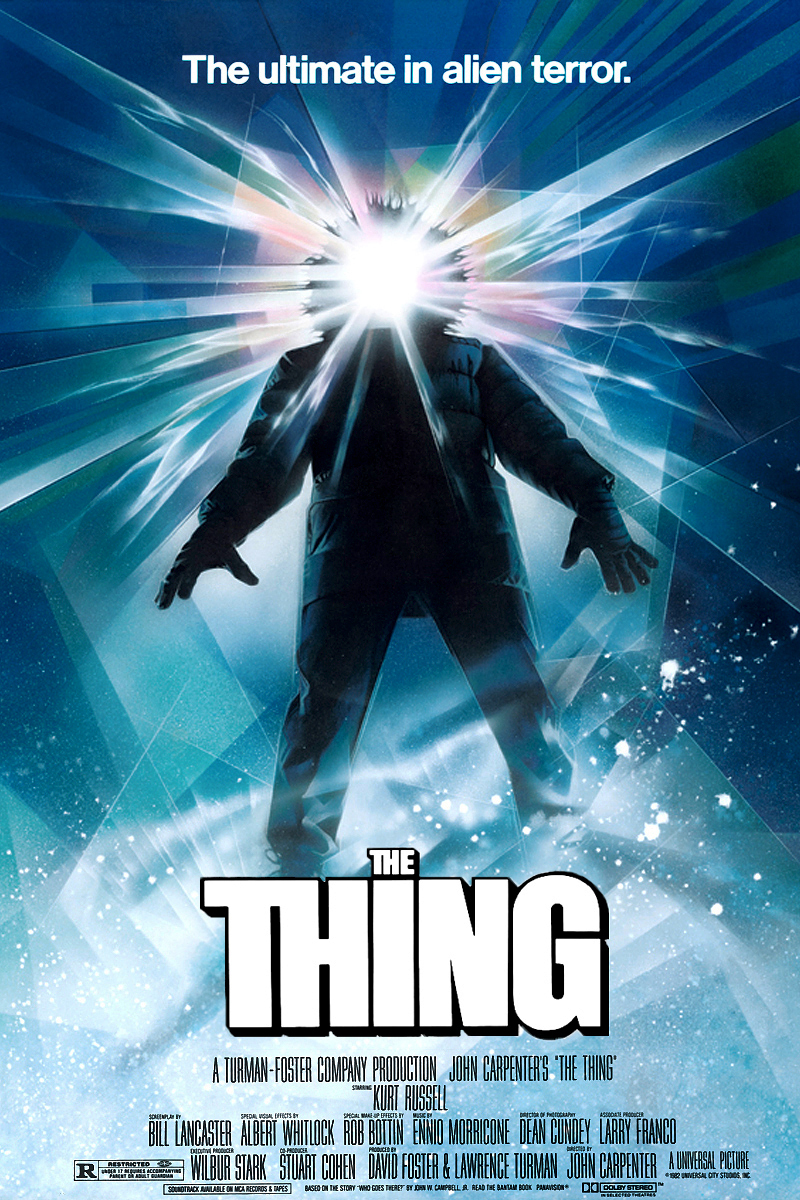
The Ultimate in Alien Terror: The Thing at 40


As soon as the throbbing electronic pulse of Ennio Morricone's score comes up in the opening shots of John Carpenter's The Thing, accompanying a doomed pursuit, it's clear that a light hearted caper is not about to unfold. That said, the intensity of what follows still took audiences by surprise in 1982. The reception towards The Thing when it was released on June 25th, 1982, wasn't just dismissive, it was openly hostile. Beyond the fact that the film simply wasn't an enjoyable experience for many, the reaction to it was as though it was telling people something that they didn't want to hear and people were quick to push back. 


A remake of the 1951 Howard Hawks classic The Thing From Another World but more of a proper adaptation of that earlier film's source material - John W. Campbell's 1938 novella Who Goes There? - Carpenter's Thing is often described as downbeat and nihilistic. Personally, I prefer to think of it as a tough film rather than a bleak one. Despite being surly loners in general, the men of US Outpost 31 actually give a damn about not just their own lives but the lives of everyone who will suffer if the shape shifting organism that has invaded their base should somehow get past them and into the general population. As the saying goes, they might not be the heroes we want but they're the ones we need.


There are no excessive attempts on the part of Carpenter or screenwriter Bill Lancaster to humanize these men or to manufacture an extra level of sympathy for their plight by having any of them take a moment to refer to, say, that special girl waiting back home or to any loved ones that they're fighting on behalf of and wanting to reunite with. You never get the kind of stock scene that you would see in other movies where one character or another pulls out a photo of their wife or fiancee and says how they just want to kill this damn Thing and get back to their life.


Nah, there's no cheap sentiment here. All these guys seem to be, by choice, pretty alone in the world. Richard Masur's Clark likes his dogs and that's about it. These guys are where they are specifically because they aren't looking to mingle with the rest of civilized society. Which, for me, makes their determination to stop the Thing all the more poignant and noble. Yes, they're fighting for their own survival but they are also completely cognizant of what will happen if they fail to keep the Thing from proceeding further and they are willing, without hesitation, to make any necessary sacrifice to save the world. Not once do they flinch from what needs to be done or stop to whine about the shitty hand that they've been dealt.


When the Thing takes out the generator in its Hail Mary attempt to freeze its enemies to death and return to its arctic slumber, helicopter pilot R. J. MacReady (Kurt Russell) is able to get Nauls (T.K. Carter) and Garry (Donald Moffat) instantly on board with the idea to "warm things up around here" and bring the whole base down. They don't even bother to consult with Childs (Keith David) before they set their suicide plan in motion. They just do it, like Carpenter protagonists should.


Even in the film's famously ambiguous final moments, when the prospects of survival for MacReady and Childs look grim and it's very possible that all their efforts to stop The Thing may have still come up short, MacReady is still able to give a rueful chuckle before the fade out. Maybe he'll make it, maybe he won't. Maybe Childs is going to Thing out on him or maybe they're just two men about to die. Whatever happens, there's no sense crying about it. 


Carpenter and Lancaster don't ascribe the failures of the men of Outpost 31 to any specific errors on their part, an aspect of The Thing that I believe makes it more troubling to viewers. I think most people honestly prefer it when characters in horror movies make stupid mistakes. You know, it allows them to nudge their friend next to them, roll their eyes and feel safe in believing that, well, if these fools had been smart about this, all this could have been avoided but that does not happen in The Thing. You could say that MacReady and Cooper (Richard Dysart) shouldn't have brought those burned remains back from the Norwegian camp but hey, the damn dog was already in their base. The remains were superfluous. Many horror movies have a moment where the characters do something specific that unleashes the evil or sabotages everyone's chances of survival (in the original Thing, it was putting a heated electrical blanket on the block of ice holding the Thing). In the '82 Thing, though, there are no obvious, egregious fuck ups. As much as paranoia may be running rampant, the men of The Thing manage to keep their heads and make smart decisions at every turn. That they still can't claim a decisive win as the credits roll did not sit well with 1982 audiences. The we're fucked before we even started pessimism of The Thing was completely contrary to the gung ho, can-do spirit of the times. 


After the defeatism of the '70s, audiences of the early '80s were not into seeing Americans forced to play a losing hand. And they definitely did not want to hear a protagonist wearily admit "We're all very tired." No sir, not in the same summer where Rocky was getting the eye of the tiger.


The Thing's poor box office performance has always been laid at the feet of E.T. with the belief being that audiences choose Spielberg's kindly alien over Carpenter's nasty one but I don't think that one had anything to do with the other. The fact is, Ridley Scott's Alien could have come out in the summer of '82 and still crushed it. The Xenomorph would have held its own just fine against E.T. because Alien is a crowd pleaser, pure and simple, and, in every way, The Thing just isn't. Had MacReady encountered Childs in the smoking ruins of the base at the end and they immediately high-fived each other over the Thing's defeat just as a rescue helicopter arrived, well, then it would have been a different story at the box office. 


It wasn't the shocking splatter of The Thing that alienated audiences. Had its story ended with MacReady being satisfied that the Thing had been defeated and if he and Childs had survived to tell the tale, I believe that audiences could have stomached whatever hideous sights The Thing had to offer. No, it was the hopelessness and the ambiguity that really got to them.


Had Universal held off on The Thing's release until the fall, saved it for Halloween (and maybe chose to re-title it Who Goes There?), maybe it would have fared better. Who knows? Forty years later, it's all moot. It tanked and the fallout was what it was. 


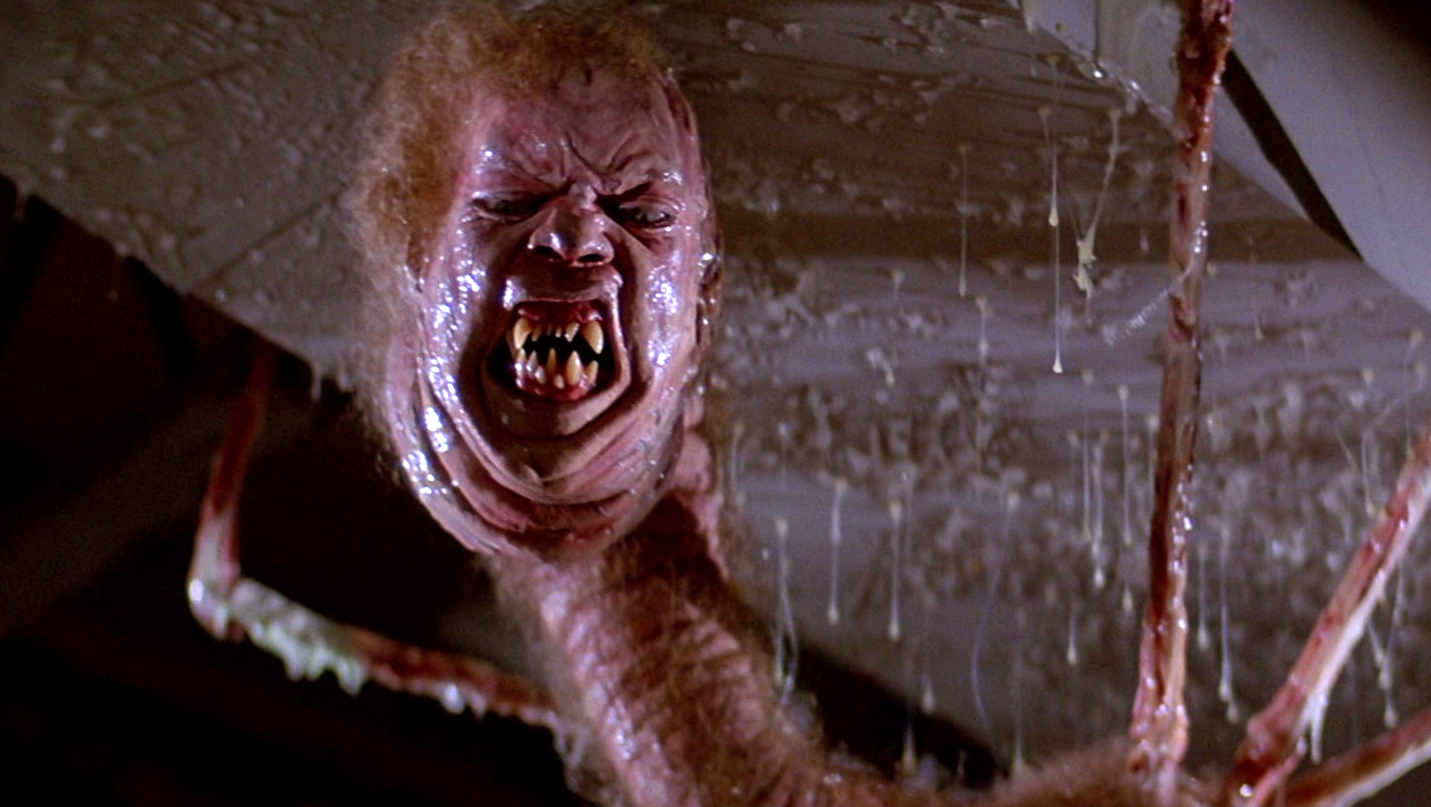
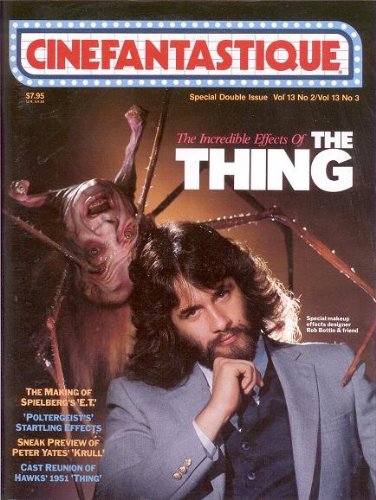
The only person whose star immediately rose after The Thing was young FX genius and former Rick Baker protege Rob Bottin. As much as the grotesque FX of The Thing was slagged as borderline pornographic by outraged critics, no one could deny the astonishing level of skill that it took to pull off The Thing's transformations. 


Only twenty-four at the time and placed in charge of leading a massive crew, Bottin threw himself into the creation of the Thing so hard that he had to be checked into the hospital for nervous exhaustion by the time the shoot was done. The result of Bottin's groundbreaking wizardry, though, allowed Carpenter to make a monster movie that finally broke the "guy in a suit" cliche that even the best examples of the genre, like Alien, had always succumbed to. 


Even though the critical plaudits did come eventually it's still a shame that Carpenter took such a beating upon The Thing's release. There's some irony to be found in the fact that Carpenter made a movie about people fighting to hold onto their individuality only to get so much shit for being true to his own artistic identity. 


A lot of directors might have folded after receiving the kind of body blow that Carpenter suffered with The Thing but he not only persevered and toughed it out, he kept on making classics for years to come. Just the same, I'm sure he wishes that his first foray into major studio filmmaking had not been its own sort of painful transformation.  


In the end, I suppose you just have to believe that, come what may, every Thing is meant to be.

Saturday, June 4, 2022

KHAAAAAAN at 40

Let's get this out of the way first: at the 1983 Oscar ceremonies, when the envelope for Best Actor was opened, the announcement should have read "...For Best Actor, William Shatner, Star Trek II: The Wrath of Khan!" 

Ben Kingsley actually won that year for Gandhi and his fellow nominees were Paul Newman for The Verdict, Peter O' Toole for My Favorite Year, Dustin Hoffman for Tootsie and Jack Lemmon for Missing but make no mistake: that statue should have gone to Shatner. Those other performances are all top notch. Shatner's just happens to have been better. To be fair, Shatner had years of experience with his role by then. Makes sense that he could crush it. No shame in losing to him, I say.

 Of course, he wasn't even nominated and that is an absolute crime. By the early '80s it was already fashionable to have, at best, an ironic appreciation of Shatner's acting style with the understanding that even if you enjoyed what he did, you still were supposed to concede that it was objectively bad. I do not go along with that line of thinking at all. I think Shatner is a legitimately great actor and if not for the kneejerk snobbery directed towards him and against sci-fi in general and Star Trek in particular, his performance in Khan would have been instantly heralded as a career high point, one that should have made even the doubters finally give it up for the man. Honestly, I don't see how what Peter O'Toole does in My Favorite Year or Paul Newman does in The Verdict (both incredible, by the way) is any goddamned better than what Shatner does in Khan

Both O'Toole and Newman are playing middle aged men facing down their own mortality and their own weaknesses and regrets. In Khan, Shatner is doing the exact same and he's doing it at the top of his game, for everything he's worth. He deserved equal acclaim. Did he not get it just because My Favorite Year and The Verdict are realistic and not space adventures? Must be, because there doesn't seem to be any other reason to laud the one and ignore the other.

Anyhow, Shatner is fucking great in Wrath of Khan. What is also fucking great is Wrath of Khan itself.  

Written and directed by Nicholas Meyer (who had also wrote and directed 1979's ingenious H.G. Wells vs. Jack the Ripper tale Time After Time), Wrath of Khan introduced the Kobayashi Maru into Star Trek lore, a training exercise meant to test Star Fleet cadets' reaction to a no win scenario that Kirk, in true Kirk style, found a way to cheat his way out of because he rejects the idea that any such scenario exists. In real life, the first Trek sequel saw its makers facing a crucial must win scenario that would decide the future of the franchise.

When the first Star Trek movie came out in 1979, it was a thing of beauty but inert. It's full title was Star Trek: The Motion Picture but it was quickly dubbed The Motionless Picture by critics due to its lethargic pace. If Trek was going to survive as a movie series - or as any kind of franchise, for that matter - something had to be done to really engage audiences the second time around and to better capture what people loved about the original series. More than just bringing back the action the sequel also had to restore the warmth and humor between Kirk, Spock and McCoy. Meyer did all that and more. The result was the greatest course correction in movie history. 

Released on June 3rd, 1982, Khan so completely righted the ship for Star Trek that, even though it's one of the great Part II's ever made, it feels more like a complete reset than it does a sequel. One thing that Star Trek: The Motion Picture lacked (which its fans would argue is an aspect that made it intriguing) is a villain. V'Ger was not a bad guy, it was just a machine looking for answers about its creator. But this time around, Meyer knew it would be important to give Kirk and the crew of the Enterprise a true adversary to test them. Looking to the original series for inspiration, Meyer brought back Khan Noonien Singh (Ricardo Montalban) from the first season episode "Space Seed."

At the end of "Space Seed," the genetically enhanced superman Khan had been defeated after trying to take over the Enterprise but rather than being punished for his crimes, Kirk gives Khan the opportunity to relocate along with his followers to Ceti Alpha V, an uninhabited but fertile world that could be his to rule. The episode leaves off with Spock musing about how it would be interesting to return to Ceti Alpha V in 100 years to see what Khan has made of it. As it turned out, fifteen years was long enough to find out that things hadn't gone so well.

Some time after Kirk had left Khan and his crew on Ceti Alpha V, the neighboring planet of Ceti Alpha VI exploded, causing Ceti Alpha V's surface to be devastated. The previously fertile world was turned into a wasteland and Khan and his people, including his wife (Lieutenant Maria McGivers, the historian who betrayed the Enterprise to assist Khan in "Space Seed"), struggled for survival. His wife didn't make it, leaving Khan bitter and vengeful. When the Starship Reliant, which counts former Enterprise navigator Commander Pavel Chekov (Walter Koenig) among its crew, comes to Ceti Alpha V (mistaking it for Ceti Alpha VI) in order to assess the lifeless world's viability as a testing ground for the top secret Project Genesis, Khan puts Chekov and Reliant Captain Clark Terrell (Paul Winfield) under his control (thanks to depositing alien eel larvae in their ears, a scene that was nightmare inducing for young viewers in '82), and sets his sights on exacting his revenge on James T. Kirk.

Khan, of course, learns that when you come at Kirk, you better not miss. And Kirk, for his part, realizes that he should have just killed Khan's ass when he had the chance. Along the way, Kirk reunites with his former lover Carol Marcus (Bibi Besch), now the lead scientist on Project Genesis, who introduces Kirk to her son David Marcus (Merritt Butrick), also a scientist assisting his mother and also, as it turns out, the son that Kirk never knew he had.

Already grappling with a midlife crisis at the start of Khan, unable to enjoy the occasion of his own birthday (as a fed up Bones says "Damn it Jim, what the hell is the matter with you? Other people have birthdays, why are we treating yours like a funeral?"), coming face to face with the adult son he never knew forces Kirk to ask even more questions about his life. At the same time, his mettle is being tested at every turn by the relentless Khan. The cat and mouse pursuit that Kirk and Khan engage in across the galaxy, with Montalban doing his best to not give an inch of the screen to Shatner, provided the kind of bracing, edge of your seat adventure that was missing from the airless, somnolent ST: TMP.

When their conflict finally comes down to a situation where Khan seems to have stalemated Kirk, leaving Kirk and the Enterprise primed for destruction, even though it will mean Khan himself will go too, a sacrifice play is the only thing that will save the Enterprise and its crew. It's Spock, Kirk's eternal right hand man, who selflessly - and with perfect logic - takes it upon himself to make that play, slipping off the bridge to go down into the engine room and fix the ship's damaged warp drive, exposing himself to fatal levels of radiation in the process. The news of Spock's possible death in Khan had leaked prior to the film's release and fans had flooded Paramount Studios with outraged letters, hoping to force them to change course.

Despite the angry outcry (which included death threats), Paramount and Meyer did not rethink their decision. Of course, once the film was released it was obvious that a back door had been put in place to allow for Spock's return in the form of life-restoring Project Genesis but even though it was clear it would not be permanent, the death stands as one of the great moments in Star Trek history and both Leonard Nimoy and William Shatner play this scene for all the emotion it's worth. I have no shame in admitting that as a 13 year old, I did not greet this moment with Vulcan-like stoicism.

I began this by saying that Shatner should have gotten an Oscar for his work here and, man, I will not budge from that. Just his performance during Spock's funeral alone is enough for me. When Kirk delivers the eulogy, choking back tears as he utters the word "human," holy hell.

I just wish that Shatner could have gotten more opportunities in subsequent Trek sequels to match or top his performance in Khan but he really didn't. He continued to be great throughout, of course, but in reviving Spock in the next sequel, the emotional and dramatic stakes of the series felt instantly lowered across the board. Sure, Kirk loses his son (and the Enterprise!) at the hands of Klingons in The Search for Spock but the impact wasn't the same. Once the universe gave his best friend back to him, Kirk's problems never seemed to hit as hard again.

In Khan, though, Kirk went through some stuff. Meyer gave Shatner a lot to work with and the man was up to the challenge. Forty years later, it is still peak Trek

So come on and say it with me people: 

"...KHAAAAAAAAAAN!!!"