

Of all the classics released in the summer of '82, E.T. is the one I have the least nostalgia for. And by least I mean zero. Not to say that I didn't like it at the time. I did. The movie worked just as well on me as it did with most everybody else. It pushed all my emotional buttons (let me tell you, between this, Wrath of Khan, and Mick's death in Rocky III, I did a lot of crying at the movies in June of '82!) but the thing is I was just the wrong age to really fall in love with it. You know, 13 is just not the age where you think E.T. is cool. It's your younger sibling's movie, if you have any, not yours. That said, there's no denying the power that E.T. had over audiences that summer. It's uncanny how perfectly attuned to the mood of the moment Steven Spielberg was. It was almost as if he had been given psychic access to the audience's deepest emotional cravings before making it.

Prior to its release, though, expectations for E.T. were shaky at best. The above item from Cinefantastique 's May-June issue penned E.T.'s obituary in advance ("Universal hopes to make a bundle on the secretive Steven Spielberg picture before word of mouth kills it."). This not only seems crazy in hindsight, betting against Spielberg seemed pretty crazy then, too. I mean, it's not like his track record had been spotty. 1941 may have tanked but the win column was still firmly in the guy's favor. I mean, for God's sake, his last movie was Raiders of the Lost Ark.

Maybe the fact that E.T. had been filmed under such tight security naturally generated suspicion. Who knows? Personally, I think Spielberg had earned the benefit of the doubt but whatever. Of course once the public saw E.T. after its release on June 11th, 1982, the reaction was immediate. Between Spielberg's direction, the uniformly excellent performances of its cast (particularly of its talented child actors), Melissa Mathison's sensitive screenplay, and John Williams' score, it instantly claimed equal footing with cherished classics that had been around for decades. It brought audiences together in a way that many people had assumed couldn't be done anymore.

In the early '80s, Walt Disney Studios was struggling to regain the family market that, for decades, had been their exclusive bread and butter. The kind of all-ages movies that Disney used to specialize in seemed to have gone out of style in a more savvy, cynical, sensation driven era. I expect the thinking within Disney was that, well, it wasn't their fault that they couldn't score hits like they used to because the audience for movies with the sort of innocent outlook that used to define their brand just wasn't there anymore. But then Steven Spielberg came along with E.T..
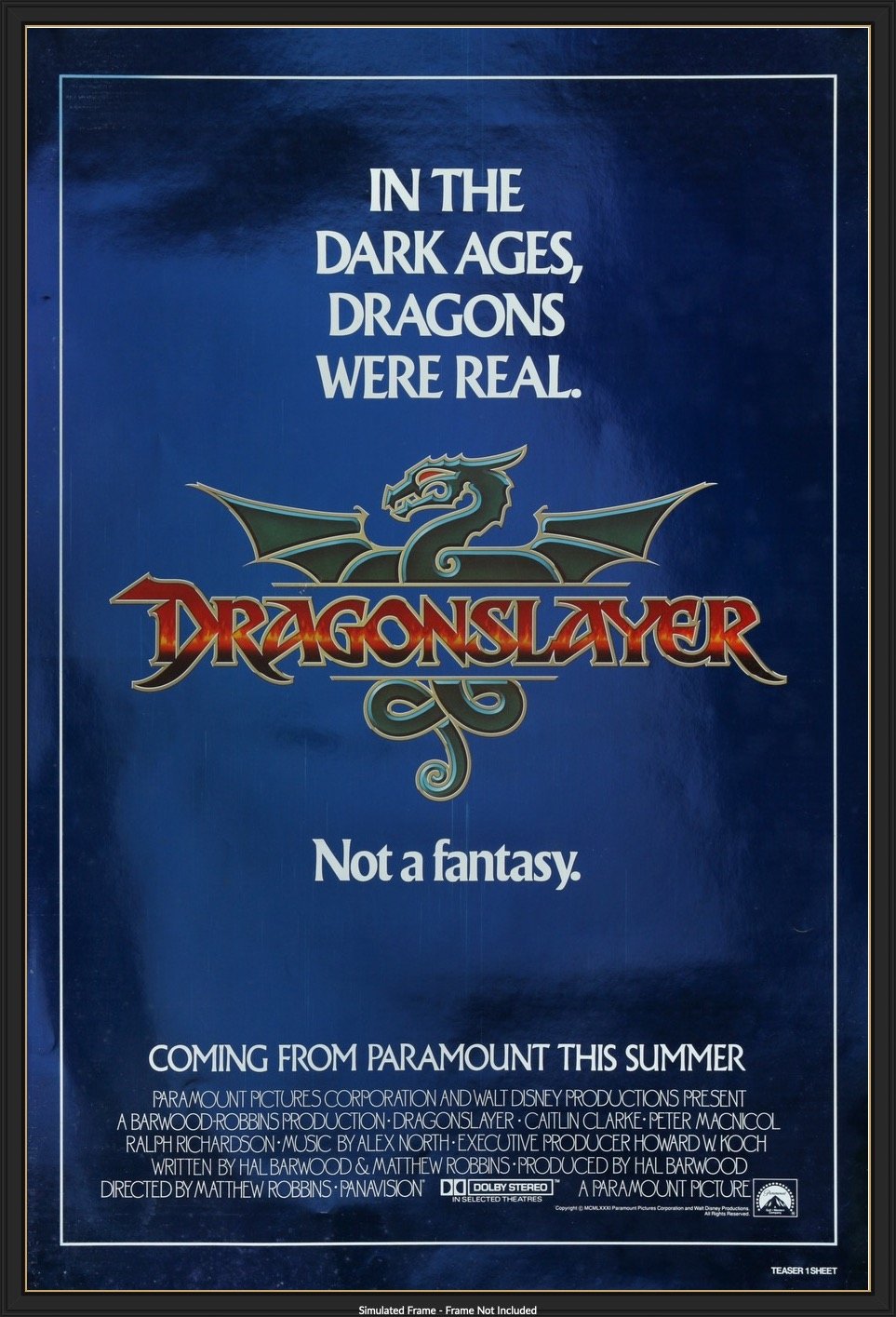
In every way, E.T. was exactly the kind of family movie that Disney wished it could still make. Faced with changing times, Disney had come to believe that their best option was to shake up the perception of what a Disney movie was and to go a little darker with movies like Dragonslayer and The Black Hole. Ironically, every time they did that, the movies still stiffed at the box office (even when the movies themselves turned out good). But just by sticking to his guns and following his heart Spielberg had, unintentionally, beat Disney at their own game. As Variety said at the time, E.T. was "the best movie Disney never made."

The look of E.T. himself, designed by Carlo Rambaldi (Close Encounters of the Third Kind, Alien), is so familiar and so taken for granted that I think it's achievement as a piece of design is underrated. The bottom line on E.T. is if E.T. himself didn't work, if audiences didn't 100% buy into the reality of this creature or if they found the look of him to be off putting in any way, the movie would have fallen apart. The whole movie rested on his wrinkled shoulders and the fact that they nailed it is a much more impressive achievement than it's given credit for. This wasn't like adapting a non-human character from a comic book, you know? It a different thing than getting, say, Rocket Raccoon right. That's a case where the design has been already laid out. You can adapt it and modify it but the basic idea has already been established. This, however, was about inventing a creature from whole cloth and hoping that audiences will a) believe it and b) fall in love with it. Additionally, Spielberg didn't have the same option here that he had with Jaws in which if it proved that his star attraction wasn't convincing on camera, that he could just choose to show it as little as possible. No, E.T. had to deliver.

When making a scary alien, there are certain elements that you know have to be there in order to make an intimidating creature. When designing a predator (or The Predator, for that matter), you know you have to incorporate fangs, claws, etc.. Size, too, of course can be important. Making a lovable creature, though, is a much tougher assignment with no ready formula to follow. But somehow everyone involved with E.T. intuitively found a way. Beyond the emotion that was able to be conveyed with E.T.'s large, expressive eyes (modeled after Albert Einstein's), it was ingenious to make E.T. - with his diminutive shape and impossibly thin neck that stretches and contracts - break the mold of being just a man in a suit. When you see classic movie monsters like the Creature from the Black Lagoon or the Xenomorph from Alien, as incredible as they look and as impressive as the suits are, you know there's a guy inside of them. They're sophisticated enough outfits where you don't see a zipper running up their back or any seams showing but yet you recognize that underneath it all they're still a full sized adult in a costume. The mechanics of how they pulled it off aren't a mystery. But E.T. broke away from that.

Unlike the aliens or creatures in horror movies, whose impact is largely derived from how little we see them, once E.T. is revealed, he has to be seen full on, all the time. There's no hiding him, no resorting to quick glimpses of just an eye or a claw. He has to hold up to the audience's constant scrutiny. We know that he's not just a puppet like Yoda because we get all kind of full body shots of E.T. in action, but at the same time the shape of the costume obfuscates how it all works. Is it an actor in a suit? Is it a puppet? Is an animatronic creation? It's all of those things and they all combine to create a seamless performance on screen (two different little people along with a 12 year old boy born without legs all took turns being in the E.T. suit). The craftsmanship behind him is so good and it calls so little attention to itself that all the work behind making him happen disappears and that allows us to connect with E.T. as a character, not as a special effect. On some level, it's almost as if people find it easy to believe that E.T. somehow just walked onto the set like any other actor.

As much as the film still holds up, I think to fully appreciate or understand the response to E.T. and the mania that greeted the film, you really had to be there. The reaction to it when it was new and in theaters is different than seeing it now and being able to objectively appreciate its virtues as a well-crafted film. In '82 it was more than that. It was a phenomena. This was a movie that your dad might cry at. You know, like in public. That was crazy.
Something else I feel you also had to really be there to fully understand is the impact of Spielberg in his prime. To have Raiders and E.T. in back to back years (along with producing Poltergeist) on top of having Jaws and Close Encounters (and the TV movie Duel!) to his name, that was just a string of hits that no one else could touch and '82 was the peak. After that, Spielberg was - by his own choice - not content to stay in the same lane, despite absolutely owning that lane.

The rest of Spielberg's pop stuff in the '80s was limited to the Indy sequels while past that he was working on stretching as a director and expanding his range with more serious fare like The Color Purple and Empire of the Sun. Great movies but just not the kind where kids hung the posters in their bedrooms. After those back to back summers of '81 and '82, Spielberg (to his credit) didn't try and just keep repeating that particular brand of success. There will forever be a sense of magic associated with his name but the summer of '82 was the moment when his name cast the most powerful spell. We talk a lot about franchises dominating the box office today but in his prime, Spielberg was the franchise. He was able to occupy a singular spot in the pop culture landscape that no other director has matched.

Over the years, the temptation for Spielberg do a sequel, a prequel, a remake, or just about anything to exploit the value of this insanely successful property must have been - and likely continues to be - enormous. He could say he was making an E.T. 2 today and it would instantly be a Huge Fucking Deal. Despite that, he's continued to leave it alone and I have to say I find that to be pretty cool. Even when he mucked around with it for the Special Edition in 2002, digitally removing the F.B.I. guy's guns, he soon thought better of it and vowed to never tamper with the movie again. Spielberg's refusal to make E.T. into a franchise has allowed this movie to do what few other films with the same level of success have done: remain pure.

Not to pat Spielberg too hard on the back for having integrity but when you look at the godawful Fantastic Beasts movies or how adapting The Hobbit, which should have been two movies at best, ballooned into a bloated trilogy, you see how intense the pressure to squeeze every last dime out of a property is. The fact that Spielberg never did that with E.T. is no small thing, in my opinion. The thing is, I don't even think it's hard to imagine that there could be a story worth telling with an E.T. 2. Even now I believe there could be a follow up that wouldn't necessarily cheapen the original but whether that's true or not is something we'll never know. When E.T. says goodbye to Elliott, that was our goodbye to the character too.

Forty years later, E.T. remains a singular creation. When we talk about it, we don't have to specify whether we're talking about the first one or the original rather than the remake. When you talk about E.T., you can only be talking about E.T..
That's a pretty remarkable thing.

So rare, in fact, that it qualifies as an alien concept.


