Showing posts with label Sam Raimi. Show all posts

Thursday, April 27, 2023

Rise Rules

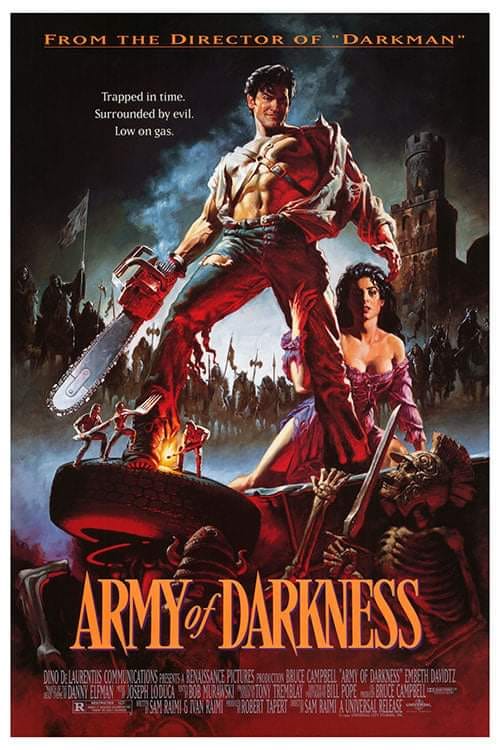
From today's perspective, it's odd to remember that, for a long time, The Evil Dead existed only as a trilogy, a cult trilogy at that, one whose audience was once deemed to be so microscopically niche that the marketing for Army of Darkness was based on the belief of Universal Studios that it even wasn't worth acknowledging its connection to the previous two films. For many years it was generally accepted by fans that after 1992, we had seen our last Deadite and that we'd have to be satisfy our Evil Dead itch going forward by dutifully buying each new Special Edition of each film in the trilogy on every new home video format. Sure, there was always the hope that Ash would return in an Evil Dead 4 but it seemed more far likely that AoD marked the end of the road for all things Evil Dead, save perhaps in comics and games. 

But proving that nothing Evil ever dies, there was the Fede Alvarez big screen reboot in 2013, shepherded into existence by producers Sam Raimi, Rob Tapert and Bruce Campbell, a movie that revived the hardcore spirit of the original in grand, gory fashion, followed by three seasons of Ash vs. Evil Dead on Starz from 2015 to 2018 that gave us more Ash than the movies could have ever given us and here we are in 2023 with yet more big screen ED action with Evil Dead Rise. What was once three films with a devoted cult following is now a still-thriving franchise. Not just still thriving but arguably, pound for pound, the finest modern horror franchise. We'll see that be put to the test if they start to pump out movies with more frequency but for now, you've got five movies and three seasons of a TV show without a single miss in the bunch. Whether you put Evil Dead Rise towards the top or the bottom of your ED rankings, it still kicks ass because they all kick ass.  

Arriving in theaters on the heels of the not bad but kind of ho-hum possession yarn The Pope's Exorcist, Evil Dead Rise is a masterclass in showing 'em how it's done. Director Lee Cronin picks up the gauntlet from Fede Alvarez and confidently puts his own bloody stamp on the ED franchise. As a horror fan who remembers the battles genre filmmakers fought throughout the '80s with the MPAA and how neutered much of the splatter output of the '80s was, it will never not seem crazy to me how much bloodshed a R rating can get away with now. For whatever reason, the MPAA long ago straight up stopped giving a shit about graphic violence and horror fans are reaping the benefits. I know some horror fans find gore to be a bore and, hey, that's fair but these recent ED films aren't made for that crowd. 


No, Evil Dead Rise is a movie designed to cater to gorehounds who bought their ticket secure in the knowledge that the people involved in making this movie weren't going to waste time getting cute with them or tease shit and then not deliver. This is a movie made for the crowd who, when they spot a tree mulcher in the background of a scene early on, know full well that the next time they see it, someone's going to be getting fed into it. Some might shrug at the promise of that kind of carnage and it's safe to say that if splatter isn't your thing, or if you just feel like you've already had enough to last a lifetime, Evil Dead Rise won't be your kind of party. For those whose enthusiasm for gore remains insatiable, though, EDR is cause for celebration. As an old school gorehound who always lamented the way that chainsaw mayhem was always teased in movies like Motel Hell, Pieces, and The Evil Dead but never really shown, I have to say I find the explicit chainsaw related gore in the modern ED's to be very satisfying to behold. Hey, we've all got our things, right?   

At this point, Evil Dead is a series comprised of five movies that form two trilogies. The first trilogy consists of the 1983 original, Evil Dead 2 and Army of Darkness. There the emphasis is on Ash and his adventures against the Deadites. The other trilogy is the original, the 2013 ED and now Evil Dead Rise and in that trilogy the star of the show is the Necronomicon itself. That evil tome is the linking device across those films and if you just watch those three, it's about people encountering that book and unleashing hell upon themselves and everyone in the immediate perimeter. 

In retrospect, the original has only become perceived as campy because of the turn towards comedy in Evil Dead 2 and Army of Darkness but that was not how The Evil Dead was seen in '83. Back then, it was serious hardcore horror, devoid of laughs (but not devoid of fun!) and I love that the two recent films have reclaimed that OG ED vibe. I love Ash and I love the splatstick humor of Evil Dead 2 and AoD (and the TV series) but I also love that Raimi, Tapert, and Campbell have been able to make Evil Dead a viable ongoing franchise without Ash while still being completely true to the "dead by dawn" spirit of the original. If we keep getting more movies like this where the Necronomicon wrecks havoc in different locations (and perhaps even different times!), I'm all for it. 

Most point to the change in location from a cabin in the woods to a apartment building in LA as being the big shake up in Evil Dead Rise but while that is notable, I think the bigger change is in having a family in peril. Sure, we've seen adult siblings pitted against each other, caught up in the throes of demonic possession but this stuff hits very differently when you see a mother and her three young children going through it. It's emotionally grueling and disturbing in a way that no previous Evil Dead movie has been. 


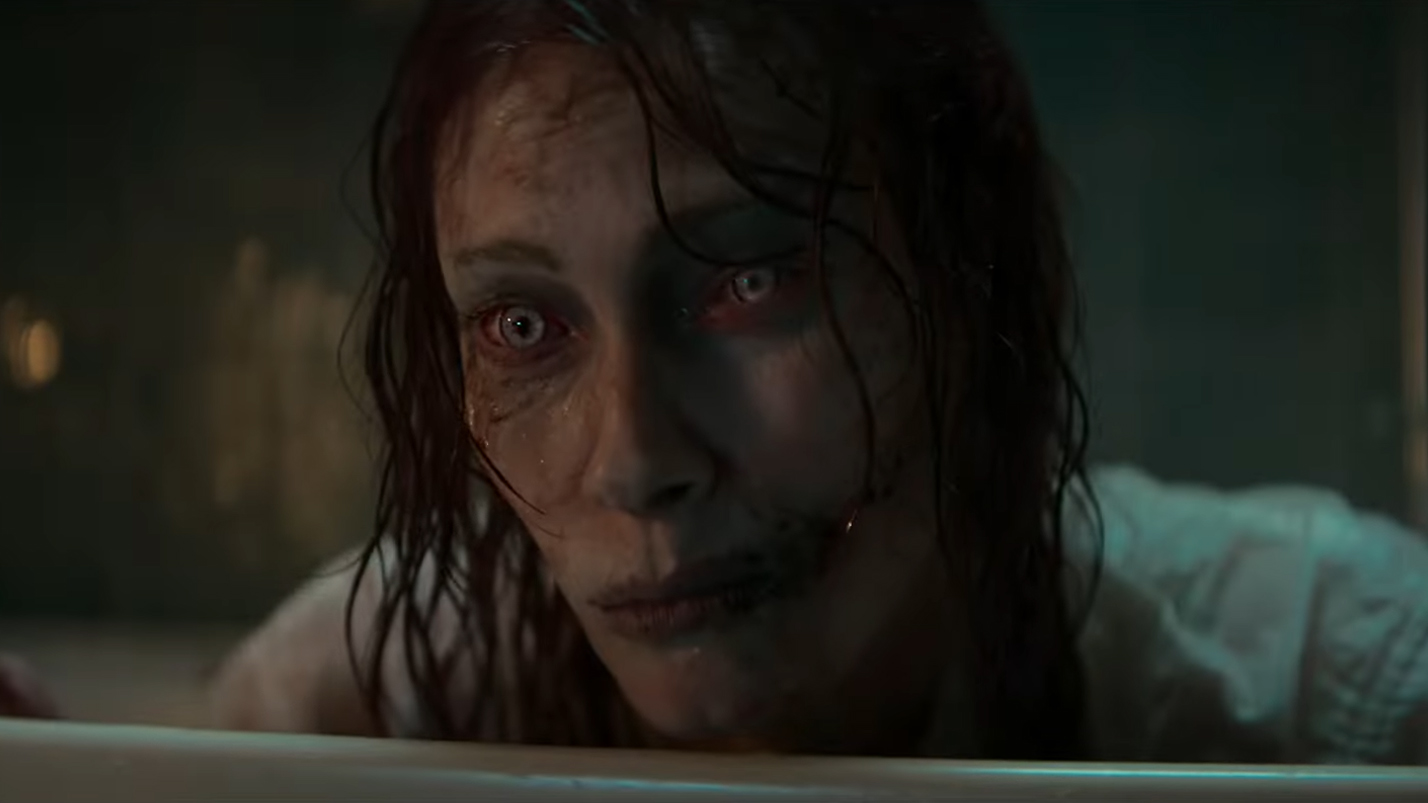
We spend enough time with Alyssa Sutherland as single mom Ellie and Gabrielle Echols as older daughter Bridget, Morgan Davies as brother Danny and Nell Fisher as the youngest sibling, Cassie, to feel genuinely horrified when this family literally starts ripping each other apart. Even though you know going in that this is where the movie is likely to go, it's still unsettling to see kids being tormented by their possessed mom and in turn being possessed themselves and trying to butcher their siblings. Beyond the bloodletting, it's strong stuff on a character level. Lily Sullivan as Ellie's sister Beth rises to the challenge of being the latest ED hero to stand against the Deadites and in true ED fashion, grows stronger through suffering. 


I know some fans balk at seeing Evil Dead becoming a slick commercial vehicle but Evil Dead was never art house stuff. It was always intended to be commercial. It's just that the audience for this type of material has grown beyond the cult cul-de-sac over the years, where what was once considered the extreme edge of horror has become more acceptable, and with decades of experience under their belts, Raimi, Tapert and Campbell have developed expert eyes for knowing what Evil Dead needs to be. They're doing a great job of bringing the right directors in and the loosening of the MPAA has meant that these new movies can go even farther than the original while still getting a R rating that allows them to play to a wider audience. It's impossible to have a new Evil Dead with the same raw energy of the original. What Evil Dead is now is a Book of the Dead that's still being written, chapter by bloody chapter.  

Sunday, February 19, 2023

Roll the Bones: Army of Darkness at 30


Nerd culture has become established as the predominant culture today with what used to be strictly cult stuff now being mainstream fare (when M.O.D.O.K., in all his weirdness, is featured in the #1 movie in the country, you know you're living in a full on nerd world) but in 1993, things were not so groovy and the chances were that unless you were a regular Fangoria reader, you did not know or care that this new movie called Army of Darkness was actually the second sequel to The Evil Dead. To this day I continue to find it wild that the Evil Dead movies were considered so cult and their audience so insignificant that Universal didn't even think it was worth calling attention to Army's sequel status in its marketing and instead chose to promote it as a stand alone movie. In certain circles, though, Army qualified as a massive event. 


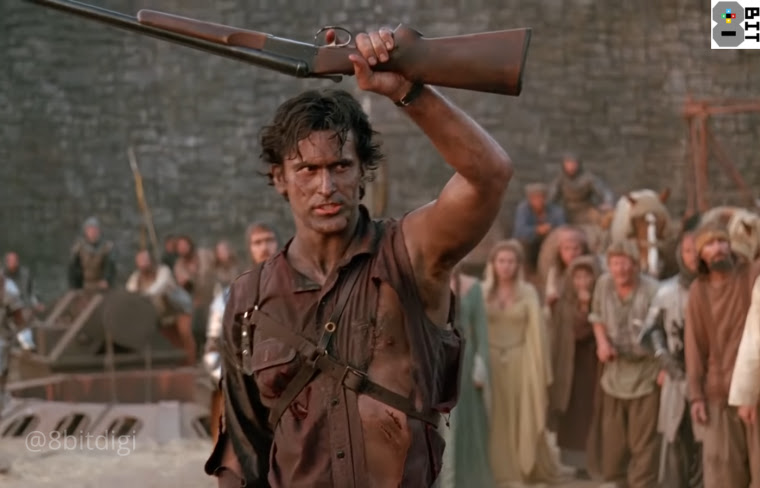
Seeing Army on an opening day matinee with a fellow nerd buddy of mine remains one of my favorite movie going memories. Back when I saw Evil Dead II at a midnight show in '87, the then-surprising turn it took towards comedy caught me completely off guard (in a way that delighted me) but now, of course, I felt I was going in prepared. Turns out I was blindsided all over again by the complete avalanche of Bruce Campbell one liners and the transformation of Ash into a caricature of a macho action hero, a portrayal that walked the line between sincerity and send up. After thirty years of being endlessly quoted, the lines in this movie are so familiar now but I remember losing it in the theater hearing all of them for the first time. 


If there's any one movie that made Bruce Campbell into an enduring cult icon it's this. Evil Dead 1 & 2, as great as they are, wouldn't have put Bruce over the top like this one did. It's just a bummer to stop and realize that, wait, this was the last time Bruce was the lead in a movie that had a wide theatrical release. It's fucking wrong is what that is. 


As for the debate about which ending is better, the theatrical S-Mart ending or the original "I slept too long!" ending, I think just about everyone who saw Army theatrically would go for the S-Mart ending. Even though having Ash blow it and wake up in a post apocalyptic wasteland is 100% in character, it feels too much like a retread of II's downer ending and Army needed to bring something fresher to the table. While it might have been insisted on by Universal, I love that rather than begrudgingly comply with this artistic compromise, Sam Raimi choose to go so insanely hard in embracing the studio's mandate for an upbeat ending. "Oh, you want a more commercial ending? HERE YOU GO!" 


Thirty years later, Army of Darkness still rocks. It will never not be cool that in the same year that Steven Spielberg and ILM reinvented the art of movie FX in Jurassic Park, Raimi and co. made a movie whose idea of spectacle was an army of skeleton puppets. Even better, a handful of skeleton puppets that had to be shot to look like an army. At no time is Raimi trying to sell anyone on how convincing any of this is, he's all in on the obvious artifice of it, and that's what makes it great. For me, this movie's defining moment is when in the heat of battle, someone off camera throws a skeleton into the frame at Campbell who grabs it and breaks it over his knee. The Deadites here don't explode in CGI dust when they die, they just get trashed like cheap pieces of junk. Bruce isn't facing some slick adversary like the T-1000 here. Instead, much like the retro aesthetics that Francis Ford Coppola brought to Bram Stoker's Dracula the year before, Raimi crafted Army as a tribute to the naive movie magic of an earlier, less sophisticated age. Even with all the skeletons on display, there's not a jaded bone to be found here. 


Hail to the King, baby! 

Friday, January 6, 2023

The Ultimate Experience in Grueling Horror

When it comes to talking about what the best horror franchise is, I think we're at the point where we might have to say that, if we're talking about longevity and consistency of quality, Evil Dead is the hands down champ. What else can compete with it? Of everything out there, the Chucky franchise is the strongest contender. With Chucky you've got seven feature films, all of them at least decent, with several being classics, and then two seasons of a TV series (with hopefully more to come) that didn't hold back on the horror and also deepened and expanded on the series' mythology.

But then there's Evil Dead, which, like Chucky, has never stopped kicking ass. The slight edge that I feel it has over Chucky is that it is has become a double layered franchise. You have the aspect of it that was driven by Bruce Campbell as Ash and that alone would be enough. With that, you've got three classics films and a TV series that didn't have a single dud episode in three glorious seasons. 

Now there's also the latest feature incarnations - the 2013 reboot and the upcoming Evil Dead Rise - that go back to the roots of Evil Dead. Some fans balk at these, I guess because they can't wrap their head around Evil Dead without Ash, but I love that they've reclaimed the OG soul of Evil Dead.

Billed by Sam Raimi as the "ultimate experience in grueling horror," no one thought of The Evil Dead as campy or jokey before the sequels changed the tone of the series. As much as I love Evil Dead II and Army of Darkness, I never liked that they had retroactively caused the original, which had been received as one of the most hardcore horror films of the '80s, to be seen in a mostly comedic light. 

Because of that, I love that Raimi, Campbell and Rob Tapert have been able to bring Evil Dead back to symbolizing full on, balls out horror. Had they tried to recast Ash as a way to keep the franchise going, that would have been a massive mistake. Much better to return to telling gore soaked possession tales and reestablish Evil Dead as a brand that isn't dependent on a specific character.

Had some shady corporate hands yanked the franchise away from Raimi, Campbell and Tapert, I would be vehemently against whatever was done with it but these guy are Evil Dead. This has been their baby for over forty years and if they want to pivot it back to what it initially was and shepherd some nasty new visions of that world, then cool.

With the MPA being much more horror friendly than it was in the '80s, R-rated Evil Dead movies can go every bit as hard as the unrated Evil Dead did back in the day. I'm still stunned by how much Fede Alvarez got away with with his 2013 ED and Lee Cronin looks to match it with Rise. I just hope Raimi and co. start to deliver these at a faster clip because ten years between Evil Dead movies is way too long. Now that Evil Dead Rise is set to move things out from the traditional cabin in the woods, I hope we can get an Evil Dead on a cruise ship or even Evil Dead on a plane. I mean, after all, ships and planes do have cabins of their own. 

Sunday, August 21, 2022

The Ultimate Spin: Spider-Man (2002)


Living in a time where there's been three actors to date that have played Peter Parker on the big screen, eight solo Spider-Man films (the latest of which brought all three Spider-Men together in a multiversal free for all) and eleven films appearances altogether for the web-swinger, we tend to take the idea of live action cinematic Spidey for granted. I mean, how could we not? By now, there's a whole generation or two who have never known a world without Spider-Man movies.

Older fans will remember, though, that bringing Spidey to the screen was once a web too far for Hollywood. For many years, a Spider-Man movie was just a frequently frustrated dream as one attempt after another failed to get off the ground.

In the '80s, directors like Tobe Hooper and Joe Zito were associated with attempts to bring Spidey to life for Cannon Films and in the '90s, we nearly got to see James Cameron's Spider-Man. But while I would love to know what those adaptations would have been like I think it was ultimately worth the wait for Sam Raimi's 2002 Spider-Man. It's hard to imagine any other adaptation getting it quite as right as Raimi did. Certainly, based on what we know about them, none of the projects that fell through would have been anywhere near as reverent to the material as Raimi's film was.

Raimi's first Spidey film is a classic case of the right people on the right project at the right time. In our current superhero saturated cinematic age, where comic book-based films are not just a regular occurrence but (to the chagrin of some) a seemingly permanent fixture of modern cinema, it's hard now to remember the thrilling wave of anticipation that the first Spider-Man rode in on, coming as it did at a time when comic book films were still relative novelties and when the long term viability of the sub-genre was still in question - with many believing the boom in comic book films that began with 2000's X-Men was due to burst .


The fact that this project was in the hands of a fan favorite like Raimi, a director with impeccable nerd cred, only made Spider-Man seem all the more like a sure thing. But, you know, nothing's ever guaranteed and things can go wrong with even the most promising films. But as things came together and details were announced, like the casting of Tobey Maquire as Peter and the involvement of the legendary John Dykstra as Visual Effects Supervisor, it only became more and more evident how well Spider-Man was shaping up.

The only nagging issue was reports that Spidey would sport organic (eww!) webbing rather than the classic home-grown formula that science nerd Peter Parker famously whipped up for himself in the comics, along with building his own mechanical web-shooters. This concept of organic webbing was an idea that Raimi poached from James Cameron's treatment for his aborted Spidey film and it struck fans as a sacrilegious change to the character, one that undermined Peter's scientific ingenuity.

Raimi's rationale at the time - that he believed it would simply be too hard for audiences to accept that a kid like Peter would be so brilliant as to invent his own webbing - seems like a quaint concern now, given that the subsequent Andrew Garfield and Tom Holland Spideys have both had artificial webbing and no one blinked at it.


It also seems absurd, by the way, that artificial webbing of all things was perceived as being a bridge too far when it's way more of a strain on suspension of disbelief that Peter is magically able to create a costume for himself that we know that in the real world costs hundreds of thousands of dollars and was put together by the most skilled designers in Hollywood. We see Peter drawing his Spidey costume and in the next scene, ta-daaah!, he's wearing it. I mean, come on.

I can totally believe that he made this costume:


But I can't believe this cash-strapped kid, with no apparent skill in any of the many facets of design that would be required to pull this off, went from the sad, bargain outfit above to this slick number:


Nope, don't buy it! Now, I'm not complaining - far better to get something that looks like the comic than not but, if we're talking about "hey, let's keep things within the ballpark of what a regular teenager could pull off," this costume with its sophisticated design and array of highly expensive, complex components (it's got raised webbing!) is way more of an ask for the audience than "oh, this scientifically gifted kid cooked up some webbing for himself!"

But anyhow, organic webbing it was, and as much as it caused some consternation among fans, eventually they came to accept it.

Which, of course, was easy to do when the film came out and proved to be pretty much everything that fans wanted it to be. Raimi had read the original Spider-Man comics as a kid in the '60s and his adaptation is an unabashed love letter to the early Lee/Ditko/Romita Sr. days of The Amazing Spider-Man as well as introducing imagery of its own (like the upside down kiss with MJ) that would instantly become a part of the character's iconography.

David Koepp's screenplay successfully captures the familiar soap opera melodramatics of the comics in which teenage outcast Peter Parker gains the proportionate strength and abilities of a spider after being bit by a radioactive arachnid at a science demonstration and then must find a way to navigate all the complications that brings, even as he has to also look after his elderly aunt, struggle with his love life, and make ends meet as a part-time news photographer - all the while being guided by the hard learned lesson that "with great power there must also come great responsibility."

Speaking of which, while Cliff Robertson as Peter's beloved-but-doomed Uncle Ben can be credited as being one of this film's many spot-on bits of casting, the moment where he says that famous line to Peter has always rubbed me the wrong way. It's nothing to do with his delivery, which is just fine, but rather with the fact that I don't feel like Ben should be saying these lines in the first place.

"With great power comes great responsibility" is nothing that Uncle Ben ever says to Peter in Amazing Fantasy #15. Those immortal words only appear in the closing caption boxes of the story, courtesy of Stan Lee's omniscient narrator. In the years since, as that phrase has become part of the popular lexicon, comic writers have, in flashbacks, had Ben utter those words to Peter but I've always felt it was awkward. Specifically in this movie, what "great power" is Ben talking about here? He's scolding Peter for roughing up a bully at school but there's certainly no "great power" at work here as far as he knows. The phrase feels unnaturally shoe-horned in and I maintain that having Ben utter those actual words is just goofy. 

But hey, it's one of those things that one must accept. And I do. If only kind of.

In adapting Spidey's iconic origin there are a couple of other decisions Raimi and Keopp make that I also think were missteps. Not catastrophic ones by any means but ones that I wish had been re-thought.

I really feel that they should have followed the comic in having Peter enjoy a brief career as a celebrity before Uncle Ben's murder causes him to forsake fame for crime-fighting. In the film, Peter goes to cash in on the wrestling challenge and that same night the burglar robs the promoter and kills Uncle Ben outside the venue. Everything's over and done with in about an hour. In the comics, however, Spider-Man becomes a media sensation after beating wrestler Crusher Hogan, going on to appear on TV and cultivating a fanbase.

In the comic, Spidey appears to packed houses, wins showbiz awards, and even has a possible TV series lined up - according to newspaper headlines seen in the issue. This all fuels Peter's cockiness and his indifference to anyone other than his beloved Aunt and Uncle. While I know that this is a movie and that there's a running time to consider, I feel like this angle could have been explored - even if it was just relegated to a montage of Spidey making his various TV appearances and being hailed as a big deal.

Eliminating Spider-Man's brief career as a celebrity feels like a mistake to me as that rise to the top that Peter experiences, all the new attention that comes with it, and Peter's belief that he can enjoy it free of guilt or consequence, is part of the hubris that makes his fall that much more profound. In the movie, the karmic wheel hasn't had enough time to turn in order for the impact of Ben's death and Peter's part in it to hit the way it should. It should be a bitter comeuppance for Peter. Instead, it occurs in such a whirlwind fashion that it's more like, well, just a thing that happened.

In the comics, because it was some time after Peter originally let the burglar get away that Ben was killed there was an important aspect of that encounter appearing to be this fleeting, inconsequential moment that would later came back to crush Peter. In the movie, Peter lets the burglar go - and Raimi and Keopp wrongly let him feel almost justified in doing so, due to the fact that the promoter just screwed Peter out of his full payday - and Ben is killed immediately after. It works well enough, sure, but it's just too soon for it to work quite the way that it really should.

I'm also not crazy about the decision to have the burglar die (and yes, I know that in the film he would be more correctly described as "the thief" or "the carjacker" but in the comics this character is just always known as "the burglar" so we're just going with that!).

Going back to Peter learning that "with great power comes great responsibility," I feel that it is a key element of the origin that Peter hand the burglar over to the cops. It was part of the lesson that he learned and the true birth of his career as a crime-fighter. In the comic, it's clear that he goes to the warehouse where the burglar is holed up with revenge on his mind. He goes there in a righteous rage, ready to tear the man who killed his uncle apart but the shock of recognizing the burglar's face stops him cold. It's then that he feels the weight of his own accountability in this tragedy and he does the responsible thing by delivering his uncle's killer to the authorities - lowering him down on a web to the waiting group of cops below.

Having Ben's killer accidentally plunge to his death in the film immediately after Peter recognizes him, however, makes it feel more like a case of "justice was served."

It becomes more about the burglar getting what's coming to him rather than about Peter learning a real lesson (Spider-Man 3 goes on to screw even that up with its ret-con of the whole scenario). The burglar getting away and Peter not paying the moment any mind (in the comics, he's scolded for his inaction by an elderly security guard who Peter rudely brushes off as opposed to being accosted by the unscrupulous promoter who just ripped Peter off) and going on to enjoy a brief period of fame is what puts a cruel ticking clock in the background on the bitter lesson he's going to learn. And if Ben was ever going to say to Peter "with great power comes great responsibility," and make it sound natural, it should have been when the two are talking (over Aunt May's wheatcakes, of course!) about the feats of this mysterious new Spider-Man who is appearing on TV using his powers simply for money and fame.

I also think that having Ben die at home, protecting May from an intruder, is much more impactful than having him die keeping his car out of a crook's hands - even if it is the classic Oldsmobile Delta 88, cameo king of the Raimi-verse!


So as much as this movie was lauded by many fans as getting it right, I actually don't think that Raimi and Keopp nail the origin quite as well as they could have. The basic beats are there but they're just a little off and some key notes are missing entirely. But hey, it's still a mostly admirable effort and at least, unlike the live action Nicholas Hammond TV series from the late '70s, it actually includes Uncle Ben and shows how his death puts Spider-Man on a heroic path. Bottom line is that you can see they tried. The pains taken to honor the overall spirit of the comic, even when the particulars arguably could have been handled better, are apparent.

Beginning with the punishments he cheerfully inflicted on Ash in the original Evil Dead, Raimi has showed a sadistic glee in making his protagonists suffer both physically and mentally, which makes the perpetually downtrodden Peter Parker the perfect hero for Raimi. Peter's chronic misfortunes in regards to his love life, his job, his superhero identity, and his academic career, have been dubbed in the comics as a result of "The Ol' Parker Luck" and Raimi embraces Peter's cursed condition with relish. Sometimes Peter's bad breaks are played for laughs, other times for poignancy but all these moments spring from Raimi recognizing that Peter Parker is the Charlie Brown of the superhero world, forever having the football pulled away at the last second and landing on his back.

Besides doing right by Peter, Raimi, Koepp, and the cast all nail the supporting cast that has always been so important in the comics. No comic character has such a well-loved supporting cast as Spidey and his extended universe of friends, family, and co-workers are all brought to life here in fine form.

Rosemary Harris and J.K. Simmons are ripped right from the '60s comics, embodying the classic versions of Aunt May and J. Jonah Jameson respectively. The late Bill Nunn (Do The Right Thing) is an excellent pick as Daily Bugle editor Robbie Robertson, although I wish he'd been given more to do - not just in this first film but in the whole Raimi trilogy. Kristen Dunst's MJ is literally the girl next door and while I don't think she quite matches the glamorous image of MJ from the comics, her chemistry with Maguire - especially in this first film - is undeniable. And James Franco as Harry Osborn adeptly walks the line between being a believable best bud to Peter and as well as being Norman Osborn's spoiled son.


As Norman himself, Willem Dafoe is every bit as good as Jack Nicholson was as The Joker in Batman and his performance is cut from the same cloth, indulging in hammy, over-the-top villainy.

Dafoe's Goblin cheerfully cackles at his own wicked deeds and mercilessly taunts those he has at his mercy, whether it be Aunt May or a bunch of helpless school kids. I wish this type of scenery chewing arch-villainy hadn't gone out of fashion because, well, it's just fun to watch. Dafoe's triumphant, scene-stealing return in Spider-Man: No Way Home was a total vindication of his Goblin and it left no doubt who Spidey's #1 big screen baddie is. I mean, even Thanos seems low-key next to Dafoe's Goblin.


Dafoe's performance aside, some complained about the design of his Green Goblin outfit, comparing it to a Power Rangers uniform but I think it's totally fine. I mean, when it comes to trying to dress a real person like this...


...You've got to cut anyone charged with that task some slack.

More difficult, though, is that when the Goblin was introduced in Amazing Spider-Man #14, his identity was a secret. It remained so until way down the road in Amazing Spider-Man #39 and once it was revealed that wealthy business man Norman Osborn was behind the Goblin mask, Stan Lee had to figure out how to explain exactly why this member of high society chose to dress up in a goofy Halloween costume, hurl pumpkin bombs that he stored in his purple purse, and zip around town on a jet-powered broom or bat.

As it turns out, Stan didn't really have much of an explanation to give on that count. Sure, he explained how a chemical accident gave Norman his powers but as for why he concocted the Green Goblin identity specifically, about as close he comes to giving a reason is that, well, Norman's favorite color was green. So let's just say that Norman reason for being the Goblin was always kind of thin. That puts a burden on anyone adapting the Goblin to other media in that they don't have much of an actual base to go on.

Given that, I think Keopp and Raimi did a perfectly fine job of giving us a Green Goblin that is as close as can be to the image of the character that readers have from the comics while coming up with a semi-plausible rationale for him to dress as he does, just through planting the background detail of showing the collection of tribal masks that Norman displays in his home that all echo the fear-instilling visage of the Goblin.


With its combination of action (which, by the way, still holds up great here - Raimi delivers some top-shelf fights between Spidey and the Goblin, particularly their brutal final showdown), humor and pathos, Spider-Man proved to be a culmination of everything that Raimi had learned as a director up to that point. It marked his graduation from cult favorite to a true blockbuster filmmaker.

While he'd made a comic book style film in 1990 with Darkman it wasn't until afterwards that Raimi started to really focus on developing his skills as a director of actors and on incorporating more genuine emotion and depth in his films with movies like A Simple Plan (1998). Had Raimi made Spider-Man years earlier, it would have been a much different film than the one we got in 2002. I don't think the Raimi of the Evil Dead II/Darkman era would have been as ready to take on the emotional aspects of Peter Parker.

Twenty years later, Spider-Man still holds up beautifully, even though the comic book genre has evolved dramatically since then. To be sure, there's a lot that's dated in Spider-Man. In most ways, that's not a bad thing (the only negative would be how shockingly white this movie looks to today's eyes - no big film now would be so lacking in diversity). Primarily, it should be considered a happy blessing that this movie got made when it did as it got in just under the wire as far as being able to do a Spider-Man movie that takes place in a world where newspapers are still a big deal and where a young Peter Parker can believably make money selling exclusive photos to the Daily Bugle.


To watch Spider-Man today is to be reminded of a world where newspapers rather than Twitter feeds were still the way that most people received their info and where taking pictures was something that people still had to do with cameras with actual film in them.

The world has changed so dramatically since 2002 that much of Spider-Man seems downright old-timey. I mean, Peter webbing his automatic camera to a light pole to snap pictures? It's so out of date with the way things are now it's hard to believe that it was even in this century. Today, by the time Peter had schlepped his photos to the Bugle, Instagram and YouTube would already be flooded with pics and videos of Spidey so I'm happy that a movie portraying the Bugle as a central facet of the comic book's mythos was able to get made before that aspect became, if not obsolete, then noticeably dated.

Also marking Spider-Man as a product of its era are the kind of then-current elements that tie it to its particular cultural moment, like Macy Gray performing in Times Square (if only they could have gotten J Lo - it would still seem right at home in 2022!) or the blatant nod to post-9/11 sentiment with New Yorkers pitching in to help Spidey in his battle with the Green Goblin, hurling garbage at the flying menace ("You mess with one of us, you mess with all of us!") which was well-intended but now seems a bit on the nose, a snapshot of a moment in time. Even the final shot of Spidey with the American flag waving behind him (a shot much more naturally suited to Superman than to Spider-Man) also seems clearly informed by the then-fresh post-9/11 spirit in America.

These dated elements, though, aren't a detriment to the film. Unlike Bryan Singer's X-Men, which was hailed as a benchmark comic book adaptation upon its release in 2000 but now has dated to the point where it's borderline unwatchable, Raimi's Spider-Man has, in most ways, held up remarkably well. Its dated aspects generate nostalgia more than derision. Most importantly, Raimi's love of the material always shines through. Spider-Man isn't perfect but it reflects a love of the character and a determination to do right by him. Throughout the film, Peter suffers moments of doubt, angst and disappointment that feel lifted directly from panels of the original comics, where the burden of his double life often prompts Peter to ask, in a thought balloon hanging over his head, "...is this the price I must always pay for being Spider-Man?" 

I do wish that Maquire had been funnier in the role. He and Raimi nail the melancholy side of Peter but aren't quite as successful in translating the character's trademark humor to the screen. Maquire's Spidey typically comes across as morose rather than as quippy and wisecracking. And that organic webbing thing, well, it's still a slight bummer. Also, while I applaud that this first film established that sticking to the original costume design was important, there's a stiffness to this version of the suit, with its underlying sculpted musculature that prohibits much movement (Danny Seagren was more successful in conveying a "spider-y" body language in The Electric Company). But in most every key aspect, this feels like the quintessential Spider-Man. As the first cinematic venture for Spidey, the one that had the most to prove and the one that had to establish the character as a big screen superhero that could perform on the level of Superman and Batman, Raimi and co. crushed it.

Sony's ad campaign touted Spider-Man as being "the ultimate spin," and in the summer of 2002, for the legions of fans who had waited years to see the web-head on the big screen, it really was.


Most critics and fans hail Raimi's sequel as being the high point of his Spidey trilogy but, as good as that film is, my affection remains strongest for the original. It simply has something that no other Spider-Man film can ever usurp or lay claim to - it will forever be the first. There can be any number of reboots and recastings (and to be sure, there will be those on through eternity) but even if subsequent films represent improvements in one way or another, they can never quite duplicate the unique magic of this first film. Just by virtue of having no predecessors, there's a singular purity to Raimi's original. While the character would go on to swing to even greater heights on screen, none of that would have been possible if the original not first succeeded in having Spidey learn to crawl.

Wednesday, May 11, 2022

Strange Days

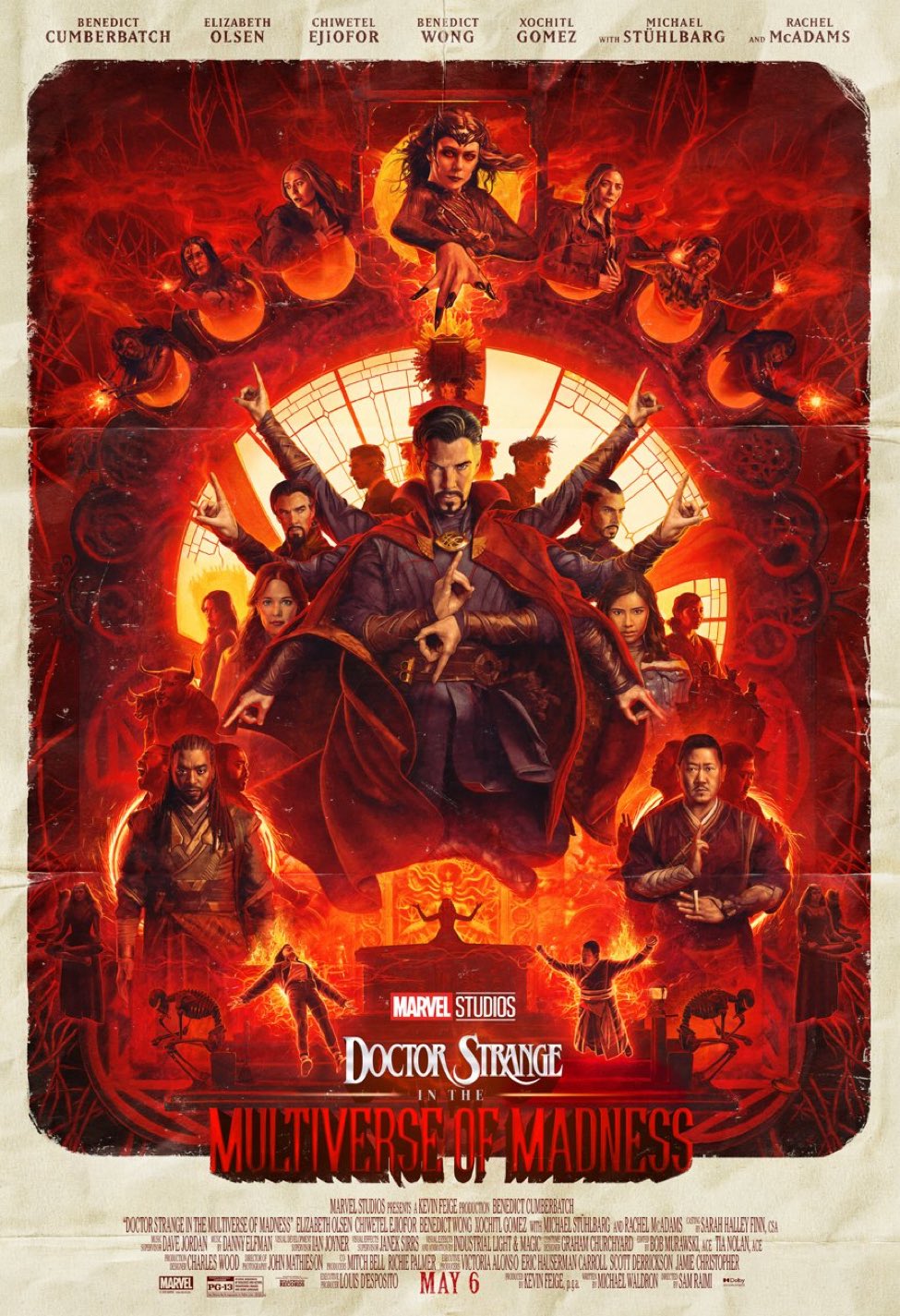
My main takeaway from Doctor Strange in the Multiverse of Madness is that it's a crime Sam Raimi has not directed a feature film since 2013's Oz the Great and Powerful. Some advance concern might have been warranted regarding how much of his own creativity Raimi would be able to bring to the MCU but right from the opening shots, it's clear that this is very much a Raimi film. Yes, of course he is obliged to keep the MCU narratives on track but that doesn't constrain or diminish his style. His visual flair and his prankish sensibilities are in full effect here. If you hear anyone try to spout some garbage about how, oh, this is like only 20% a Raimi film and 70% MCU, please disregard. Take any random minute from MoM and it is impossible to confuse it with a movie directed by anyone else. Early on, when a tentacled one-eyed monster (who looks like Shuma-Gorath from the comics but for some reason is dubbed Garnatos here) is rampaging through the streets, Raimi cuts to the monster's POV and you just know that when he conceived of this shot and tasked his FX team to create it, he described it to them as Monster Vision. It's one brief moment in the midst of a big battle but it's the sort of cool detail that no one else would have thought to include and those kind of instantly identifiable Raimi-esque touches are all over MoM

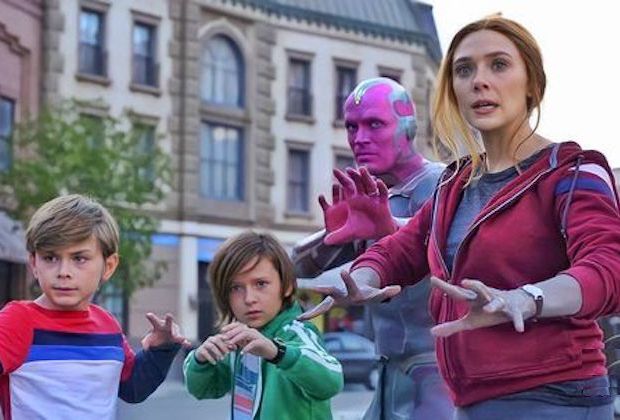
Storywise, there is a lot of heavy lifting to be done as this continues on from the events of Wandavision as well as carrying through ongoing threads from the original Doctor Strange and elements from the wider MCU. With all that, though, it never feels like there's massive info dumps or reams of exposition. The screenplay by Loki writer Michael Waldron is as fleet with dispensing information as possible while servicing the arcs of Strange and Wanda and newcomer to the MCU, America Chavez (the immediately charming Xochitl Gomez) as well as giving Wong (Benedict Wong) his own crucial part to play (I love, by the way, that Wong still carries the title of Sorcerer Supreme and that there's been no move to return it to Stephen, post Endgame). Is MoM still clunky at times? Yes. Could some of the character beats have landed better and some of the issues that they're dealing with been more fully explored? Also yes. All of which is simply to say, as a story, as a screenplay, this is not perfectly finessed. But it's more than fine, with Raimi's style gliding us over the bumpy parts. 

It should be no surprise that MoM will definitely lose something if a viewer is coming in cold to it, without being current on the MCU. Some will fault MoM for this but honestly, being fluent in the MCU's mythology may feel like homework for some critics but that is not the case for the wider audience. There is a ginormous global audience locked into the ongoing saga of the MCU (these are not niche movies, people!) and that audience has 100% watched Wandavision and Spider-Man: No Way Home and the original Doctor Strange and Avengers: Endgame and all the rest so acting as though there's some onus being put on the viewer to come in already knowing what these characters have gone through up to this point or that some sin is being committed against the integrity of cinema because this functions as new chapter within a larger, ongoing narrative rather than being a pristine, stand alone film is silly. We're way past the point where "how is anyone supposed to keep up with this?!" rates as a valid criticism of an MCU film. Some MCU entries are slightly more independent from the bigger story than others but this happens to not be one of those cases. MoM is not an Avengers level event but it is a sequel to several other Marvel movies and TV shows and so some previous knowledge is expected. You know, we're like fourteen years into this MCU thing now and it's all been interconnected from the start. If you're a fan, this isn't convoluted or alienating to you. No, the complexity is integral to why you're so invested in it.

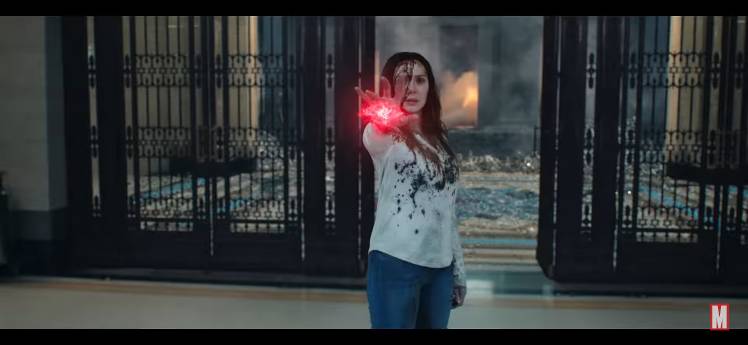
In its role as a follow-up to Wandavision is where MoM is likely to be most problematic for fans, specifically for fans of Elizabeth Olsen's Wanda. Olsen's performance is excellent but as well played as it is, the reveal that Wanda is the villain Strange must defeat, rather than a fellow Avenger that he's partnering with, will not sit well with everyone. For what it's worth, Olsen makes Wanda a splendidly fearsome, complicated villain, as dangerous as any of the heavy hitters of the MCU (and the closest we've come to seeing a Dark Phoenix style threat in the MCU, which for comic book nerds adds a cool layer to her encounter with Xavier). Waldron's screenplay makes it clear that Wanda has been corrupted by the Darkhold and that, coupled with the agonizing losses she's suffered, that her soul has been twisted. 

I think the fact that Wanda was the star of Wandavision and that Olsen was so good at letting viewers feel Wanda's pain and putting them on her side throughout that journey just made it easy for many to ignore or to not even realize how explicitly her heel turn was established there. Before that show even starts, she's already a villain. She's the protagonist but she's never a hero. Her actions are not the actions of an Avenger. She's holding an entire town prisoner, warping the reality of innocent people against their will. Life in Westview is idyllic only for Wanda. It is hell for its other inhabitants. Even Vision comes to be tormented by the facade. As much as viewers may have sympathized with her, Wanda was a monster in Wandavision and her actions in MoM are fully in line with the events of the show. Wanda caused an enormous amount of pain in Wandavision (a whole show could be done on the PTSD impact on the residents of Westview) and she never paid a price for it. She inflicts a cruel punishment on her primary adversary and flees, not to reflect on what's she's done but to develop new plans to reclaim what she lost. MoM is where Wanda finally faces real consequences. Given where Wanda's story ends up here, things look pretty final but, you know, I think it's safe to assume that it isn't. What her next step in the MCU will be, who knows, but in the comics Wanda has gone from hero to villain and back to hero a time or two so it's easy to believe that redemption is in the cards for her. Especially when her motivation going back to Wandavision is not wickedness but grief and rage.

As much as it might agitate Wanda fans to see her consumed by darkness, with them feeling that Doctor Strange has been let off easy in comparison, it seems clear that her descent provides a prescient glimpse to what Doctor Strange himself will have to contend with. In his efforts to save America Chavez and the multiverse, he takes steps in this film that, while seemingly necessary in the moment, put him on a path with dark implications. Strange does not come out of this with clean hands (he's arguably already dirty going in as his Infinity War decision that led to the Blip is called into question - was that really the only correct path to take in that moment or was it an example of Strange's unchecked arrogance, with him making a life or death choice on behalf of every living being?) and it's evident that, in time, his fate could mirror Wanda's. We see in MoM that Strange's standing as a hero is not so clear cut at all - whether in the 616 or across the multiverse - and that it is only going to become further complicated.   

Between Wanda and Strange, we see that employing magic solutions can easily corrupt and compromise their users. Beneath Raimi's giddy spook-a-blast hi-jinks, there's a sobering portrayal here of two beings who are powerful enough to change the fabric of reality but who are incapable of conjuring real happiness or healing for themselves. Strange is asked early on by the newly married Christine (Rachel McAdams) if he's happy and even though he answers in the affirmative, the movie is ambiguous right to the end as to whether he really is. It's a bold choice for a blockbuster entertainment to make, where both its hero and villain walk away from the film's events unsatisfied.

 Wanda pointedly asks Strange why, when he breaks the rules, he's seen as a hero but when she does it, she's a villain. Her question lingers over a discovery later in the film as we see that Strange's heroism in one corner in the multiverse is purely an act of myth making. Wanda is not privy to this information but it only further validates her question and underlines the unfairness of the judgement against her. While not condoning her actions, MoM does address and condemn the double standard she faces. In a reality where Strange is known by an inner circle to have gone bad, we see how that inner circle chooses to publicly perpetrate the myth of Strange as a selfless hero, making it bitterly clear that societies have no qualms about vilifying females who threaten the order of things while simultaneously providing cover for the similar crimes of men. 

The multiverse angle may not be as indulged as some would have wanted or expected (to be fair, for some fans nothing short of the appearance of every single character owned by Disney/Marvel and encores from all past MCU stars would have satisfied) but it does allow for one particularly cool sequence that is a buffet of cool cameos as the group of overseers known as the Illuminati are introduced. It may not feature every character under the banner of the Marvel Universe but the ones it does include are awfully neat to see. At its core, though, this movie is steadfastly a Strange and Wanda story and does not over-indulge in MCU Easter eggs. You get what you get but what you get is pretty awesome. The MCU has really spoiled comic book fans so some of this stuff gets taken in stride these days or met with an indignant huff of "that's all?" but it's worth appreciating just how wild some of the character appearances in MoM are (including a surprise introduction in the mid-credits tease). We truly live in a gloriously nerdy time. 

Based on where MoM leaves off, things are only going to get crazier for the MCU with the mention of "incursions" teeing up the MCU to incorporate material from writer Jonathan Hickman's massive Avengers run. How that storyline, which in the comics culminated in Secret Wars, will play out and what part Strange will play in it is something we'll see unfold over the next few years. Whereas the first three Phases of the MCU were very linear, almost rudimentary in getting us to Thanos and Infinity War, Phase 4 is already laying down multiple tracks, any of which could keep these characters busy for years to come. For awhile, it was relatively easy for comic fans to stay ahead of where the MCU was going but not anymore. While some of the storylines they're developing now can be identified, trying to anticipate how they'll advance or how they'll dovetail with each other (if some of them even will) is impossible at this point. But I think that only speaks to how Kevin Feige has become more confident and more ambitious with the MCU. The success of Phases 1-3 has only given Marvel Studios the confidence and experience and the storytelling tools to push everything further. 

Whatever is coming, a third Strange movie is absolutely going to be part of the future plans of the MCU and it would be very cool if Raimi could come back for it. I don't buy the lazy, demonstrably false complaint that there's a sameness to the MCU but I will say that few directors are able to put a such a distinctive personal stamp on any film quite like Raimi can so more of him in the MCU can only be a good thing. There's a battle sequence in MoM between Strange and one of his multiversal counterparts involving dueling musical notes that is so visually clever, so creative, and so unlike what anyone else would have conceived of that it shows (even more than the horror elements) what you gain by having Raimi as a director. Whether or not he jumps back into the MCU, I hope he finds another project to direct soon. For a filmmaker this gifted and so clearly still at the top of his game, he needs to pick up the pace from here, not slow down. MoM serves as a joyous reminder that there's no one else like him. When it comes to making movie magic, Raimi is still the sorcerer supreme.


Tuesday, May 3, 2022

Spider-Man at 20


The fact that when Spider-Man was released on May 3rd, 2002, I was already a full grown adult who had waited their whole lifetime for that movie to exist makes the idea that twenty years have gone by since feel a bit weird. But even though twenty years have passed, a significant chunk of time, the majority of my life so far has still been spent in a world sans Spider-Man movies so, you know, even twenty years later and eight movies in I don't take them for granted. The thing is, I remember what it was like when they weren't around and, let me tell you, it sucked. 

Throughout the '80s and '90s the chances of a Spider-Man movie getting made at all seemed incredibly slim. Plans to make it had collapsed so often, the property seemed cursed. Now, of course, there's a generation of full grown adults who never have lived in a world that didn't include Sam Raimi's genre-defining take on the web-spinner. For older fans, the release of Spider-Man was a long deferred dream finally realized. Now it's like, oh Spider-Man movies have always been with us. Of course there's Spider-Man movies, why wouldn't there be?

It's easy to forget, though, how long it took Spidey to swing onto the big screen. While Marvel's flagship character languished in development hell for years, with even James Cameron not being able to make a Spider-Man movie a reality, DC was essentially the only game in town when it came to supplying the world with big screen superheroes. 

The Superman movies with Christopher Reeve were iconic, the ones that first proved that comic book heroes could work on screen as legit big budget, A-list entertainment. Even if the third and fourth films had derailed the success of that franchise, the first two films were undeniably the gold standard of superhero cinema. And the original Tim Burton 1989 Batman was a triumph of its own, establishing a darker take on the character that was more in line with the comics and that successfully transformed the public's perception of Batman as being more than a relic of '60s camp. The sequels were a mixed bag but in terms of box office, Batman was undeniably the superhero of the '90s. Even though 1997's Batman & Robin had temporarily tanked the franchise, those four films still made Batman a cinematic superstar for the better part of ten years. 

As far as superhero films went back then, there was Batman and nothing else. The Caped Crusader's comic book movie competition was the likes of Tank Girl and Spawn. You might have a surprise cult hit like The Crow but the Crow wasn't competing with Batman to sell any Happy Meals. Even Warners/DC wasn't able to have anywhere near Batman levels of success with the rest of their catalog, putting up tepid offerings like Steel

In the meantime, Marvel wasn't even in the game. Adaptations of their characters were dismal direct-to-video offerings like 1990's Captain America and 1989's The Punisher (which I would argue was actually pretty decent). It wasn't until 1998 and the release of Stephen Norrington's exceptional Blade that finally there was clear proof that, hey, if you do a Marvel adaptation right, you can have a hit. Then Bryan Singer's original X-Men followed in 2000 and achieved even bigger success. And unlike the action/horror hybrid of Blade, X-Men was a true Marvel superhero movie. In the wake of X-Men's success, any comic fan would have told you, if someone does Spider-Man and they get it right, it's going to crush everything else. At the very least, it's going to be freaking huge. 

As it turned out, Raimi and his collaborators did so well in getting Spider-Man right that it's hard to imagine the movie being anything other than the success that it is. But it shouldn't be taken for granted how, all down the line, that the right choices were made - from the casting, which was so dead on with everybody from Tobey Maguire to J.K. Simmons to the script by David Koepp to the visual effects design of special effects legend John Dykstra. Even the most controversial aspect at the time, the organic web-shooters, quickly became a non-issue in light of how thrilling the overall movie was and how faithfully the film translated the trademark pathos of the comics.

Given all the Spidey spectaculars that have come along since, the original seems practically quaint now. In some respects, though, I believe it's still unbeaten. I don't think the series ever captured the romance angle quite as well since - the upside down kiss between Spidey and MJ is so iconic that there's been nothing else to top it - and it should also be said that Willem Dafoe's Green Goblin remains the true Spidey villain GOAT, even twenty years later. Dafoe's Goblin operates on a level of pure wickedness that none of Spidey's other foes, great as they are, can really equal. 

Along with that, I would also say that the final fight between Spidey and the Goblin is arguably still the best battle of the series. It's a given that no matter who had ended up directing this movie, the climax would have been a fight between Spidey and the Goblin but I don't believe that anyone other than Raimi would have chosen to make it as brutal as he did. Leave it to Raimi, who had made a career out of heaping abuse on Bruce Campbell, to not go soft on Spider-Man.  

When Spider-Man came out, it was so long ago in pop culture terms that no one even thought of it as a "Marvel Movie." But even in the MCU world we live in now, Spider-Man holds up remarkably well. Other Spidey films may have gone on to outdo the original in terms of box office and sometimes in terms of critical success and fan reaction as well but there is a singular magic attached to that first outing. We've become accustomed to the sight of Spidey web-swinging through NYC and elsewhere by now - there's nothing novel about it anymore - but to see it on the big screen for the first time, courtesy of the most sophisticated FX of the day, that was pure elation.  

The original Spider-Man is so good, such a love letter to the character that Stan Lee and Steve Ditko co-created, that it could have been the only Spider-Man movie we ever got and it would have been enough.