Showing posts with label Spider-Man: No Way Home. Show all posts

Friday, June 30, 2023

Lost in the Multiverse

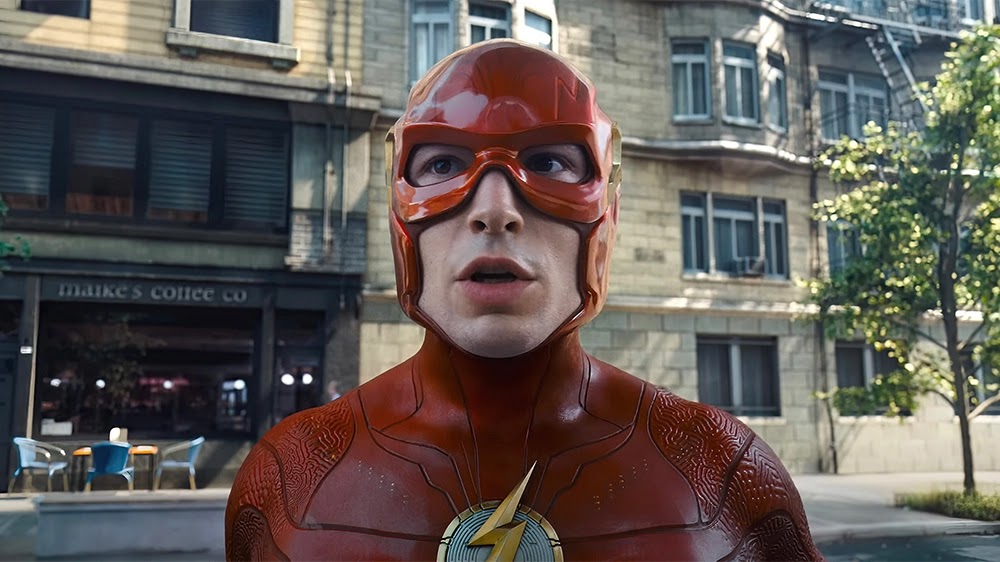
In the wake of The Flash's disappointing box office, things are looking grim on the DC front. Or at the very least, uncertain. It seems clear that audiences are not buying what DC is selling at the moment and it's unclear what's going to turn that around. What you can bank on is that WB will never throw in the towel on the DC universe. That is an IP gold mine that no studio is ever going to forsake. So no matter what kind of failures the DC universe suffers, the movies will keep on coming. It's just a matter of what the latest plan for the DCU will be. 

For long time comic fans, the great irony of DC's current movie dilemma is how badly they've botched the multiverse aspect of their universe and, more than that, how they've forfeited that space to Marvel. For years, the multiverse was DC's thing. While Marvel had one streamlined universe with one continuity, DC was the comic universe that dealt in a myriad of multitudes. To explain the aging of their characters and to explain the multiple versions of their characters, DC had a multiverse that allowed Golden Age characters to exist in their own universe and Silver Age characters to exist in theirs, with the opportunities for crossovers between the two. One of the most legendary comics in DC history is 1961's Flash #123, an issue in which readers were presented with the tale of the "Flash of Two Worlds," with present day speedster Barry Allen meeting the Golden Age Flash Jay Garrick and it was the popularity of this issue with readers that led to a series of annual crossovers between the Golden Age Heroes of the Justice Society of America, whose roster included the likes of Hourman and Dr. Fate and the present day Justice League. 

For decades, DC had used the multiverse to account for continuity errors or to simply allow alternate versions of characters to remain in play, just not within the primary universe. But by the '80s, the thinking within DC was that to compete with industry leader Marvel, they had to emulate Marvel's singular continuity and trim the fat from their universe, paring it down to just one world. So 1985's Crisis on Infinite Earths was the big move on DC's part to rid themselves of the multiversal baggage that had built up over the course of fifty years and, hopefully, make their universe more new reader friendly. It ended up being an imperfect act of housekeeping, with editorial at the time failing to make a totally clean break between the past and present of DC. Remnants of prior history survived here and there and some characters were given a fresher slate than others. But even though it was a slightly sloppy segue way from one era to the next, overall it worked and the bottom line was that readers understood that there was now one connected DC universe going forward. 

That lasted until 2011 when DC decided to reinstate the multiverse with the Flashpoint storyline. So on the publishing side, decades after changing their universe to be more like Marvel, DC decided to get back in the multiverse game. Meanwhile, in the movie and TV realm, while Phases 1 through 3 of the MCU had been very liner, moving from Point A to Point B to lay down the foundation of the MCU, going into Phase 4, the new watchword of the MCU, according to Kevin Feige, would be "multiverse." On the Sony side of Marvel, this was also true with 2019's animated Spider-Man: Into the Spider-Verse being all about the vast multiverse of Spider Heroes, including everyone from Spider-Noir to Spider-Ham. While WB/DC was still in the process of struggling to create a singular shared universe to match the MCU, Marvel was already moving on to stake their claim as the masters of the multiverse, dubbing Phase 4 "The Multiverse Saga." What historically used to be DC's domain has now become perceived by the public at large as a Marvel thing. The multiverse was something that DC chose to give up and now they're forced to play catch up. 

With Phases 1 through 3, Marvel provided a model on establishing a cinematic universe but following their example proved difficult for WB/DC. Now in Phases 4 and 5, Marvel has been showing how to establish a cinematic multiverse but, again, as it was when it came to building a linear universe, when it comes to their multiverse game, WB/DC still just wants to short cut their way to where Marvel's at without putting the same effort in. 

Marvel has staked out the multiverse front with Spider-Man: Into the Spider-Verse (2018), Spider-Man: No Way Home (2021), Doctor Strange in the Multiverse of Madness (2022), Spider-Man: Across the Spider-Verse (2023) and the Disney+ Marvel shows Loki (soon to debut its second season) and the animated What If? (also due to have a second season). They've dominated this space in a way that WB/DC is ill equipped to compete with. 

Case in point: The Flash. 

Even with Marvel beating them to the punch, The Flash still could have made the statement that DC has its own bragging rights to the multiverse but it did not send that message. It's not the fault of the filmmakers so much as the fault of a fickle studio demanding last minute changes. First and foremost, the problem that hinders WB/DC is that they lack the strong guiding hand that Marvel has and the willingness to stay the course and see things through. Whether that will change with James Gunn, who knows? For now, DC looks like a company that's been forced to play a weak hand. 


Aside from the lack of a clear strategy in place, in reflecting on The Flash and how it compares to the MCU's multiverse projects, the main flaw in DC compared to Marvel is how small and diminished their multiverse seems. Everything about the MCU's multiverse (and Sony Picture's part in it as well) has been about expansion. It is about opening up new possibilities, new avenues to explore, introducing new characters. DC's multiverse, on the other hand, seems like a sad wax museum. In The Flash, when Barry is seeing the various multiverse and it's just these poorly generated CGI images from DC's past, whether it be Adam West's Batman or Christopher Reeve's Superman, it gives the impression that DC's multiverse is simply about nostalgia and looking back on these inert figures sealed in amber, as opposed to Marvel's multiverse, which is about forging ahead and discovering new possibilities. 

Across the Spider-Verse makes the idea of seeing spin offs with Spider-Punk or Spider-Gwen and others a very welcome possibility. Multiverse of Madness, Loki, and What If? showed that there's endless, and endlessly surprising, variants on the Marvel universe. For its part, The Flash leaves audiences wondering "What was up with Nicolas Cage as Superman?" I say when you're trying to thrill and excite an audience on the possibilities that lie within your multiverse and you choose to waste screen time (and FX dollars) on an in-joke within an in-joke that is pitched to an incremental number of viewers - and even then is really not so much a "joke" at all but simply a reference (you not only have to know that Nicolas Cage was up to play Superman in a '90s Tim Burton movie that never happened, you also have to know that producer Jon Peters infamously insisted that he should fight a giant spider) - you're doing it wrong. 

It's even more galling that while it goes out of its way to reference a version of Superman that never even existed, The Flash completely passed on the opportunity to honor the CW's Arrowverse, which ironically actually was successful in creating a live action, interconnected DC multiverse in a way that the movies haven't been. WB/DC will of course keep trying and perhaps in the James Gunn era the potential of the DCU will finally flourish. For now, though, the DCU and its pantheon of heroes and villains are mired in a mismanaged multiverse.  

Tuesday, May 3, 2022

Spider-Man at 20


The fact that when Spider-Man was released on May 3rd, 2002, I was already a full grown adult who had waited their whole lifetime for that movie to exist makes the idea that twenty years have gone by since feel a bit weird. But even though twenty years have passed, a significant chunk of time, the majority of my life so far has still been spent in a world sans Spider-Man movies so, you know, even twenty years later and eight movies in I don't take them for granted. The thing is, I remember what it was like when they weren't around and, let me tell you, it sucked. 

Throughout the '80s and '90s the chances of a Spider-Man movie getting made at all seemed incredibly slim. Plans to make it had collapsed so often, the property seemed cursed. Now, of course, there's a generation of full grown adults who never have lived in a world that didn't include Sam Raimi's genre-defining take on the web-spinner. For older fans, the release of Spider-Man was a long deferred dream finally realized. Now it's like, oh Spider-Man movies have always been with us. Of course there's Spider-Man movies, why wouldn't there be?

It's easy to forget, though, how long it took Spidey to swing onto the big screen. While Marvel's flagship character languished in development hell for years, with even James Cameron not being able to make a Spider-Man movie a reality, DC was essentially the only game in town when it came to supplying the world with big screen superheroes. 

The Superman movies with Christopher Reeve were iconic, the ones that first proved that comic book heroes could work on screen as legit big budget, A-list entertainment. Even if the third and fourth films had derailed the success of that franchise, the first two films were undeniably the gold standard of superhero cinema. And the original Tim Burton 1989 Batman was a triumph of its own, establishing a darker take on the character that was more in line with the comics and that successfully transformed the public's perception of Batman as being more than a relic of '60s camp. The sequels were a mixed bag but in terms of box office, Batman was undeniably the superhero of the '90s. Even though 1997's Batman & Robin had temporarily tanked the franchise, those four films still made Batman a cinematic superstar for the better part of ten years. 

As far as superhero films went back then, there was Batman and nothing else. The Caped Crusader's comic book movie competition was the likes of Tank Girl and Spawn. You might have a surprise cult hit like The Crow but the Crow wasn't competing with Batman to sell any Happy Meals. Even Warners/DC wasn't able to have anywhere near Batman levels of success with the rest of their catalog, putting up tepid offerings like Steel. 

In the meantime, Marvel wasn't even in the game. Adaptations of their characters were dismal direct-to-video offerings like 1990's Captain America and 1989's The Punisher (which I would argue was actually pretty decent). It wasn't until 1998 and the release of Stephen Norrington's exceptional Blade that finally there was clear proof that, hey, if you do a Marvel adaptation right, you can have a hit. Then Bryan Singer's original X-Men followed in 2000 and achieved even bigger success. And unlike the action/horror hybrid of Blade, X-Men was a true Marvel superhero movie. In the wake of X-Men's success, any comic fan would have told you, if someone does Spider-Man and they get it right, it's going to crush everything else. At the very least, it's going to be freaking huge. 

As it turned out, Raimi and his collaborators did so well in getting Spider-Man right that it's hard to imagine the movie being anything other than the success that it is. But it shouldn't be taken for granted how, all down the line, that the right choices were made - from the casting, which was so dead on with everybody from Tobey Maguire to J.K. Simmons to the script by David Koepp to the visual effects design of special effects legend John Dykstra. Even the most controversial aspect at the time, the organic web-shooters, quickly became a non-issue in light of how thrilling the overall movie was and how faithfully the film translated the trademark pathos of the comics.

Given all the Spidey spectaculars that have come along since, the original seems practically quaint now. In some respects, though, I believe it's still unbeaten. I don't think the series ever captured the romance angle quite as well since - the upside down kiss between Spidey and MJ is so iconic that there's been nothing else to top it - and it should also be said that Willem Dafoe's Green Goblin remains the true Spidey villain GOAT, even twenty years later. Dafoe's Goblin operates on a level of pure wickedness that none of Spidey's other foes, great as they are, can really equal. 

Along with that, I would also say that the final fight between Spidey and the Goblin is arguably still the best battle of the series. It's a given that no matter who had ended up directing this movie, the climax would have been a fight between Spidey and the Goblin but I don't believe that anyone other than Raimi would have chosen to make it as brutal as he did. Leave it to Raimi, who had made a career out of heaping abuse on Bruce Campbell, to not go soft on Spider-Man.  

When Spider-Man came out, it was so long ago in pop culture terms that no one even thought of it as a "Marvel Movie." But even in the MCU world we live in now, Spider-Man holds up remarkably well. Other Spidey films may have gone on to outdo the original in terms of box office and sometimes in terms of critical success and fan reaction as well but there is a singular magic attached to that first outing. We've become accustomed to the sight of Spidey web-swinging through NYC and elsewhere by now - there's nothing novel about it anymore - but to see it on the big screen for the first time, courtesy of the most sophisticated FX of the day, that was pure elation.  

The original Spider-Man is so good, such a love letter to the character that Stan Lee and Steve Ditko co-created, that it could have been the only Spider-Man movie we ever got and it would have been enough.