Showing posts with label DC Films. Show all posts

Friday, June 30, 2023

Lost in the Multiverse

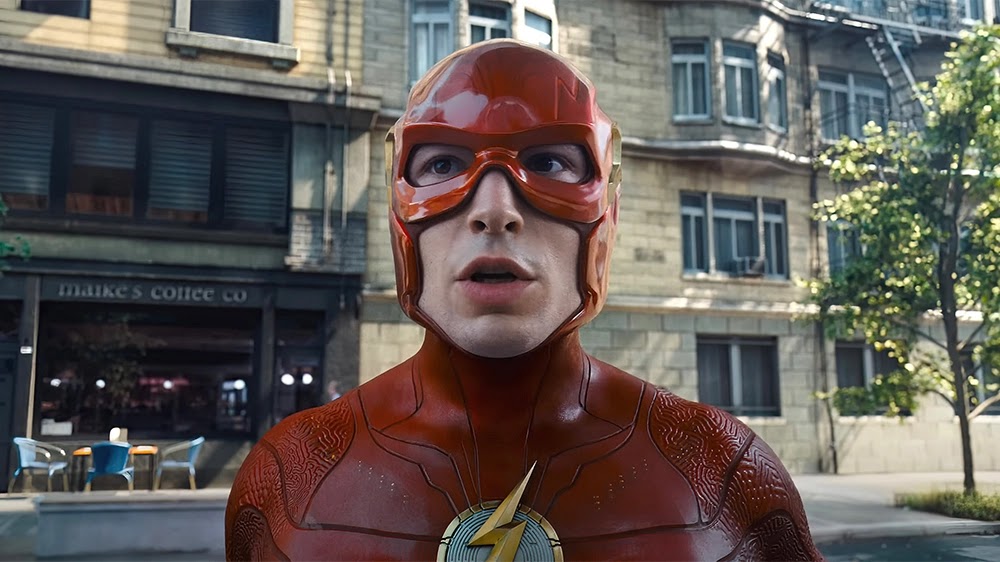
In the wake of The Flash's disappointing box office, things are looking grim on the DC front. Or at the very least, uncertain. It seems clear that audiences are not buying what DC is selling at the moment and it's unclear what's going to turn that around. What you can bank on is that WB will never throw in the towel on the DC universe. That is an IP gold mine that no studio is ever going to forsake. So no matter what kind of failures the DC universe suffers, the movies will keep on coming. It's just a matter of what the latest plan for the DCU will be. 

For long time comic fans, the great irony of DC's current movie dilemma is how badly they've botched the multiverse aspect of their universe and, more than that, how they've forfeited that space to Marvel. For years, the multiverse was DC's thing. While Marvel had one streamlined universe with one continuity, DC was the comic universe that dealt in a myriad of multitudes. To explain the aging of their characters and to explain the multiple versions of their characters, DC had a multiverse that allowed Golden Age characters to exist in their own universe and Silver Age characters to exist in theirs, with the opportunities for crossovers between the two. One of the most legendary comics in DC history is 1961's Flash #123, an issue in which readers were presented with the tale of the "Flash of Two Worlds," with present day speedster Barry Allen meeting the Golden Age Flash Jay Garrick and it was the popularity of this issue with readers that led to a series of annual crossovers between the Golden Age Heroes of the Justice Society of America, whose roster included the likes of Hourman and Dr. Fate and the present day Justice League. 

For decades, DC had used the multiverse to account for continuity errors or to simply allow alternate versions of characters to remain in play, just not within the primary universe. But by the '80s, the thinking within DC was that to compete with industry leader Marvel, they had to emulate Marvel's singular continuity and trim the fat from their universe, paring it down to just one world. So 1985's Crisis on Infinite Earths was the big move on DC's part to rid themselves of the multiversal baggage that had built up over the course of fifty years and, hopefully, make their universe more new reader friendly. It ended up being an imperfect act of housekeeping, with editorial at the time failing to make a totally clean break between the past and present of DC. Remnants of prior history survived here and there and some characters were given a fresher slate than others. But even though it was a slightly sloppy segue way from one era to the next, overall it worked and the bottom line was that readers understood that there was now one connected DC universe going forward. 

That lasted until 2011 when DC decided to reinstate the multiverse with the Flashpoint storyline. So on the publishing side, decades after changing their universe to be more like Marvel, DC decided to get back in the multiverse game. Meanwhile, in the movie and TV realm, while Phases 1 through 3 of the MCU had been very liner, moving from Point A to Point B to lay down the foundation of the MCU, going into Phase 4, the new watchword of the MCU, according to Kevin Feige, would be "multiverse." On the Sony side of Marvel, this was also true with 2019's animated Spider-Man: Into the Spider-Verse being all about the vast multiverse of Spider Heroes, including everyone from Spider-Noir to Spider-Ham. While WB/DC was still in the process of struggling to create a singular shared universe to match the MCU, Marvel was already moving on to stake their claim as the masters of the multiverse, dubbing Phase 4 "The Multiverse Saga." What historically used to be DC's domain has now become perceived by the public at large as a Marvel thing. The multiverse was something that DC chose to give up and now they're forced to play catch up. 

With Phases 1 through 3, Marvel provided a model on establishing a cinematic universe but following their example proved difficult for WB/DC. Now in Phases 4 and 5, Marvel has been showing how to establish a cinematic multiverse but, again, as it was when it came to building a linear universe, when it comes to their multiverse game, WB/DC still just wants to short cut their way to where Marvel's at without putting the same effort in. 

Marvel has staked out the multiverse front with Spider-Man: Into the Spider-Verse (2018), Spider-Man: No Way Home (2021), Doctor Strange in the Multiverse of Madness (2022), Spider-Man: Across the Spider-Verse (2023) and the Disney+ Marvel shows Loki (soon to debut its second season) and the animated What If? (also due to have a second season). They've dominated this space in a way that WB/DC is ill equipped to compete with. 

Case in point: The Flash

Even with Marvel beating them to the punch, The Flash still could have made the statement that DC has its own bragging rights to the multiverse but it did not send that message. It's not the fault of the filmmakers so much as the fault of a fickle studio demanding last minute changes. First and foremost, the problem that hinders WB/DC is that they lack the strong guiding hand that Marvel has and the willingness to stay the course and see things through. Whether that will change with James Gunn, who knows? For now, DC looks like a company that's been forced to play a weak hand. 


Aside from the lack of a clear strategy in place, in reflecting on The Flash and how it compares to the MCU's multiverse projects, the main flaw in DC compared to Marvel is how small and diminished their multiverse seems. Everything about the MCU's multiverse (and Sony Picture's part in it as well) has been about expansion. It is about opening up new possibilities, new avenues to explore, introducing new characters. DC's multiverse, on the other hand, seems like a sad wax museum. In The Flash, when Barry is seeing the various multiverse and it's just these poorly generated CGI images from DC's past, whether it be Adam West's Batman or Christopher Reeve's Superman, it gives the impression that DC's multiverse is simply about nostalgia and looking back on these inert figures sealed in amber, as opposed to Marvel's multiverse, which is about forging ahead and discovering new possibilities. 

Across the Spider-Verse makes the idea of seeing spin offs with Spider-Punk or Spider-Gwen and others a very welcome possibility. Multiverse of Madness, Loki, and What If? showed that there's endless, and endlessly surprising, variants on the Marvel universe. For its part, The Flash leaves audiences wondering "What was up with Nicolas Cage as Superman?" I say when you're trying to thrill and excite an audience on the possibilities that lie within your multiverse and you choose to waste screen time (and FX dollars) on an in-joke within an in-joke that is pitched to an incremental number of viewers - and even then is really not so much a "joke" at all but simply a reference (you not only have to know that Nicolas Cage was up to play Superman in a '90s Tim Burton movie that never happened, you also have to know that producer Jon Peters infamously insisted that he should fight a giant spider) - you're doing it wrong. 

It's even more galling that while it goes out of its way to reference a version of Superman that never even existed, The Flash completely passed on the opportunity to honor the CW's Arrowverse, which ironically actually was successful in creating a live action, interconnected DC multiverse in a way that the movies haven't been. WB/DC will of course keep trying and perhaps in the James Gunn era the potential of the DCU will finally flourish. For now, though, the DCU and its pantheon of heroes and villains are mired in a mismanaged multiverse.  

Thursday, February 2, 2023

A New World of Gods and Monsters

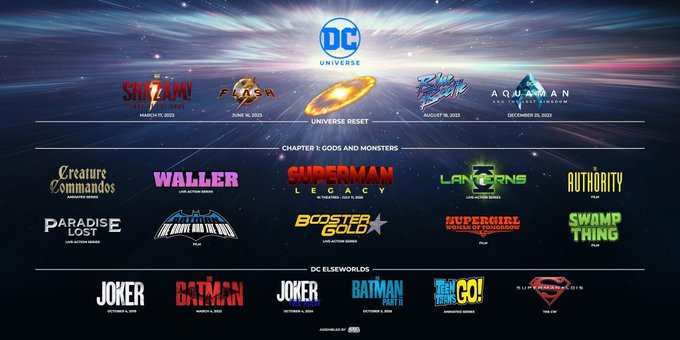
The details of the first stage of the James Gunn era of DC Films are now known with this week's announcement shedding some light on Gunn's and his co-DC Films CEO Peter Safran's plans for giving the DCU a new focus, dubbing this initial chapter as "Gods and Monsters." While the exact details of the underlying, unifying narrative are unknown, we do now know what movies and TV shows we can expect when this new era kicks off in July of 2025 with the Gunn scripted Superman: Legacy


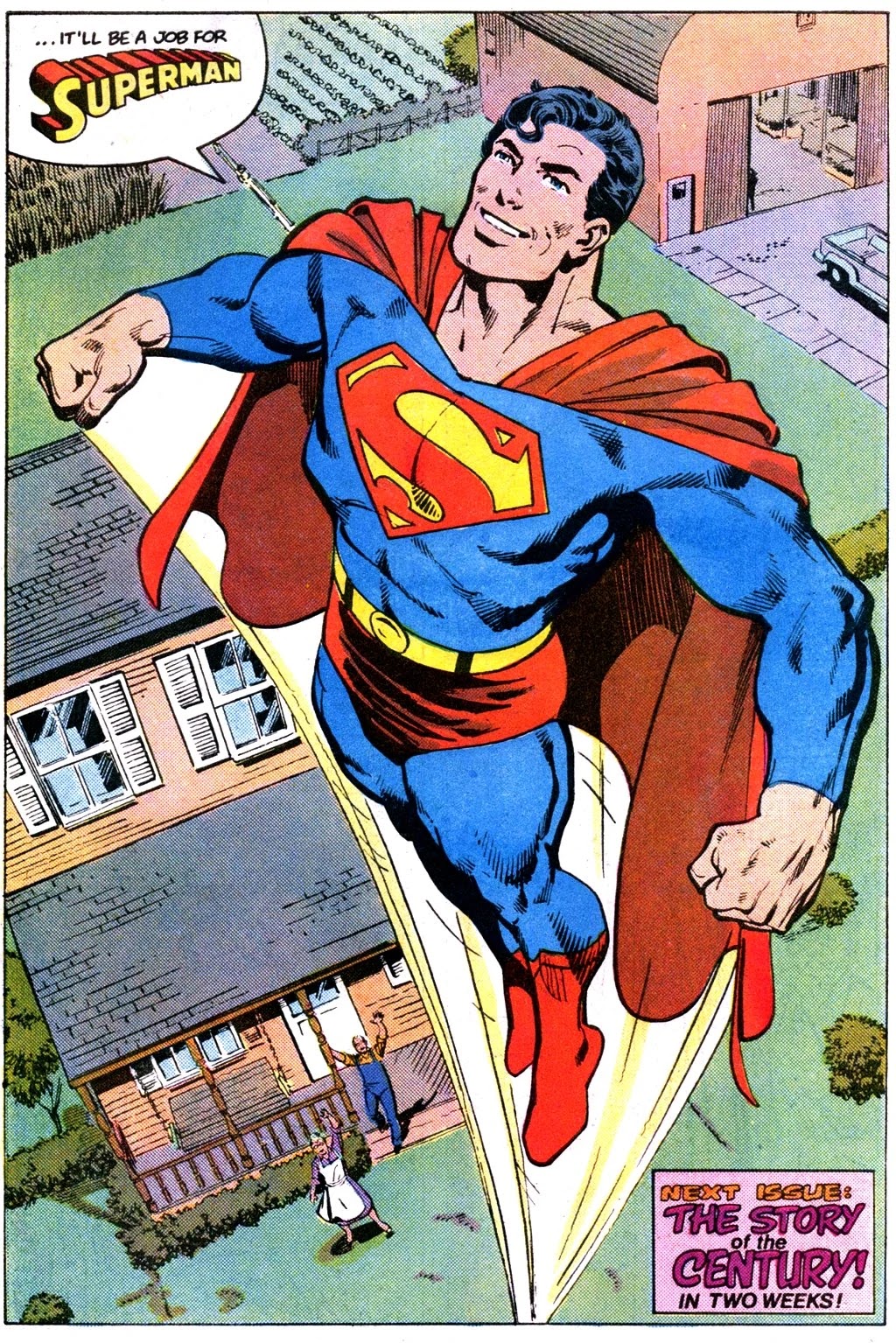
As a DC fan, my initial impression towards yesterday's announcements is very favorable. Mostly I'm just glad to see that Superman is spearheading this new era. If Gunn can bring Superman back to the screen successfully, in a way that truly honors and understands the character (like not letting him murder an opponent with his bare hands), I think the rest of his DC plans will easily come together. Superman is the linchpin of the DC Universe. Getting him right and putting him at the center of the DCU is the only way to have a solid foundation to build on. 

My main nerdy hope with Superman: Legacy - outside of wanting them to finally go deeper into Superman's rogues gallery and give those over used standbys Luthor and Zod a rest - is that I'd love to finally see Metropolis brought to life the way it should be. Metropolis should be as stylized a city as Gotham is. I imagine Tim Burton would have gone this route had he done his proposed '90s Superman movie with Nicholas Cage but that never came to be, obviously, and every Metropolis that's been on film has just been NYC or Chicago rather than the gleaming City of Tomorrow that it ideally should be. I will say I am prepared to be disappointed on this front, it won't be a deal breaker for me if it doesn't happen, but just the same here's hoping that Gunn plans to make the Metropolis skyline a unique and distinctive one. 


My secondary nerd concern is whether or not Superman will wear trunks. I know debating whether a character should be wearing their underwear over their clothes is ripe for ridicule but hey, these things do matter. For whatever reason, Batman can ditch his trunks and it's totally fine but Superman's suit never looks right without them. It's a costume so iconic that if you screw with it too much it doesn't look classic any more and above all Superman has got to look classic. In the same way you wouldn't want to mess with the design of a Coca-Cola can, because everyone knows exactly what it's supposed to look like, from the logo down to the specific shade of red, I say it's best to keep Superman looking as traditional as possible. 


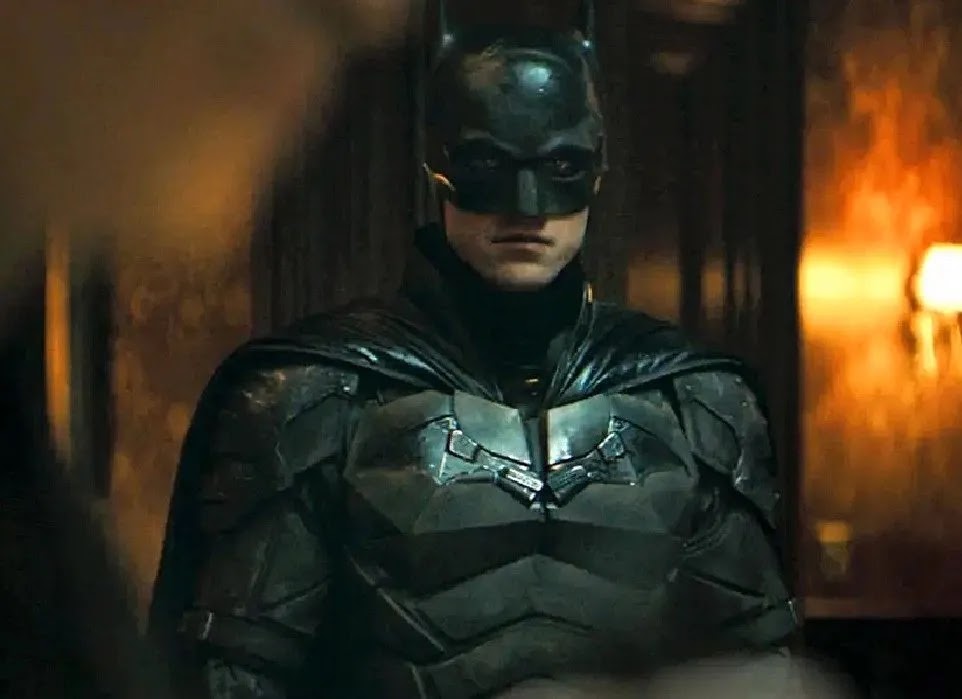
Moving from Metropolis to Gotham, it's reassuring to hear that Matt Reeves' Batman films will be operating independently of the main DCU. I was worried that they might try and fold those films into the main continuity, which I think would have been disastrous, so it's great to know that won't be an issue. Additionally, I love that we'll be getting a Brave and the Bold movie that will bring in a new Batman for the main DCU as well as introduce the broader Bat-family. And being based on Grant Morrison's Batman run, it's going to have a very different, much more overtly comic book-y, flavor than we've seen in live action till now and it'll be the first time we'll have an actually fun Batman film since the Schumacher days. As a Batman fan who laments that the character has been stuck in one groove since Batman Begins in 2005, I welcome the change of pace and the long awaited introduction of some real variety for the character. 

My one and only actual nerd nitpick among all of the new announcements is how they're using the Elseworlds banner to label stuff like Reeves' Batman and Todd Philips' Joker movies. In the comics, Elseworlds typically referred to stories that had one pivotal difference (such as "What if Superman's rocket had landed in the Soviet Union rather than Kansas?") that altered the stories that we know. In contrast, Reeves' Batman and Philips' Joker movies are just straight up multiverse tales. But I suppose the thought must have been that "multiverse" is a term that has become so associated with Marvel (ironic given that in the comics the multiverse was always a DC thing) that they didn't want to have any branding tied to it. They'll still refer to "the multiverse," sure, but in terms of marketing, having a label bearing a word that's so associated with the competition probably seemed like a bad move while "Elseworlds" is a copyrighted, DC-specific term that was right there. 

It's no big deal, of course, but I would have loved for the imprint to be used for actual Elseworlds projects. I think it would have been neat to have live action adaptations of stuff like Gotham By Gaslight and Red Son, for instance, rather than the animated adaptations that we've gotten in the past. I know that's strictly a pipe dream on my part and they'd probably never would have dropped big money into these alternate reality takes but I say it's cool to imagine if they had, don't you think? But I suppose that's just an "Elseworlds" all of its own. 

While we await the realization of all these new projects, it'll be interesting to see how the already completed DCU films due this year will set up the next chapter. In particular, I wonder how The Flash and Aquaman and the Lost Kingdom are going to tee things up and how smooth the transition will be from one era to the next. The cinematic DC universe has been defined by turmoil and instability for so long that it's exciting to think of what it's going to look like under a steady hand. 

I do have to say, though, that I feel like we've been down this road before. Back in December I wrote about the CW Special from 2016 hosted by Kevin Smith and Geoff Johns where they touted the upcoming slate of DC Films in the Snyderverse. Things seemed set in stone then too. I mean, most of the movies they were talking about were all done and ready for release. And if you watch the Special Features on the Black Adam DVD, oh boy, it's like a glimpse into an alternate universe. 

Between the time Black Adam was released in theaters in October of last year and the time the DVD came out this January, the future of the DCU that the cast was hyping in the special features had been completely erased (it's awkward and frankly a little sad to hear Dwayne Johnson earnestly say "...Building out this new era of the DC Universe is critically important to me."). I'm sure Gunn and Safran will fare better then their predecessors (no reason to think they won't) but, you know, time will tell. For now, here's to the promise of a new world of Gods and Monsters.  

Wednesday, December 21, 2022

Hey There, Bat Fans and Super Friends!


With the last vestiges of the Snyderverse due to hit theaters next year prior to whatever DCU reset James Gunn has planned, a promotional special that aired in prime time on the CW six scant years ago stands as a choice artifact of the Snyderverse era. On January 19th, 2016, ahead of the March release of BvS that year, the CW aired DC Films Presents The Dawn of the Justice League. Hosted by comic book/pop culture guru Kevin Smith with Geoff Johns, DC comic writer and Chief Creative Officer of DC Entertainment, joining him to share the latest inside info, the mission of this special was to hype the hell out of the Snyderverse, which at the time only consisted of Man of Steel


In his role as host, Kevin Smith delivers the best acting of his career, reacting to every bit of info from Johns with rapturous surprise as though he's learning about all this stuff in real time right before our eyes. Why anyone decided this was the angle they wanted Smith to play here, I don't know but for what it's worth he does his best to convince viewers that he somehow knows less about DC's upcoming films than any fan on the internet. 


Some might roll their eyes at Smith's relentless hucksterism on behalf of Warners' corporate product but I actually find his deep dedication to this infomercial endearing. Even if the surprise that he greets every announcement with is feigned, I don't feel like the enthusiasm he's expressing is a total put on. The fact is, all this stuff looked legitimately cool and you know that past being a paid shill, Smith is first and foremost a fanboy at heart and like every other fan weaned on the exploits of these characters, he truly hoped that all of these movies would be incredible.  


While some might think that viewing this special today is an opportunity to snicker at an enormous face plant (it is crazy to see so much laid out here that never came to anything - I forgot Cyborg was supposed to get a movie, for instance) it doesn't hit me like that at all. I actually find it to be more of a bittersweet thing. All involved here are, one assumes, good people (well, save for Ezra Miller) who set out to do their best and make some cool movies. It genuinely sucks that the whole thing fell apart. Is the tale of the failure of the Snyderverse a story of a short sighted corporation undermining an artist at every turn or is it that of a visionary director put in charge of a universe of characters that he didn't truly have a feel for? Depends on who you ask. A little of both, I say. But whatever your take may be, watching this special is like a rush of nostalgia for a future that never was. 


.  


No matter what lies ahead for the DC universe, even if everything James Gunn does is a rousing success, the Snyderverse will remain the preferred live action rendition of the DC Universe for some fans (and not all of them internet trolls). There's a loyal fanbase who will always see the Snyderverse as their DCU. Watching this special is a reminder that DC Films once believed it was theirs as well.