Showing posts with label Doctor Strange in the Multiverse of Madness. Show all posts

Friday, June 30, 2023

Lost in the Multiverse

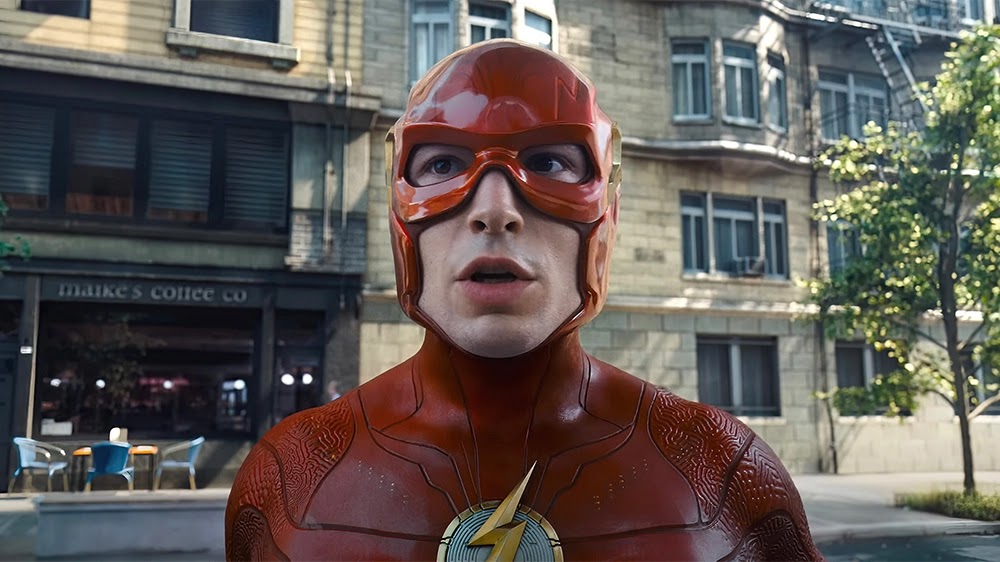
In the wake of The Flash's disappointing box office, things are looking grim on the DC front. Or at the very least, uncertain. It seems clear that audiences are not buying what DC is selling at the moment and it's unclear what's going to turn that around. What you can bank on is that WB will never throw in the towel on the DC universe. That is an IP gold mine that no studio is ever going to forsake. So no matter what kind of failures the DC universe suffers, the movies will keep on coming. It's just a matter of what the latest plan for the DCU will be. 

For long time comic fans, the great irony of DC's current movie dilemma is how badly they've botched the multiverse aspect of their universe and, more than that, how they've forfeited that space to Marvel. For years, the multiverse was DC's thing. While Marvel had one streamlined universe with one continuity, DC was the comic universe that dealt in a myriad of multitudes. To explain the aging of their characters and to explain the multiple versions of their characters, DC had a multiverse that allowed Golden Age characters to exist in their own universe and Silver Age characters to exist in theirs, with the opportunities for crossovers between the two. One of the most legendary comics in DC history is 1961's Flash #123, an issue in which readers were presented with the tale of the "Flash of Two Worlds," with present day speedster Barry Allen meeting the Golden Age Flash Jay Garrick and it was the popularity of this issue with readers that led to a series of annual crossovers between the Golden Age Heroes of the Justice Society of America, whose roster included the likes of Hourman and Dr. Fate and the present day Justice League. 

For decades, DC had used the multiverse to account for continuity errors or to simply allow alternate versions of characters to remain in play, just not within the primary universe. But by the '80s, the thinking within DC was that to compete with industry leader Marvel, they had to emulate Marvel's singular continuity and trim the fat from their universe, paring it down to just one world. So 1985's Crisis on Infinite Earths was the big move on DC's part to rid themselves of the multiversal baggage that had built up over the course of fifty years and, hopefully, make their universe more new reader friendly. It ended up being an imperfect act of housekeeping, with editorial at the time failing to make a totally clean break between the past and present of DC. Remnants of prior history survived here and there and some characters were given a fresher slate than others. But even though it was a slightly sloppy segue way from one era to the next, overall it worked and the bottom line was that readers understood that there was now one connected DC universe going forward. 

That lasted until 2011 when DC decided to reinstate the multiverse with the Flashpoint storyline. So on the publishing side, decades after changing their universe to be more like Marvel, DC decided to get back in the multiverse game. Meanwhile, in the movie and TV realm, while Phases 1 through 3 of the MCU had been very liner, moving from Point A to Point B to lay down the foundation of the MCU, going into Phase 4, the new watchword of the MCU, according to Kevin Feige, would be "multiverse." On the Sony side of Marvel, this was also true with 2019's animated Spider-Man: Into the Spider-Verse being all about the vast multiverse of Spider Heroes, including everyone from Spider-Noir to Spider-Ham. While WB/DC was still in the process of struggling to create a singular shared universe to match the MCU, Marvel was already moving on to stake their claim as the masters of the multiverse, dubbing Phase 4 "The Multiverse Saga." What historically used to be DC's domain has now become perceived by the public at large as a Marvel thing. The multiverse was something that DC chose to give up and now they're forced to play catch up. 

With Phases 1 through 3, Marvel provided a model on establishing a cinematic universe but following their example proved difficult for WB/DC. Now in Phases 4 and 5, Marvel has been showing how to establish a cinematic multiverse but, again, as it was when it came to building a linear universe, when it comes to their multiverse game, WB/DC still just wants to short cut their way to where Marvel's at without putting the same effort in. 

Marvel has staked out the multiverse front with Spider-Man: Into the Spider-Verse (2018), Spider-Man: No Way Home (2021), Doctor Strange in the Multiverse of Madness (2022), Spider-Man: Across the Spider-Verse (2023) and the Disney+ Marvel shows Loki (soon to debut its second season) and the animated What If? (also due to have a second season). They've dominated this space in a way that WB/DC is ill equipped to compete with. 

Case in point: The Flash. 

Even with Marvel beating them to the punch, The Flash still could have made the statement that DC has its own bragging rights to the multiverse but it did not send that message. It's not the fault of the filmmakers so much as the fault of a fickle studio demanding last minute changes. First and foremost, the problem that hinders WB/DC is that they lack the strong guiding hand that Marvel has and the willingness to stay the course and see things through. Whether that will change with James Gunn, who knows? For now, DC looks like a company that's been forced to play a weak hand. 


Aside from the lack of a clear strategy in place, in reflecting on The Flash and how it compares to the MCU's multiverse projects, the main flaw in DC compared to Marvel is how small and diminished their multiverse seems. Everything about the MCU's multiverse (and Sony Picture's part in it as well) has been about expansion. It is about opening up new possibilities, new avenues to explore, introducing new characters. DC's multiverse, on the other hand, seems like a sad wax museum. In The Flash, when Barry is seeing the various multiverse and it's just these poorly generated CGI images from DC's past, whether it be Adam West's Batman or Christopher Reeve's Superman, it gives the impression that DC's multiverse is simply about nostalgia and looking back on these inert figures sealed in amber, as opposed to Marvel's multiverse, which is about forging ahead and discovering new possibilities. 

Across the Spider-Verse makes the idea of seeing spin offs with Spider-Punk or Spider-Gwen and others a very welcome possibility. Multiverse of Madness, Loki, and What If? showed that there's endless, and endlessly surprising, variants on the Marvel universe. For its part, The Flash leaves audiences wondering "What was up with Nicolas Cage as Superman?" I say when you're trying to thrill and excite an audience on the possibilities that lie within your multiverse and you choose to waste screen time (and FX dollars) on an in-joke within an in-joke that is pitched to an incremental number of viewers - and even then is really not so much a "joke" at all but simply a reference (you not only have to know that Nicolas Cage was up to play Superman in a '90s Tim Burton movie that never happened, you also have to know that producer Jon Peters infamously insisted that he should fight a giant spider) - you're doing it wrong. 

It's even more galling that while it goes out of its way to reference a version of Superman that never even existed, The Flash completely passed on the opportunity to honor the CW's Arrowverse, which ironically actually was successful in creating a live action, interconnected DC multiverse in a way that the movies haven't been. WB/DC will of course keep trying and perhaps in the James Gunn era the potential of the DCU will finally flourish. For now, though, the DCU and its pantheon of heroes and villains are mired in a mismanaged multiverse.  

Wednesday, May 11, 2022

Strange Days

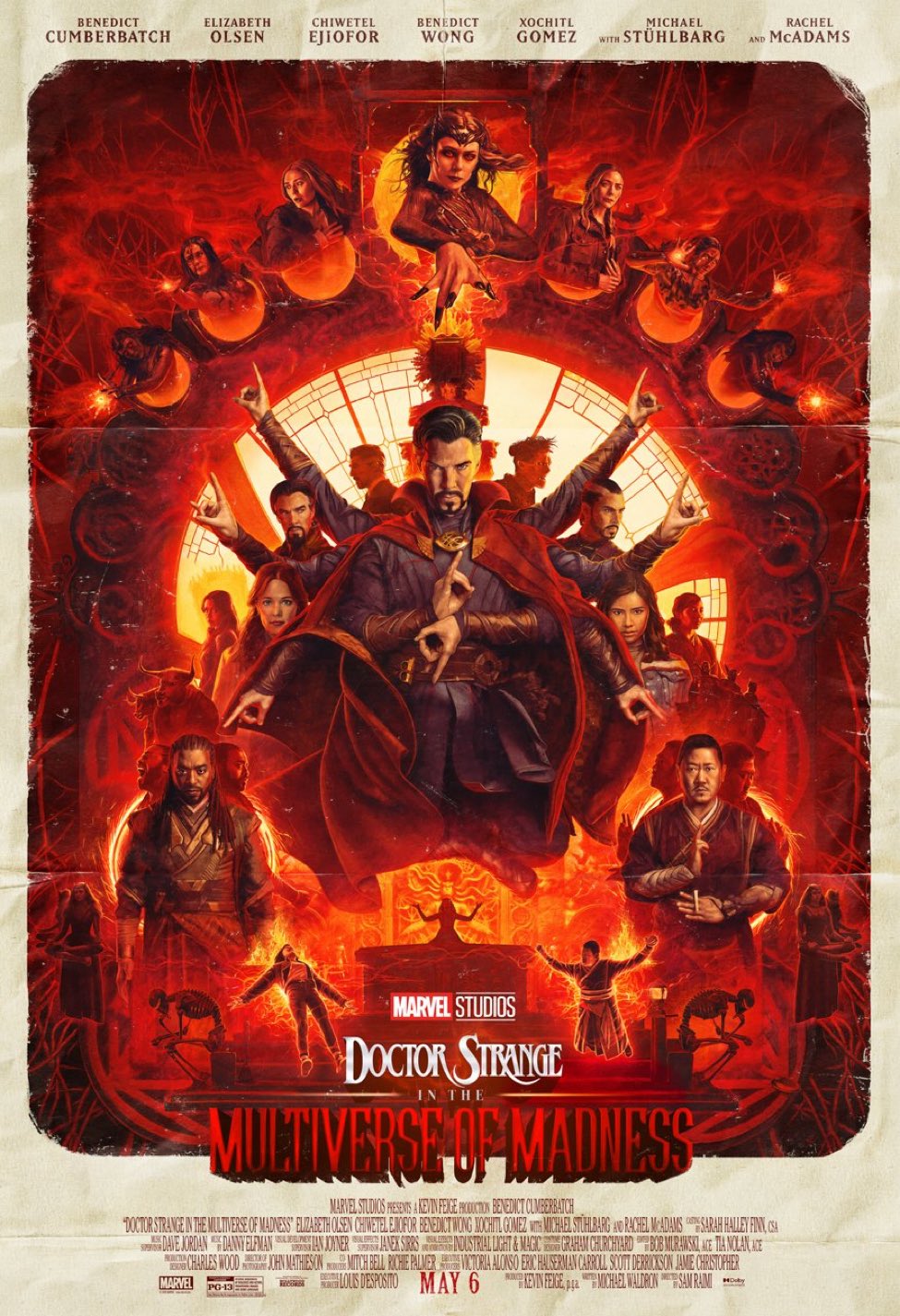
My main takeaway from Doctor Strange in the Multiverse of Madness is that it's a crime Sam Raimi has not directed a feature film since 2013's Oz the Great and Powerful. Some advance concern might have been warranted regarding how much of his own creativity Raimi would be able to bring to the MCU but right from the opening shots, it's clear that this is very much a Raimi film. Yes, of course he is obliged to keep the MCU narratives on track but that doesn't constrain or diminish his style. His visual flair and his prankish sensibilities are in full effect here. If you hear anyone try to spout some garbage about how, oh, this is like only 20% a Raimi film and 70% MCU, please disregard. Take any random minute from MoM and it is impossible to confuse it with a movie directed by anyone else. Early on, when a tentacled one-eyed monster (who looks like Shuma-Gorath from the comics but for some reason is dubbed Garnatos here) is rampaging through the streets, Raimi cuts to the monster's POV and you just know that when he conceived of this shot and tasked his FX team to create it, he described it to them as Monster Vision. It's one brief moment in the midst of a big battle but it's the sort of cool detail that no one else would have thought to include and those kind of instantly identifiable Raimi-esque touches are all over MoM. 

Storywise, there is a lot of heavy lifting to be done as this continues on from the events of Wandavision as well as carrying through ongoing threads from the original Doctor Strange and elements from the wider MCU. With all that, though, it never feels like there's massive info dumps or reams of exposition. The screenplay by Loki writer Michael Waldron is as fleet with dispensing information as possible while servicing the arcs of Strange and Wanda and newcomer to the MCU, America Chavez (the immediately charming Xochitl Gomez) as well as giving Wong (Benedict Wong) his own crucial part to play (I love, by the way, that Wong still carries the title of Sorcerer Supreme and that there's been no move to return it to Stephen, post Endgame). Is MoM still clunky at times? Yes. Could some of the character beats have landed better and some of the issues that they're dealing with been more fully explored? Also yes. All of which is simply to say, as a story, as a screenplay, this is not perfectly finessed. But it's more than fine, with Raimi's style gliding us over the bumpy parts. 

It should be no surprise that MoM will definitely lose something if a viewer is coming in cold to it, without being current on the MCU. Some will fault MoM for this but honestly, being fluent in the MCU's mythology may feel like homework for some critics but that is not the case for the wider audience. There is a ginormous global audience locked into the ongoing saga of the MCU (these are not niche movies, people!) and that audience has 100% watched Wandavision and Spider-Man: No Way Home and the original Doctor Strange and Avengers: Endgame and all the rest so acting as though there's some onus being put on the viewer to come in already knowing what these characters have gone through up to this point or that some sin is being committed against the integrity of cinema because this functions as new chapter within a larger, ongoing narrative rather than being a pristine, stand alone film is silly. We're way past the point where "how is anyone supposed to keep up with this?!" rates as a valid criticism of an MCU film. Some MCU entries are slightly more independent from the bigger story than others but this happens to not be one of those cases. MoM is not an Avengers level event but it is a sequel to several other Marvel movies and TV shows and so some previous knowledge is expected. You know, we're like fourteen years into this MCU thing now and it's all been interconnected from the start. If you're a fan, this isn't convoluted or alienating to you. No, the complexity is integral to why you're so invested in it.

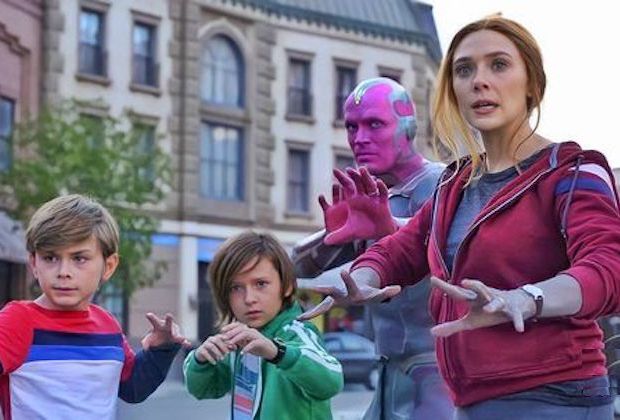
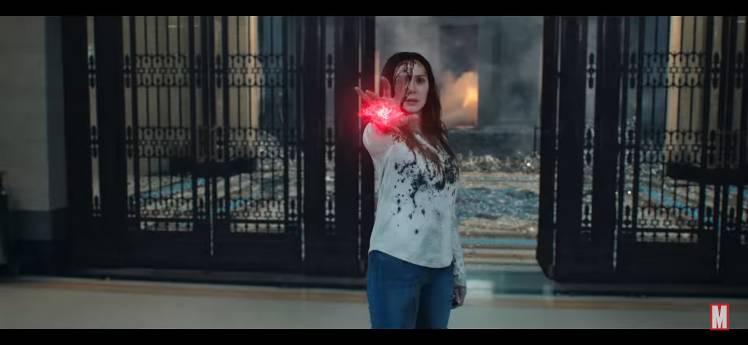
In its role as a follow-up to Wandavision is where MoM is likely to be most problematic for fans, specifically for fans of Elizabeth Olsen's Wanda. Olsen's performance is excellent but as well played as it is, the reveal that Wanda is the villain Strange must defeat, rather than a fellow Avenger that he's partnering with, will not sit well with everyone. For what it's worth, Olsen makes Wanda a splendidly fearsome, complicated villain, as dangerous as any of the heavy hitters of the MCU (and the closest we've come to seeing a Dark Phoenix style threat in the MCU, which for comic book nerds adds a cool layer to her encounter with Xavier). Waldron's screenplay makes it clear that Wanda has been corrupted by the Darkhold and that, coupled with the agonizing losses she's suffered, that her soul has been twisted. 

I think the fact that Wanda was the star of Wandavision and that Olsen was so good at letting viewers feel Wanda's pain and putting them on her side throughout that journey just made it easy for many to ignore or to not even realize how explicitly her heel turn was established there. Before that show even starts, she's already a villain. She's the protagonist but she's never a hero. Her actions are not the actions of an Avenger. She's holding an entire town prisoner, warping the reality of innocent people against their will. Life in Westview is idyllic only for Wanda. It is hell for its other inhabitants. Even Vision comes to be tormented by the facade. As much as viewers may have sympathized with her, Wanda was a monster in Wandavision and her actions in MoM are fully in line with the events of the show. Wanda caused an enormous amount of pain in Wandavision (a whole show could be done on the PTSD impact on the residents of Westview) and she never paid a price for it. She inflicts a cruel punishment on her primary adversary and flees, not to reflect on what's she's done but to develop new plans to reclaim what she lost. MoM is where Wanda finally faces real consequences. Given where Wanda's story ends up here, things look pretty final but, you know, I think it's safe to assume that it isn't. What her next step in the MCU will be, who knows, but in the comics Wanda has gone from hero to villain and back to hero a time or two so it's easy to believe that redemption is in the cards for her. Especially when her motivation going back to Wandavision is not wickedness but grief and rage.

As much as it might agitate Wanda fans to see her consumed by darkness, with them feeling that Doctor Strange has been let off easy in comparison, it seems clear that her descent provides a prescient glimpse to what Doctor Strange himself will have to contend with. In his efforts to save America Chavez and the multiverse, he takes steps in this film that, while seemingly necessary in the moment, put him on a path with dark implications. Strange does not come out of this with clean hands (he's arguably already dirty going in as his Infinity War decision that led to the Blip is called into question - was that really the only correct path to take in that moment or was it an example of Strange's unchecked arrogance, with him making a life or death choice on behalf of every living being?) and it's evident that, in time, his fate could mirror Wanda's. We see in MoM that Strange's standing as a hero is not so clear cut at all - whether in the 616 or across the multiverse - and that it is only going to become further complicated.   

Between Wanda and Strange, we see that employing magic solutions can easily corrupt and compromise their users. Beneath Raimi's giddy spook-a-blast hi-jinks, there's a sobering portrayal here of two beings who are powerful enough to change the fabric of reality but who are incapable of conjuring real happiness or healing for themselves. Strange is asked early on by the newly married Christine (Rachel McAdams) if he's happy and even though he answers in the affirmative, the movie is ambiguous right to the end as to whether he really is. It's a bold choice for a blockbuster entertainment to make, where both its hero and villain walk away from the film's events unsatisfied.

 Wanda pointedly asks Strange why, when he breaks the rules, he's seen as a hero but when she does it, she's a villain. Her question lingers over a discovery later in the film as we see that Strange's heroism in one corner in the multiverse is purely an act of myth making. Wanda is not privy to this information but it only further validates her question and underlines the unfairness of the judgement against her. While not condoning her actions, MoM does address and condemn the double standard she faces. In a reality where Strange is known by an inner circle to have gone bad, we see how that inner circle chooses to publicly perpetrate the myth of Strange as a selfless hero, making it bitterly clear that societies have no qualms about vilifying females who threaten the order of things while simultaneously providing cover for the similar crimes of men. 

The multiverse angle may not be as indulged as some would have wanted or expected (to be fair, for some fans nothing short of the appearance of every single character owned by Disney/Marvel and encores from all past MCU stars would have satisfied) but it does allow for one particularly cool sequence that is a buffet of cool cameos as the group of overseers known as the Illuminati are introduced. It may not feature every character under the banner of the Marvel Universe but the ones it does include are awfully neat to see. At its core, though, this movie is steadfastly a Strange and Wanda story and does not over-indulge in MCU Easter eggs. You get what you get but what you get is pretty awesome. The MCU has really spoiled comic book fans so some of this stuff gets taken in stride these days or met with an indignant huff of "that's all?" but it's worth appreciating just how wild some of the character appearances in MoM are (including a surprise introduction in the mid-credits tease). We truly live in a gloriously nerdy time. 

Based on where MoM leaves off, things are only going to get crazier for the MCU with the mention of "incursions" teeing up the MCU to incorporate material from writer Jonathan Hickman's massive Avengers run. How that storyline, which in the comics culminated in Secret Wars, will play out and what part Strange will play in it is something we'll see unfold over the next few years. Whereas the first three Phases of the MCU were very linear, almost rudimentary in getting us to Thanos and Infinity War, Phase 4 is already laying down multiple tracks, any of which could keep these characters busy for years to come. For awhile, it was relatively easy for comic fans to stay ahead of where the MCU was going but not anymore. While some of the storylines they're developing now can be identified, trying to anticipate how they'll advance or how they'll dovetail with each other (if some of them even will) is impossible at this point. But I think that only speaks to how Kevin Feige has become more confident and more ambitious with the MCU. The success of Phases 1-3 has only given Marvel Studios the confidence and experience and the storytelling tools to push everything further. 

Whatever is coming, a third Strange movie is absolutely going to be part of the future plans of the MCU and it would be very cool if Raimi could come back for it. I don't buy the lazy, demonstrably false complaint that there's a sameness to the MCU but I will say that few directors are able to put a such a distinctive personal stamp on any film quite like Raimi can so more of him in the MCU can only be a good thing. There's a battle sequence in MoM between Strange and one of his multiversal counterparts involving dueling musical notes that is so visually clever, so creative, and so unlike what anyone else would have conceived of that it shows (even more than the horror elements) what you gain by having Raimi as a director. Whether or not he jumps back into the MCU, I hope he finds another project to direct soon. For a filmmaker this gifted and so clearly still at the top of his game, he needs to pick up the pace from here, not slow down. MoM serves as a joyous reminder that there's no one else like him. When it comes to making movie magic, Raimi is still the sorcerer supreme.