Showing posts with label MCU. Show all posts

Wednesday, December 20, 2023

Nerd Notes: State of the MCU

One of the biggest box office narratives of 2023 as far as the entertainment press was concerned was that it was the year of superhero fatigue, with the MCU suffering an uncharacteristic failure with The Marvels. But the fact is, Marvel had a successful year overall in 2023. Any franchise that puts out three films in a year with two of them landing in the year end worldwide box office Top Ten is doing ok. For anyone to say it isn't is just indicative of the need of many to seek clicks with hyperbolic "is the MCU is dead?" headlines. Warners/DC had four flops in a row in 2023 but where were all the articles speculating whether there was even an audience for a DC reboot? Nowhere, because those wouldn't generate clicks like trashing the MCU would. It's all driven by pure cynicism. 


The box office failure of The Marvels definitely was uncharted territory for Marvel but to put things in perspective, The Marvels was a movie that was primed to fail. Setting aside the army of online misogynist trolls who were working overtime to trash it months in advance, this is a movie that, thanks to the actors strike, did not have the traditional promotional machine at its disposal. 

With the best aspect of the film being the chemistry between Brie Larson, Teyonah Parris, and Iman Vellani, the fact that this trio couldn't make the rounds on the talk show circuit and that they couldn't hype the movie before fans at conventions, really kneecapped its chances. 

Whether or not The Marvels might have performed better under more optimal circumstances, we'll never know. Maybe it would have been a flop regardless. Does that mean that superhero fatigue has finally set in? I say no. It's not as though Marvel was racking up a series of losses in 2023. Guardians of the Galaxy Vol. 3 and Ant-Man and the Wasp: Quantumania were both in the Top Ten for the year (with Quantumania beating both Fast X and Mission: Impossible domestically) as was the non-MCU Marvel film, Spider-Man: Across the Spider-Verse, so it's not as if the Marvel brand was actively turning off audiences. It's clear that if the movie is right, people will still show up. 

Comic book movies have become so pervasive that I think audiences simply are at a point where a movie needs to be perceived as special in order to get them out to the theater. In the case of Marvel, they've been facing a new challenge specific to them with the rise of Disney+. Before Disney+, there was a greater imperative for audiences to see the latest MCU entry in theaters. Now, when everyone knows that everything will hit D+ not long after its theatrical run, that drive has dissipated. In addition to that, I think the interconnectivity between the shows and the movies has generated the feeling that there's just too much work involved in keeping up even though in reality that isn't quite the case. Someone could go into any of the recent movies will no exposure to the shows and still follow them. However, as long as people believe otherwise, it presents a psychological obstacle to getting general audiences to go to the movies. 

As an MCU fan I love how the shows and movies bounce off each other now but I think adjustments are needed when it comes to the back and forth between the shows and movies. You can't reasonably ask people to pay for a streaming service just so they can watch series in order that they can go into the next movie knowing what's what. Hardcore fans are all for it, sure. More shows! More connectivity! But that's becoming a detriment to holding on to general audiences. It's one thing for the Scarlet Witch to take a detour over to Wandavision and then return to the big screen with Multiverse of Madness but when you're talking about characters that were introduced for the first time on Disney+, it's a much harder sell to get people into the theater for the follow up to stories that they didn't watch in the first place. 

There was always going to be growing pains for Marvel post Endgame, especially as they took bigger swings with weaving shows and movies together for the first time. To add an array of real world complications to those challenges, though - such as the pandemic, the writer and actor strikes and the tragic loss of Chadwick Bosemen - it's not surprising that this has been an unsteady stretch for the MCU. The thing is, though, they're in a good spot right now. The Marvels gave them their first legitimate bomb but at the same time, it tee'd up the next step in the Multiverse Saga perfectly. Along with that, Loki season 2 was the strongest MCU series so far, the conclusion of which fed into the Multiverse Saga brilliantly. The MCU is moving forward with audiences having a better sense of where things are going than they've had in awhile.  

Putting Marvel in a stronger position still is this week's news that Jonathan Majors has been dropped by Marvel following his trial. The question of whether Marvel was going to keep him on or not given his legal troubles was a point of uncertainty that has hung over the future of the MCU for months. Now it's done. While some are questioning whether this means that the character of Kang will be dropped and that Marvel's plans for AvengersThe Kang Dynasty will now be changed, I think it will simply be a matter of recasting the role. Marvel has been down this road many times, right from its earliest days. Don Cheadle took over for Terrence Howard as Rhodey. Mark Ruffalo took over for Ed Norton as The Hulk. Harrison Ford is taking over for the late William Hurt as General Ross. There's no reason why they wouldn't recast Kang. It would be ridiculous not to, especially given how integral the character is to their current plans and how much they've built the Multiverse Saga around him. Recasting Kang also presents a perfect opportunity to generate renewed buzz for a character that got off on a slightly awkward foot with Quantumania

Going into Phases 4 and 5, it was uncharted territory for Marvel in every way. Now they have a better handle on where they stand. With their only theatrical film in 2024 being Deadpool 3, they have the breathing room for whatever projects they have in place taking them through Secret Wars to be fine tuned and I definitely think that the lessons they've learned over the past few years are going to determine the shape of the MCU post Secret Wars. I believe Secret Wars was always planned to be a soft reboot of sorts for the MCU and I think the rocky reception of some Phase 4 and 5 projects will only further feed into that decision. 

I think post Secret Wars, the MCU will still be interconnected but not as intensely as it has been. I think there's going to be a greater drive towards making stand alone movies and shows and less of a shared narrative. I could be totally wrong, of course, but I can't help but think Kevin Feige and co. are going to feel the need to adjust and find a balance between satisfying the hardcore MCU fans while also not making it seem like there's no longer an easy entry point for new or lapsed fans.  

Bottom line is that the idea that the MCU is in any danger of being derailed or shut down is absurd. Adjustments will be made, focus will be renewed, but the MCU is going to - obviously - keep moving ahead. Marvel simply has too many weapons in its arsenal to not be able to rebound from any slump or setback. I mean, we haven't even gotten to the Fantastic Four or The X-Men yet - both of which are entire universes unto themselves. 

Hell, they could do a freaking Defenders movie (Dr. Strange! Hulk! Namor! Silver Surfer! Valkyrie!) and that's a whole other mega franchise for them. 

Once you've got the Defenders in play, you've set yourself up for an Avengers/Defenders War movie. As any comic book fan could tell you, Marvel has got endless cards to turn over. While it's preferable for every movie to be a hit, Marvel can afford to take a chance (a shit ton of chances, even) knowing that they always have the big guns to pull out. When you know one of the bullets in your chamber is an Avengers vs. X-Men movie, you're not sweating the failure of The Marvels.

The absolute worse case scenario for Marvel would be that they're eventually forced to stick solely to the A level characters - Spider-Man, X-Men, Avengers (a team that is fueled by its endless roster changes), Iron Man, Cap - and try and have as much of a guaranteed blockbuster every time out as they can. And if that's the worst case scenario, that's still pretty awesome. I don't think it'll ever come to that. I think they'll be able to successfully keep experimenting with introducing lesser known characters but look, if you told a Marvel fan years ago that, hey buddy, the worst you're gonna have to look forward to is a big budget Avengers or Spidey film ever year or two, they'd incredulously respond "What the hell do you mean the worst? That sounds fucking incredible!" 

So however it unfolds, here's to the future of the MCU, still the surest bet in pop culture there is. 

Friday, June 30, 2023

Lost in the Multiverse

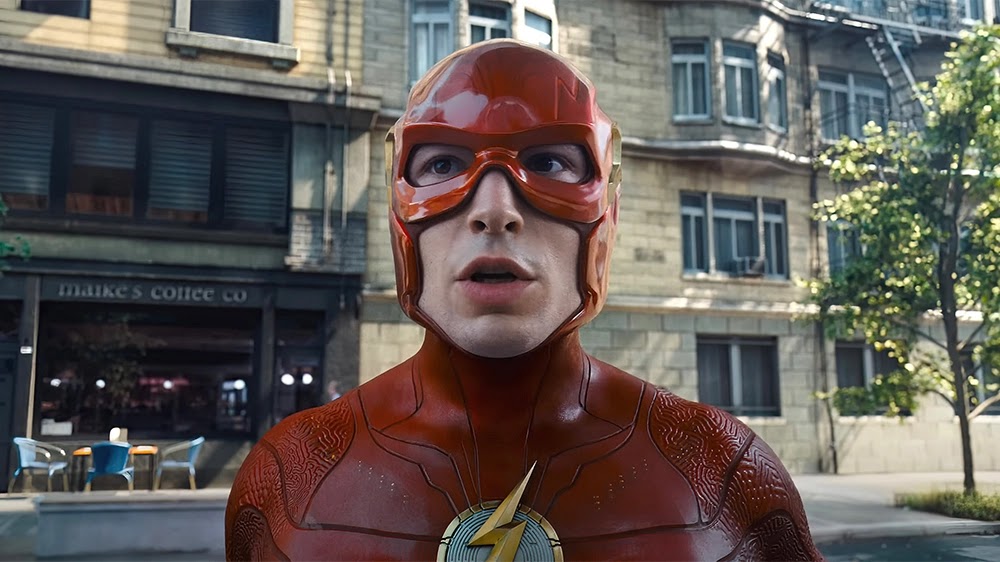
In the wake of The Flash's disappointing box office, things are looking grim on the DC front. Or at the very least, uncertain. It seems clear that audiences are not buying what DC is selling at the moment and it's unclear what's going to turn that around. What you can bank on is that WB will never throw in the towel on the DC universe. That is an IP gold mine that no studio is ever going to forsake. So no matter what kind of failures the DC universe suffers, the movies will keep on coming. It's just a matter of what the latest plan for the DCU will be. 

For long time comic fans, the great irony of DC's current movie dilemma is how badly they've botched the multiverse aspect of their universe and, more than that, how they've forfeited that space to Marvel. For years, the multiverse was DC's thing. While Marvel had one streamlined universe with one continuity, DC was the comic universe that dealt in a myriad of multitudes. To explain the aging of their characters and to explain the multiple versions of their characters, DC had a multiverse that allowed Golden Age characters to exist in their own universe and Silver Age characters to exist in theirs, with the opportunities for crossovers between the two. One of the most legendary comics in DC history is 1961's Flash #123, an issue in which readers were presented with the tale of the "Flash of Two Worlds," with present day speedster Barry Allen meeting the Golden Age Flash Jay Garrick and it was the popularity of this issue with readers that led to a series of annual crossovers between the Golden Age Heroes of the Justice Society of America, whose roster included the likes of Hourman and Dr. Fate and the present day Justice League. 

For decades, DC had used the multiverse to account for continuity errors or to simply allow alternate versions of characters to remain in play, just not within the primary universe. But by the '80s, the thinking within DC was that to compete with industry leader Marvel, they had to emulate Marvel's singular continuity and trim the fat from their universe, paring it down to just one world. So 1985's Crisis on Infinite Earths was the big move on DC's part to rid themselves of the multiversal baggage that had built up over the course of fifty years and, hopefully, make their universe more new reader friendly. It ended up being an imperfect act of housekeeping, with editorial at the time failing to make a totally clean break between the past and present of DC. Remnants of prior history survived here and there and some characters were given a fresher slate than others. But even though it was a slightly sloppy segue way from one era to the next, overall it worked and the bottom line was that readers understood that there was now one connected DC universe going forward. 

That lasted until 2011 when DC decided to reinstate the multiverse with the Flashpoint storyline. So on the publishing side, decades after changing their universe to be more like Marvel, DC decided to get back in the multiverse game. Meanwhile, in the movie and TV realm, while Phases 1 through 3 of the MCU had been very liner, moving from Point A to Point B to lay down the foundation of the MCU, going into Phase 4, the new watchword of the MCU, according to Kevin Feige, would be "multiverse." On the Sony side of Marvel, this was also true with 2019's animated Spider-Man: Into the Spider-Verse being all about the vast multiverse of Spider Heroes, including everyone from Spider-Noir to Spider-Ham. While WB/DC was still in the process of struggling to create a singular shared universe to match the MCU, Marvel was already moving on to stake their claim as the masters of the multiverse, dubbing Phase 4 "The Multiverse Saga." What historically used to be DC's domain has now become perceived by the public at large as a Marvel thing. The multiverse was something that DC chose to give up and now they're forced to play catch up. 

With Phases 1 through 3, Marvel provided a model on establishing a cinematic universe but following their example proved difficult for WB/DC. Now in Phases 4 and 5, Marvel has been showing how to establish a cinematic multiverse but, again, as it was when it came to building a linear universe, when it comes to their multiverse game, WB/DC still just wants to short cut their way to where Marvel's at without putting the same effort in. 

Marvel has staked out the multiverse front with Spider-Man: Into the Spider-Verse (2018), Spider-Man: No Way Home (2021), Doctor Strange in the Multiverse of Madness (2022), Spider-Man: Across the Spider-Verse (2023) and the Disney+ Marvel shows Loki (soon to debut its second season) and the animated What If? (also due to have a second season). They've dominated this space in a way that WB/DC is ill equipped to compete with. 

Case in point: The Flash

Even with Marvel beating them to the punch, The Flash still could have made the statement that DC has its own bragging rights to the multiverse but it did not send that message. It's not the fault of the filmmakers so much as the fault of a fickle studio demanding last minute changes. First and foremost, the problem that hinders WB/DC is that they lack the strong guiding hand that Marvel has and the willingness to stay the course and see things through. Whether that will change with James Gunn, who knows? For now, DC looks like a company that's been forced to play a weak hand. 


Aside from the lack of a clear strategy in place, in reflecting on The Flash and how it compares to the MCU's multiverse projects, the main flaw in DC compared to Marvel is how small and diminished their multiverse seems. Everything about the MCU's multiverse (and Sony Picture's part in it as well) has been about expansion. It is about opening up new possibilities, new avenues to explore, introducing new characters. DC's multiverse, on the other hand, seems like a sad wax museum. In The Flash, when Barry is seeing the various multiverse and it's just these poorly generated CGI images from DC's past, whether it be Adam West's Batman or Christopher Reeve's Superman, it gives the impression that DC's multiverse is simply about nostalgia and looking back on these inert figures sealed in amber, as opposed to Marvel's multiverse, which is about forging ahead and discovering new possibilities. 

Across the Spider-Verse makes the idea of seeing spin offs with Spider-Punk or Spider-Gwen and others a very welcome possibility. Multiverse of Madness, Loki, and What If? showed that there's endless, and endlessly surprising, variants on the Marvel universe. For its part, The Flash leaves audiences wondering "What was up with Nicolas Cage as Superman?" I say when you're trying to thrill and excite an audience on the possibilities that lie within your multiverse and you choose to waste screen time (and FX dollars) on an in-joke within an in-joke that is pitched to an incremental number of viewers - and even then is really not so much a "joke" at all but simply a reference (you not only have to know that Nicolas Cage was up to play Superman in a '90s Tim Burton movie that never happened, you also have to know that producer Jon Peters infamously insisted that he should fight a giant spider) - you're doing it wrong. 

It's even more galling that while it goes out of its way to reference a version of Superman that never even existed, The Flash completely passed on the opportunity to honor the CW's Arrowverse, which ironically actually was successful in creating a live action, interconnected DC multiverse in a way that the movies haven't been. WB/DC will of course keep trying and perhaps in the James Gunn era the potential of the DCU will finally flourish. For now, though, the DCU and its pantheon of heroes and villains are mired in a mismanaged multiverse.  

Wednesday, May 31, 2023

Are You Not Ant-ertained?

As we all know, Quantumania did not sweep the nation, much less the world, when Ant-Man and The Wasp: Quantumania was released in theaters this past February. After a record breaking opening weekend that set a new high for the franchise, it quickly dropped off and, while it wasn't exactly a box office failure, it was certainly a surprising box office disappointment in terms of the MCU.

While many wanted to ascribe its weak box office performance to "superhero fatigue," I think it's been proven time and again that "superhero fatigue" is an imaginary phenomenon. Audience respond to films on an individual basis, not on grounds of their genre. So why was Quantumania about as welcome as ants at a picnic? This wasn't just a movie that was tepidly received, it was vilified. 

Aside from the fact that the internet occasionally loves to dog pile on certain films, and that kind of hostility can take on a life of its own, I think the unhappiness with Quantumania mainly comes down to two different aspects. First and foremost, as much as some enjoyed the deliberate change of pace for the series and the ambitious attempt by director Peyton Reed to make Quantumania an entirely different type of Ant-Man film, I think that's exactly what most audiences didn't like about it. 

What sold the first Ant-Man was the shot in the trailer of Thomas the Train Engine bearing down on Yellowjacket. That specific shot, more than anything else, is what really got audiences on board with the whole Ant-Man concept. Having fun with the scale of ordinary objects was the primary hook of those first two films and taking the real world out of the equation in Quantumania removed the element that had drawn viewers to Ant-Man in the first place. Putting Scott and the rest of the Ant Family into a world where nothing is recognizable just isn't as appealing to viewers as, say, watching a car chase through city streets where the twist is that all the vehicles are shrinking and enlarging. 

It also didn't help that having the movie take place in the Quantum Realm meant Scott's crew had to sit this one out and an Ant-Man movie without Michael Pena's Luis just isn't the same. And although David Dastmalchain's vocal performance as Ved was a highlight, it wasn't the same as having him back as Kurt. The first two Ant-Mans boasted one of the most entertaining supporting casts in the MCU so having those characters not appear was just another thing working against it. 

The second aspect that I believe made it hard for Quantumania to win over audiences was the fact that it was the first big movie in theaters after Avatar: The Way of Water. Both films took place almost exclusively in a CGI created alien environment and the bottom line is that the Quantum Realm could not compete with the ground breaking spectacle of Pandora. Maybe if there'd been more of a buffer between the two movies it wouldn't have mattered but having Quantumania arrive directly on the heels of Way of Water made the comparisons inescapable. While the FX of Quantumania looked just fine by normal standards, I think with Way of the Water so fresh in viewer's minds, there was no way for Quantumania to not hit viewers as being a major downgrade. No shame in being owned by Cameron, though, I say.  

Personally I really enjoyed Quantimania. As a lighthearted, family friendly adventure, it gave me happy flashbacks to a specific style of fantasy/sci-fi film that were Saturday matinee staples of my '70s childhood, like The Land That Time Forgot, At The Earth's Core and The People That Time Forgot.
 

Like Quantumania, these were films with protagonists who found themselves thrust into strange and savage alien environments in which they had to be resourceful and find allies among the local tribes and battle the challenges of the weird worlds they find themselves in. Those '70s films were primarily silly affairs but they had an endearing, sweet natured sincerity to them, which Quantumania shares, along with their B-movie spirit. Quantumania may not have been what most audiences were looking for but I can say that right from the start, it kept me highly antertained.   

Wednesday, May 10, 2023

Fatigue and Fandom and the Future of the MCU

Whether it be in the Marvel Universe of the 616 or that of the MCU's Earth-199999, Uatu of The Watchers is a figure that sees all, knows all and perceives all concerning the various branching realities that lead to consequences both good and bad. While we can't have Uatu's clarity of vision, we can still play armchair Watchers ourselves and try and divine the possible paths ahead for the MCU. 

With the Phase 5 releases of Ant-Man & the Wasp: Quantumania and Guardians of the Galaxy Vol. 3 not performing at or above the out sized expectations set by some previous MCU releases, the cries of "superhero fatigue," which have been heard since the early '00s, are once again being thrown around in the same old kneejerk fashion. To that, let's say first that anyone who would think that the MCU needed to or feasibly could sustain the same momentum of the Infinity War/Endgame era in order to prove its viability is not a serious commentator on pop culture trends. You can handily disregard any box office pundit who expresses faux concern at the fact that a cinematic universe now in its fifteenth year and that currently encompasses thirty two films along with eight television series (far more than that if you consider series like Agents of S.H.I.E.L.D., Agent Carter and the Netflix shows to be in MCU continuity) and two Special Presentations is going to experience peaks and valleys of viewer interest. 

Yes, Avengers: Endgame represented a peak for the MCU. But getting to that point was the result of eleven years of build-up over the course of twenty one films. In a pop culture world where fads and trends quickly go in and out of fashion, the fact that the MCU was able to hold the level of engagement it did for as long as it did is extraordinary. To try and keep the audience's interest at that same peak level would be impossible. While hardcore fans will continue to stay engaged, a segment of the broader audience is naturally going to step back a bit. They're either going to get off the train altogether for a time or they're just going to become more selective about what specific aspects of the MCU still excite them. The MCU can continue to be massively successful for awhile without matching the high of Endgame

This is a cycle that the comics have experienced for decades, the ebb and flow of sales in relation to big events and reboots and so on. Some readers who have ditched comics for a time will jump back on board when some line wide event happens that calls upon the shared might of the Marvel universe to rally against an opponent of singular power. Or when a superhero team gets a spiffy new line-up, or when a hero gets a new costume or a power upgrade or a new #1 issue looks like an appealing point of re-entry. This is the dynamics that we're going to see mirrored in the MCU going forward. It's going to experience ebbs and flows of interest. And that's ok. It shouldn't be treated as a case of the sky falling when a new MCU movie doesn't break box office records. 

We might be at a point where every new MCU release isn't necessarily going to drive the same stampede to the theater but that said, it's also clear that there's a level of hardcore interest that remains locked in and, as the Multiverse Saga continues, it's just going to be a matter of getting the broader audience back on board for the bigger swings. Some might choose to sit out this movie or that in the post Endgame era but, just as with the comic crowd who might wait for an event to draw them back in, if these lapsed viewers see something that piques their interest, they'll have a renewed itch to check out what's new in the MCU. 

The biggest issue Kevin Feige is going to have to contend with going forward in regards to keeping a wider audience hooked is determining how much having a shared universe is both a selling point and a hindrance. Prior to Phase 4, there was a linear simplicity to following the MCU. It was one film and then another, one building block on top of the other, and the trajectory of each Phase was simple for a mainstream audience to understand. 

Phase 1 built up to the forming of The Avengrers and then Phases 2 and 3 were about the emerging threat of Thanos, the search for the Infinity Stones and the ramp up to Infinity War. It's with Phase 4 that things became much more complicated, to the delight of many fans but to the frustration of casual viewers who haven't been able to easily wrap their heads around Where It's All Going. 

Adding to that sense of complication and confusion is the fact that now there are a multitude of TV shows and specials that inform the movies and vice versa. If following the movies was becoming a hardship for some viewers, the addition of the Disney+ shows has made it feel impossible. It didn't help that due to the delays caused by the pandemic, Phase 4 crammed seven movies, eight shows and two specials into two years. That's a lot. For fans, it's a feast. For less dedicated viewers, I think it's been overwhelming and off-putting - especially when it's difficult for them to determine what the road map ahead is.

Comic fans naturally have a better sense of where concepts like "incursions" are going to lead as the Multiverse Saga continues but for non-nerd viewers, watching a lot of the Phase 4 and 5 content likely feels like running into a wall of gobbledygook. Fair enough, I suppose, even though there's really no more gobbledygook at play here than there was during the Infinity Saga. 

Once all the pieces start to fall into place, confusion will surely give way to a sense of "oh, so that's where all this was going" as the big picture emerges (Yes, we'll get back to dealing with that Celestial sticking out of the Indian Ocean. No, the matter of Doctor Strange's third eye hasn't been so easily resolved.) but we're not there just yet.     

Being a shared universe has been the MCU's defining characteristic. It's the quality that other studios have tried (and largely failed) to emulate. But as we pass the fifteenth anniversary of the MCU, the question is at what point does a universe that encompasses as much material as the MCU does become too daunting for some viewers? Its interconnectivity has been the MCU's strength but will it turn into a liability? At what point does the MCU's continuity represent too big of a buy in? 

When you look at the massive success of recent films like Top Gun: Maverick, Avatar: Way of the Water, and Super Mario Bros., it's easy to see there's a hunger among audiences for sharply made pop entertainment that requires minimal investment in a larger world. No one had to brush up on their Top Gun or Avatar knowledge to enjoy their sequels and even if they had, we're talking about one movie to get up to speed, not a couple of dozen or more. If there's one major factor in any downturn of audience interest in the MCU, it's likely the perception that it requires more attention than many viewers are willing to keep giving it. 

Whether the MCU actually requires that much attention, however, is debatable. I think, as with the comics, it's easy to pick and choose what interests you. No comic fan reads every comic that Marvel publishes every month and yet it's not a cause for confusion on the part of readers. You can focus on whatever characters that appeal to you and not need to know the details of every other narrative, or be familiar with every corner of the 616. Same with the MCU. You don't have to follow it all to enjoy whatever you do choose to check out. That said, it is true that the movies are now serving not just as sequels to previous films but they're also serving as continuations of the TV shows. Doctor Strange in the Multiverse of Madness isn't just a follow up to the first Doctor Strange, it's also a follow-up to Strange's appearances in Infinity War and Endgame and on top of that it's also a sequel to Wandavision. Similarly, this November's The Marvels isn't just a sequel to Captain Marvel but it's also a continuation of Monica Rambeau's story from Wandavision and Kamala Khan's from Ms. Marvel. It's hard to make a case that the MCU is new viewer friendly when in most cases it relies on the audience having made an investment in these characters across both film and TV. For MCU fans, this is an enticement not a deterrent but at the same time it's hard not to sympathize with the casual viewer that just wants to give two hours or so of their time to a movie and not have to be caught up on maybe twenty hours of material before hitting the theater on a Friday night. 

It's going to be interesting to see how Kevin Feige deals with this issue as time goes on. Clearly there is a commitment to keeping the present continuity going through Avengers: Secret Wars at least. The Multiverse Saga is well in progress and I don't think anything, box office wise, is going get that off track. The MCU is still racking up hits post Endgame. In some cases, some of their biggest to date so the path through Phase 5 and 6 seems safe. But after that, what then? Avengers: Secret Wars will be the fortieth MCU movie by that point. That's mind boggling to consider. It used to be that for a movie series to go past four or five entries was a sign that it was probably getting long in the tooth. The Fast & Furious franchise is going to be wrapping things up with its tenth and eleventh installments. So to think about the MCU at forty interconnected movies plus however many TV series by then, you have to wonder: at what point does doing a reset become a necessary move? 

In the comics, the 616 has continued unbroken since its inception and will likely continue as such on into eternity. That's a key to its success, the commitment to one ever-expanding narrative in which continuity matters (even if it has to be occasionally fudged). But comics are a very different medium than film. With characters made of pencil and ink, they can remain at their ideal age forever, can die if the story demands (only to return renewed and refreshed!) and so the task of keeping that universe intact is much easier. Movies are totally different. Actors age, they move on to other projects, and the movie going audience also shifts in ways that make maintaining a single continuity and having the audience stay invested in it over the course of ten, twenty years or more much more difficult. When Secret Wars comes out, if it stays on schedule, not only will it be the fortieth MCU film, but by 2026 we'll be getting very close to the 20th anniversary of the MCU itself. 

You can say that, well, Star Wars is well past forty years already and fans are still invested in that universe but it's also true that there's much less of a buy in to Star Wars. You've got three trilogies and two side films at this point. So, a mere eleven movies since '77. In contrast, there's been nine MCU films just since 2021. And yeah, you could point to the many Star Wars shows that have emerged over the past few years and the animated ones that have been popular as well but I don't think most audiences look at most of the SW material that exists beyond the movies as being essential to their ability to enjoy a new movie.

Then you have long running franchises like Bond and Godzilla but in both those cases, even though these franchises go back to the fifties and sixties, there's no obstacle to just jumping on board with a new entry. There's been 37 Godzilla movies to date (with a new one from Toho due this year) and 27 Bond films (if you count 1967's Casino Royale and 1983's Never Say Never Say Never Again) but with minimal continuity between them. All you need to be up to speed on going in is that Bond is a secret agent and Godzilla is a giant lizard. That's it. Now imagine if the Godzilla series had been telling one long narrative since 1954. On the one hand, I say that'd be pretty cool. On the other, it would have required an insane amount of coordination over the years on the part of studios and filmmakers as well as an uncommon level of commitment on the part of the audience. That we'll still have MCU movies in another twenty or thirty years seems certain to me. The question is whether they'll still be telling one big interconnected story by then. 


What I'm wondering in regards to the MCU is whether Secret Wars will be used as a reset point for the universe. In the comics, the Jonathan Hickman 2015 Secret Wars series saw the 616 destroyed and reformed. If the movie follows suit, it would be the perfect opportunity to start over while still preserving the previous continuity. Whatever new Marvel U that emerges in the wake of Secret Wars could acknowledge the existence of the previous one and retain certain aspects of it while also allowing for a square one reset. There could be a new Tony Stark, a new Steve Rogers, a new T'Challa even. The opportunity to start anew could also allow for the X-Men to be a part of the new MCU from the start. It could also allow for a young Peter Parker to be there from the beginning as opposed to joining midway in. That aspect could be tricky as we don't know what path the new set of Spidey films will be taking and how tightly they'll line up with the MCU. I don't think Sony or Marvel has any desire to shuffle Tom Holland off the stage too quickly but at the same time a reset would be the perfect time for a recast.
 

Whether any of this will happen is anyone's guess, of course. This is nothing but pure fan speculation on my part but I have to imagine that Kevin Feige is thinking along these lines. At the very least, he's got to be considering all the options of how to maintain a shared universe while still making it accessible to a wider audience that can't help but become a bit indifferent to it as it grows past the point where it's easy for casual viewers to follow. 

It's possible that overcoming that obstacle might not require a reset at all. While a reboot could be on the horizon, I truly feel like we've just seen the tip of the iceberg when it comes to the ongoing MCU narrative. I mean, the scope of Secret Wars is going to be so massive it will dwarf Infinity War/Endgame. I would be surprised if Secret Wars wasn't a two part film with the first film ending not with half the population of the universe turning to dust but the whole damn multiverse itself fading into oblivion (although I admit that this might be a beat too similar to Infinity War to go with) and the universe not being restored until Part 2. 

If they follow Hickman's Secret Wars from the comics, between the two films, we could have a whole run of movies and shows that take place in a "Battleworld" that encompasses many different regions that reflect the various aspects and genres of the Marvel universe, from sword and sorcery to Westerns to magic to mutants to high technology. Upon a reassembling of the MCU, if the previous continuity remains intact, there's so much that's been laid down that is still there to follow up on. 


We could eventually have the Defenders on the big screen, Marvel's contentious, oddball answer to The Avengers, compromised of Hulk, Namor, Silver Surfer, Doctor Strange and Valkyrie. And if there's a Defenders, it's inevitable that we'll have an old school Avengers/Defenders War. There's also the potential still there for a World War Hulk movie (even more so should Harrison Ford's Thunderbolt Ross become Red Hulk). And with Kate Bishop, Kamala Khan, America Chavez, Cassie Lang, Billy Kaplan and Riri Williams all in place there's a Young Avengers team and/or Champions team ready to go. There's also a street level aspect to the MCU that has barely been touched on that could possibly be the focus of the next Spider-Man film if the likes of Daredevil, Punisher and Jessica Jones get involved. And we haven't even gotten to the Fantastic Four or the X-Men yet. Both of which represent huge entire universes unto themselves. 


In addition to all that, I think it's inevitable that once the X-Men are established, that an Avengers vs. X-Men movie will be in the cards. How could they not go with that? You think Endgame was big? Please. An AvX movie would handily crush it. It'd make Civil War look like a playground squabble.   


People can talk about superhero fatigue all they want but the fact of the matter is, the MCU isn't going anyplace. Whether or not there will be some course correction here and there, the idea that the MCU might end is ridiculous. Warners has been floundering with their DC universe for over ten years now with no talk of throwing in the towel, despite all the mixed results. So if anyone thinks that failing to break box office records with each new release, while still being successful, is going to lead to Disney and Marvel giving up on the MCU, that person is nuts. I'm telling you now, strap in for years and years more of the MCU. The option for individual viewers to get off the ride is always there but people shouldn't confuse whatever personal apathy they might feel with the reality that the MCU is not going anywhere. It will be up to Kevin Feige and his creative collaborators to make the shared universe aspect of the MCU feel like an asset rather than an albatross if they choose not to ever hit the reset button but I expect everyone involved will be more than up for that challenge. 

If anything, I think it's fair to say that in another ten years or so we might look back at this era as the point when the MCU was just getting started.