Sunday, June 12, 2022

If It Bleeds, We Can Kill It: Predator at 35

In the summer of 1987, Predator was the ultimate rumble in the jungle. Hard hitting pulp sci-fi guided by the sure hand of director John McTiernan, Predator surrounded peak '80s Arnold Schwarzenegger with a crew of guys - Carl Weathers, Jesse Ventura, Bill Duke and Sonny Landham - who might not have been able to match him muscle for muscle but were still convincingly tough. Shane Black and Richard Chaves filling out the rest of the team, not so much, but you gotta have a couple of normal dudes in there.

Released on June 12th, 1987, the story of Predator, with its screenplay penned by brothers Jim and John Thomas, put a team of bad asses deep in a Central American jungle where they unexpectedly found themselves up against a star-spawned adversary so proficient it could take 'em out one by one as easily as Jason slaughtering his way through a bunch of camp counselors. If you think of Predator as essentially a sci-fi slasher, with its mounting body count (and shots from the killer's POV) and its series of gory, creative deaths (far bloodier than the late '80s Friday sequels were allowed to be), then Schwarzenegger's cigar chomping Dutch is its Final Girl. 

He's the last survivor who has to prove himself to be pluckier and more resourceful than all the characters that have fallen before him in one final, do or die battle. 

In true Final Girl fashion, Schwarzenegger's Dutch gears up for his third act showdown by elaborately booby trapping the jungle in a way that would make Nightmare on Elm Street's Nancy Thompson proud. In the end, both of them are operating from the same playbook. Nancy sets up Freddy to take a sledgehammer to the gut while Dutch tricks the Predator into getting a log dropped on his head. 

When it was released in 1988, McTiernan's Die Hard was praised for subverting the macho cliches of '80s action cinema, with Bruce Willis' John McClane painfully bleeding his way through his face offs with Hans Gruber and his band of terrorists rather than breezing through them but I say McTiernan had already been breaking down those cliches in Predator. The whole movie is about how empty and ineffectual macho bullshit is. One by one these tough guys get taken out as their advanced weapons prove to be completely useless and most of them don't go out stoically but instead die screaming. Predator is very clear about the fact that none of the stuff that usually wins the day in action movies counts for shit. 

After having Dutch's team in full swagger mode in the first act, having them spouting lines like "I ain't got time to bleed," McTiernan takes the wind out of all their smirking machismo by having the Predator make quick work of them. 

Predator is typically perceived as a celebration of male bravado but it is not that at all. McTiernan ruthlessly torpedoes the cartoonish bluster of these characters. Jesse Ventura's Mac gets his chest blown out before he even has a chance to give the Predator a taste of Old Painless. When Sonny Landham's Billy decides to stand alone in a mano a mano confrontation between himself and the Predator, McTiernan doesn't even honor this encounter by showing it. Instead all we get is Billy's off-camera scream. That jacked arm of Carl Weather's Dillon that greets Dutch's handshake? It ends up dismembered, lying on the floor of the jungle, firing off rounds into the dirt. And although Dutch ultimately does win, he isn't wrapped in glory at the end. Instead he's covered in ash. 

As designed by FX legend Stan Winston (and as worn by Kevin Peter Hall both here and in Predator 2), the Predator suit proved to be instantly iconic. I wouldn't have thought that dreadlocks would look right on an alien but as soon as you see the Predator you know that Winston's instincts were spot on, right down to him wisely incorporating his buddy James Cameron's casual mention that he always thought it'd be cool to see a creature with mandibles. When James Cameron says "Hey, you know what'd be cool?" it definitely pays to listen. 

Given how well McTiernan set this franchise up for success, I think it's crazy that he never returned to the series. I mean, if Ridley Scott could come back and do a couple more Aliens, why not McTiernan on Predator? Maybe the ultimate answer to that is, well, he went to jail but to that I say "yeah but he got out" and, you know, a lot of stuff can be overlooked for the sake of the Predator.
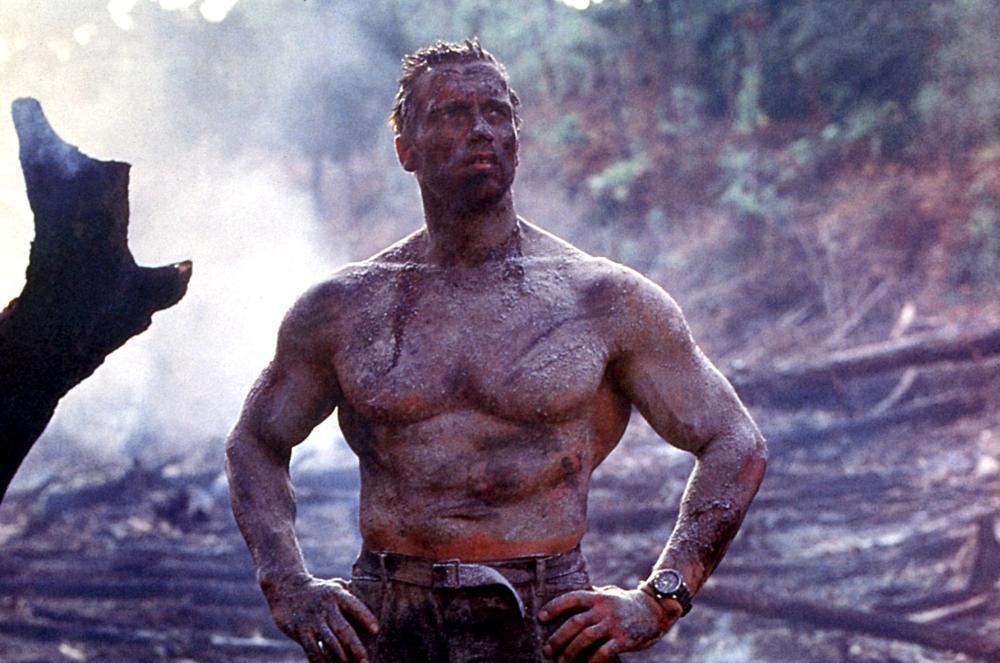
I think it's interesting, too, that Schwarzenegger never came back. This could have been his franchise, if he wanted it to be. It was definitely his name that sold the original but he just moved on and ultimately I think that was to the series' benefit. Even though it's easy to imagine all kinds of sequel scenarios in which Dutch returns and has to gather another group of guys to take out more Predators or he starts working with the government to advise them on combating this alien threat or even to have Dutch really go on the offensive and lead a Space Force back to the Predator's home world, Schwarzenegger was out after the first film and I think that only helped the Predator franchise to thrive. 
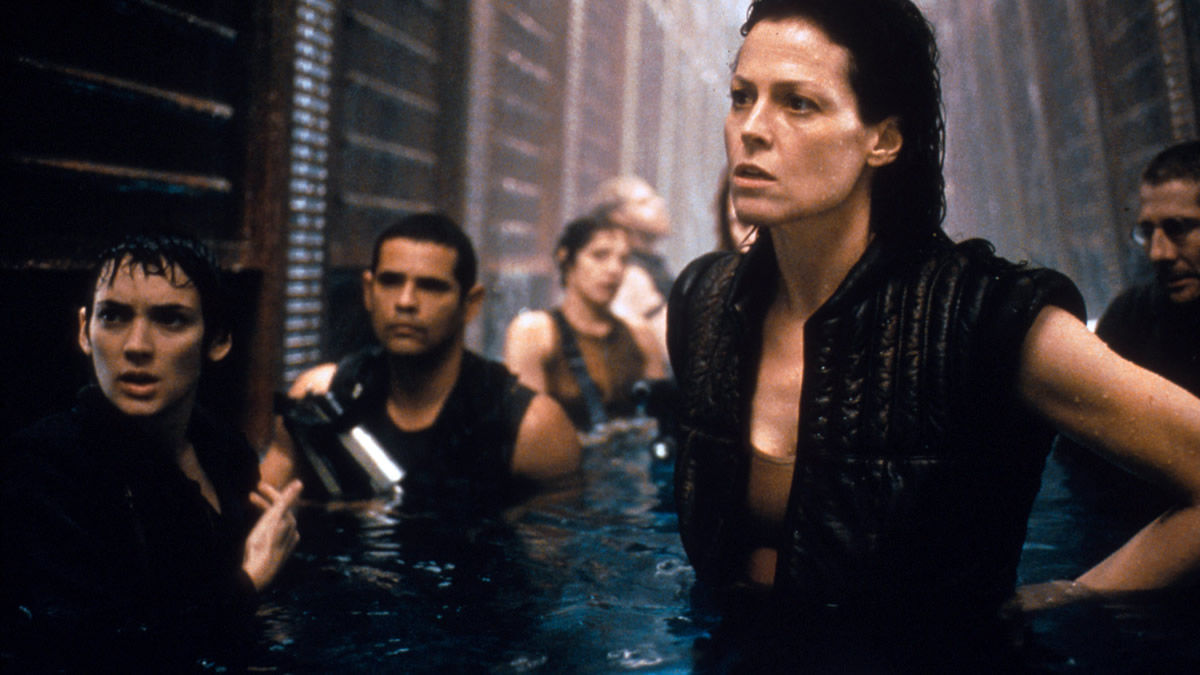
The biggest problem with the Alien series is that they kept Sigourney Weaver around way too long. Coming back for Aliens, fine, but after that they should have moved on. The studio and the producers got hung up on the idea that Sigourney was what was driving the franchise, not the concept of the Aliens themselves and that ultimately hurt the series. With Predator, the Predators have always been the star. Going back to the idea of the first movie being a sci-fi slasher, the Predator sequels have been like Friday the 13th's in which every movie presents a fresh slate of victims for the Predators to eliminate in gruesome fashion. With the Predator, it's all about the hunt and the sequels, despite taking place in different environments (or even different time periods), have all followed the formula of Predator vs. Prey that the original established so perfectly.  

So Happy 35th, Predator. You're one classic motherfucker! 

Saturday, June 11, 2022

His Adventure on Earth: E.T. at 40

Of all the classics released in the summer of '82, E.T. is the one I have the least nostalgia for. And by least I mean zero. Not to say that I didn't like it at the time. I did. The movie worked just as well on me as it did with most everybody else. It pushed all my emotional buttons (let me tell you, between this, Wrath of Khan, and Mick's death in Rocky III, I did a lot of crying at the movies in June of '82!) but the thing is I was just the wrong age to really fall in love with it. You know, 13 is just not the age where you think E.T. is cool. It's your younger sibling's movie, if you have any, not yours. That said, there's no denying the power that E.T. had over audiences that summer. It's uncanny how perfectly attuned to the mood of the moment Steven Spielberg was. It was almost as if he had been given psychic access to the audience's deepest emotional cravings before making it. 

Prior to its release, though, expectations for E.T. were shaky at best. The above item from Cinefantastique 's May-June issue penned E.T.'s obituary in advance ("Universal hopes to make a bundle on the secretive Steven Spielberg picture before word of mouth kills it."). This not only seems crazy in hindsight, betting against Spielberg seemed pretty crazy then, too. I mean, it's not like his track record had been spotty. 1941 may have tanked but the win column was still firmly in the guy's favor. I mean, for God's sake, his last movie was Raiders of the Lost Ark. 

Maybe the fact that E.T. had been filmed under such tight security naturally generated suspicion. Who knows? Personally, I think Spielberg had earned the benefit of the doubt but whatever. Of course once the public saw E.T. after its release on June 11th, 1982, the reaction was immediate. Between Spielberg's direction, the uniformly excellent performances of its cast (particularly of its talented child actors), Melissa Mathison's sensitive screenplay, and John Williams' score, it instantly claimed equal footing with cherished classics that had been around for decades. It brought audiences together in a way that many people had assumed couldn't be done anymore.

In the early '80s, Walt Disney Studios was struggling to regain the family market that, for decades, had been their exclusive bread and butter. The kind of all-ages movies that Disney used to specialize in seemed to have gone out of style in a more savvy, cynical, sensation driven era. I expect the thinking within Disney was that, well, it wasn't their fault that they couldn't score hits like they used to because the audience for movies with the sort of innocent outlook that used to define their brand just wasn't there anymore. But then Steven Spielberg came along with E.T.

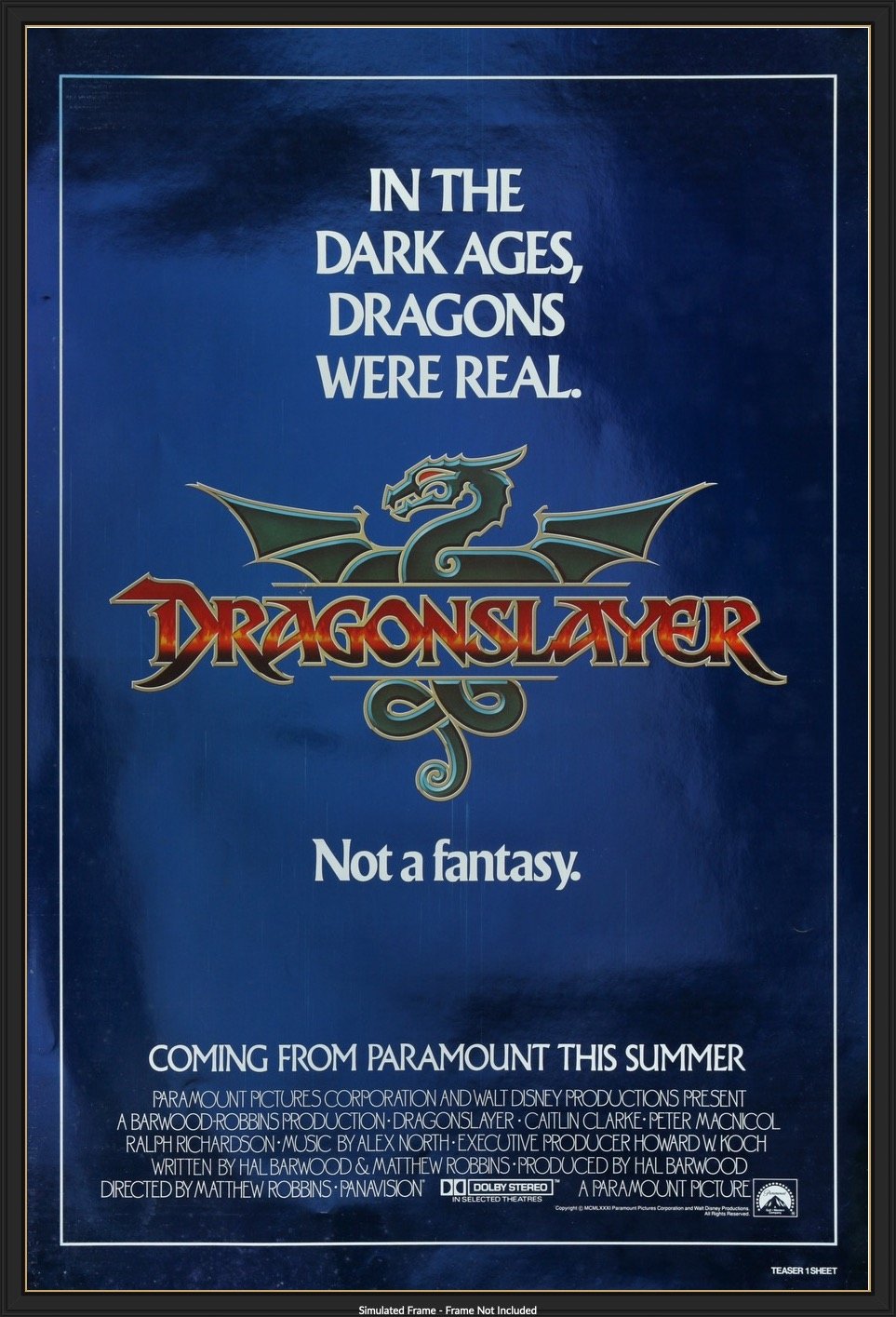
In every way, E.T. was exactly the kind of family movie that Disney wished it could still make. Faced with changing times, Disney had come to believe that their best option was to shake up the perception of what a Disney movie was and to go a little darker with movies like Dragonslayer and The Black Hole. Ironically, every time they did that, the movies still stiffed at the box office (even when the movies themselves turned out good). But just by sticking to his guns and following his heart Spielberg had, unintentionally, beat Disney at their own game. As Variety said at the time, E.T. was "the best movie Disney never made."

The look of E.T. himself, designed by Carlo Rambaldi (Close Encounters of the Third Kind, Alien), is so familiar and so taken for granted that I think it's achievement as a piece of design is underrated. The bottom line on E.T. is if E.T. himself didn't work, if audiences didn't 100% buy into the reality of this creature or if they found the look of him to be off putting in any way, the movie would have fallen apart. The whole movie rested on his wrinkled shoulders and the fact that they nailed it is a much more impressive achievement than it's given credit for. This wasn't like adapting a non-human character from a comic book, you know? It a different thing than getting, say, Rocket Raccoon right. That's a case where the design has been already laid out. You can adapt it and modify it but the basic idea has already been established. This, however, was about inventing a creature from whole cloth and hoping that audiences will a) believe it and b) fall in love with it. Additionally, Spielberg didn't have the same option here that he had with Jaws in which if it proved that his star attraction wasn't convincing on camera, that he could just choose to show it as little as possible. No, E.T. had to deliver. 

When making a scary alien, there are certain elements that you know have to be there in order to make an intimidating creature. When designing a predator (or The Predator, for that matter), you know you have to incorporate fangs, claws, etc.. Size, too, of course can be important. Making a lovable creature, though, is a much tougher assignment with no ready formula to follow. But somehow everyone involved with E.T. intuitively found a way. Beyond the emotion that was able to be conveyed with E.T.'s large, expressive eyes (modeled after Albert Einstein's), it was ingenious to make E.T. - with his diminutive shape and impossibly thin neck that stretches and contracts - break the mold of being just a man in a suit. When you see classic movie monsters like the Creature from the Black Lagoon or the Xenomorph from Alien, as incredible as they look and as impressive as the suits are, you know there's a guy inside of them. They're sophisticated enough outfits where you don't see a zipper running up their back or any seams showing but yet you recognize that underneath it all they're still a full sized adult in a costume. The mechanics of how they pulled it off aren't a mystery. But E.T. broke away from that. 

Unlike the aliens or creatures in horror movies, whose impact is largely derived from how little we see them, once E.T. is revealed, he has to be seen full on, all the time. There's no hiding him, no resorting to quick glimpses of just an eye or a claw. He has to hold up to the audience's constant scrutiny. We know that he's not just a puppet like Yoda because we get all kind of full body shots of E.T. in action, but at the same time the shape of the costume obfuscates how it all works. Is it an actor in a suit? Is it a puppet? Is an animatronic creation? It's all of those things and they all combine to create a seamless performance on screen (two different little people along with a 12 year old boy born without legs all took turns being in the E.T. suit). The craftsmanship behind him is so good and it calls so little attention to itself that all the work behind making him happen disappears and that allows us to connect with E.T. as a character, not as a special effect. On some level, it's almost as if people find it easy to believe that E.T. somehow just walked onto the set like any other actor.  

As much as the film still holds up, I think to fully appreciate or understand the response to E.T. and the mania that greeted the film, you really had to be there. The reaction to it when it was new and in theaters is different than seeing it now and being able to objectively appreciate its virtues as a well-crafted film. In '82 it was more than that. It was a phenomena. This was a movie that your dad might cry at. You know, like in public. That was crazy. 

Something else I feel you also had to really be there to fully understand is the impact of Spielberg in his prime. To have Raiders and E.T. in back to back years (along with producing Poltergeist) on top of having Jaws and Close Encounters (and the TV movie Duel!) to his name, that was just a string of hits that no one else could touch and '82 was the peak. After that, Spielberg was - by his own choice - not content to stay in the same lane, despite absolutely owning that lane.

The rest of Spielberg's pop stuff in the '80s was limited to the Indy sequels while past that he was working on stretching as a director and expanding his range with more serious fare like The Color Purple and Empire of the Sun. Great movies but just not the kind where kids hung the posters in their bedrooms. After those back to back summers of '81 and '82, Spielberg (to his credit) didn't try and just keep repeating that particular brand of success. There will forever be a sense of magic associated with his name but the summer of '82 was the moment when his name cast the most powerful spell. We talk a lot about franchises dominating the box office today but in his prime, Spielberg was the franchise. He was able to occupy a singular spot in the pop culture landscape that no other director has matched. 

Over the years, the temptation for Spielberg do a sequel, a prequel, a remake, or just about anything to exploit the value of this insanely successful property must have been - and likely continues to be - enormous. He could say he was making an E.T. 2 today and it would instantly be a Huge Fucking Deal. Despite that, he's continued to leave it alone and I have to say I find that to be pretty cool. Even when he mucked around with it for the Special Edition in 2002, digitally removing the F.B.I. guy's guns, he soon thought better of it and vowed to never tamper with the movie again. Spielberg's refusal to make E.T. into a franchise has allowed this movie to do what few other films with the same level of success have done: remain pure. 

Not to pat Spielberg too hard on the back for having integrity but when you look at the godawful Fantastic Beasts movies or how adapting The Hobbit, which should have been two movies at best, ballooned into a bloated trilogy, you see how intense the pressure to squeeze every last dime out of a property is. The fact that Spielberg never did that with E.T. is no small thing, in my opinion. The thing is, I don't even think it's hard to imagine that there could be a story worth telling with an E.T. 2. Even now I believe there could be a follow up that wouldn't necessarily cheapen the original but whether that's true or not is something we'll never know. When E.T. says goodbye to Elliott, that was our goodbye to the character too. 

Forty years later, E.T. remains a singular creation. When we talk about it, we don't have to specify whether we're talking about the first one or the original rather than the remake. When you talk about E.T., you can only be talking about E.T.

That's a pretty remarkable thing. 

So rare, in fact, that it qualifies as an alien concept.

Saturday, June 4, 2022

KHAAAAAAN at 40

Let's get this out of the way first: at the 1983 Oscar ceremonies, when the envelope for Best Actor was opened, the announcement should have read "...For Best Actor, William Shatner, Star Trek II: The Wrath of Khan!" 

Ben Kingsley actually won that year for Gandhi and his fellow nominees were Paul Newman for The Verdict, Peter O' Toole for My Favorite Year, Dustin Hoffman for Tootsie and Jack Lemmon for Missing but make no mistake: that statue should have gone to Shatner. Those other performances are all top notch. Shatner's just happens to have been better. To be fair, Shatner had years of experience with his role by then. Makes sense that he could crush it. No shame in losing to him, I say.

 Of course, he wasn't even nominated and that is an absolute crime. By the early '80s it was already fashionable to have, at best, an ironic appreciation of Shatner's acting style with the understanding that even if you enjoyed what he did, you still were supposed to concede that it was objectively bad. I do not go along with that line of thinking at all. I think Shatner is a legitimately great actor and if not for the kneejerk snobbery directed towards him and against sci-fi in general and Star Trek in particular, his performance in Khan would have been instantly heralded as a career high point, one that should have made even the doubters finally give it up for the man. Honestly, I don't see how what Peter O'Toole does in My Favorite Year or Paul Newman does in The Verdict (both incredible, by the way) is any goddamned better than what Shatner does in Khan

Both O'Toole and Newman are playing middle aged men facing down their own mortality and their own weaknesses and regrets. In Khan, Shatner is doing the exact same and he's doing it at the top of his game, for everything he's worth. He deserved equal acclaim. Did he not get it just because My Favorite Year and The Verdict are realistic and not space adventures? Must be, because there doesn't seem to be any other reason to laud the one and ignore the other.

Anyhow, Shatner is fucking great in Wrath of Khan. What is also fucking great is Wrath of Khan itself.  

Written and directed by Nicholas Meyer (who had also wrote and directed 1979's ingenious H.G. Wells vs. Jack the Ripper tale Time After Time), Wrath of Khan introduced the Kobayashi Maru into Star Trek lore, a training exercise meant to test Star Fleet cadets' reaction to a no win scenario that Kirk, in true Kirk style, found a way to cheat his way out of because he rejects the idea that any such scenario exists. In real life, the first Trek sequel saw its makers facing a crucial must win scenario that would decide the future of the franchise.

When the first Star Trek movie came out in 1979, it was a thing of beauty but inert. It's full title was Star Trek: The Motion Picture but it was quickly dubbed The Motionless Picture by critics due to its lethargic pace. If Trek was going to survive as a movie series - or as any kind of franchise, for that matter - something had to be done to really engage audiences the second time around and to better capture what people loved about the original series. More than just bringing back the action the sequel also had to restore the warmth and humor between Kirk, Spock and McCoy. Meyer did all that and more. The result was the greatest course correction in movie history. 

Released on June 3rd, 1982, Khan so completely righted the ship for Star Trek that, even though it's one of the great Part II's ever made, it feels more like a complete reset than it does a sequel. One thing that Star Trek: The Motion Picture lacked (which its fans would argue is an aspect that made it intriguing) is a villain. V'Ger was not a bad guy, it was just a machine looking for answers about its creator. But this time around, Meyer knew it would be important to give Kirk and the crew of the Enterprise a true adversary to test them. Looking to the original series for inspiration, Meyer brought back Khan Noonien Singh (Ricardo Montalban) from the first season episode "Space Seed."

At the end of "Space Seed," the genetically enhanced superman Khan had been defeated after trying to take over the Enterprise but rather than being punished for his crimes, Kirk gives Khan the opportunity to relocate along with his followers to Ceti Alpha V, an uninhabited but fertile world that could be his to rule. The episode leaves off with Spock musing about how it would be interesting to return to Ceti Alpha V in 100 years to see what Khan has made of it. As it turned out, fifteen years was long enough to find out that things hadn't gone so well.

Some time after Kirk had left Khan and his crew on Ceti Alpha V, the neighboring planet of Ceti Alpha VI exploded, causing Ceti Alpha V's surface to be devastated. The previously fertile world was turned into a wasteland and Khan and his people, including his wife (Lieutenant Maria McGivers, the historian who betrayed the Enterprise to assist Khan in "Space Seed"), struggled for survival. His wife didn't make it, leaving Khan bitter and vengeful. When the Starship Reliant, which counts former Enterprise navigator Commander Pavel Chekov (Walter Koenig) among its crew, comes to Ceti Alpha V (mistaking it for Ceti Alpha VI) in order to assess the lifeless world's viability as a testing ground for the top secret Project Genesis, Khan puts Chekov and Reliant Captain Clark Terrell (Paul Winfield) under his control (thanks to depositing alien eel larvae in their ears, a scene that was nightmare inducing for young viewers in '82), and sets his sights on exacting his revenge on James T. Kirk.

Khan, of course, learns that when you come at Kirk, you better not miss. And Kirk, for his part, realizes that he should have just killed Khan's ass when he had the chance. Along the way, Kirk reunites with his former lover Carol Marcus (Bibi Besch), now the lead scientist on Project Genesis, who introduces Kirk to her son David Marcus (Merritt Butrick), also a scientist assisting his mother and also, as it turns out, the son that Kirk never knew he had.

Already grappling with a midlife crisis at the start of Khan, unable to enjoy the occasion of his own birthday (as a fed up Bones says "Damn it Jim, what the hell is the matter with you? Other people have birthdays, why are we treating yours like a funeral?"), coming face to face with the adult son he never knew forces Kirk to ask even more questions about his life. At the same time, his mettle is being tested at every turn by the relentless Khan. The cat and mouse pursuit that Kirk and Khan engage in across the galaxy, with Montalban doing his best to not give an inch of the screen to Shatner, provided the kind of bracing, edge of your seat adventure that was missing from the airless, somnolent ST: TMP.

When their conflict finally comes down to a situation where Khan seems to have stalemated Kirk, leaving Kirk and the Enterprise primed for destruction, even though it will mean Khan himself will go too, a sacrifice play is the only thing that will save the Enterprise and its crew. It's Spock, Kirk's eternal right hand man, who selflessly - and with perfect logic - takes it upon himself to make that play, slipping off the bridge to go down into the engine room and fix the ship's damaged warp drive, exposing himself to fatal levels of radiation in the process. The news of Spock's possible death in Khan had leaked prior to the film's release and fans had flooded Paramount Studios with outraged letters, hoping to force them to change course.

Despite the angry outcry (which included death threats), Paramount and Meyer did not rethink their decision. Of course, once the film was released it was obvious that a back door had been put in place to allow for Spock's return in the form of life-restoring Project Genesis but even though it was clear it would not be permanent, the death stands as one of the great moments in Star Trek history and both Leonard Nimoy and William Shatner play this scene for all the emotion it's worth. I have no shame in admitting that as a 13 year old, I did not greet this moment with Vulcan-like stoicism.

I began this by saying that Shatner should have gotten an Oscar for his work here and, man, I will not budge from that. Just his performance during Spock's funeral alone is enough for me. When Kirk delivers the eulogy, choking back tears as he utters the word "human," holy hell.

I just wish that Shatner could have gotten more opportunities in subsequent Trek sequels to match or top his performance in Khan but he really didn't. He continued to be great throughout, of course, but in reviving Spock in the next sequel, the emotional and dramatic stakes of the series felt instantly lowered across the board. Sure, Kirk loses his son (and the Enterprise!) at the hands of Klingons in The Search for Spock but the impact wasn't the same. Once the universe gave his best friend back to him, Kirk's problems never seemed to hit as hard again.

In Khan, though, Kirk went through some stuff. Meyer gave Shatner a lot to work with and the man was up to the challenge. Forty years later, it is still peak Trek

So come on and say it with me people: 

"...KHAAAAAAAAAAN!!!"    


It Knows What Scares You: Poltergeist at 40

The tagline on the teaser poster for Poltergeist touted it as being "the first real ghost story," which seems like an odd claim to make. Maybe the fact that this Steven Spielberg production was set in a prosaic, lookalike suburban neighborhood rather than in a stereotypical "haunted house" was what was supposed to make it more "real." More likely, I think the intent was to suggest that Poltergeist would be the first movie to take a serious look at paranormal phenomenon, making it a spiritual successor to Spielberg's Close Encounters of the Third Kind (1977). Close Encounters had treated the sort of tales that had become part of U.F.O. lore, such as ordinary people witnessing unexplained lights in the sky, not as a subject of ridicule or the stuff of tabloid headlines but imbuing them with a sense of wonder and the implication was that Poltergeist was going to treat the supernatural world with the same respect and be an Encounters of the Paranormal Kind

With a screenplay written by Spielberg himself (based on his own story) along with writers Michael Grais and Mark Victor, the early signs of ghostly activity in the Freeling family household, located in the planned community of Cuesta Verde in California, are purely mischievous with chairs being moved and rearranged, silverware being twisted out of shape, and lights mysteriously getting brighter. 

This all suggests a movie that will be taking a subtle approach and for awhile, Poltergeist actually does hold to that. The early section of Poltergeist is stocked with small moments and details that make its everyday world feel real and recognizable, whether it's JoBeth Williams' Diane Freeling singing the Miller High Life jingle to herself as she changes her kid's (Star Wars) bed sheets or Craig T. Nelson's Steve Freeling reading a Reagan biography in bed. After Diane becomes aware of the strange activities occurring in her home, the former '60s hippie turned '80s yuppie is unfazed, just looking to embrace the peaceful cosmic vibe. As she tells a concerned Steve, "It's like another side of nature. You know, a side that you and I are not qualified to understand. When you overreact, it makes what happened much too important." About forty minutes in, though, the gnarly looking tree stationed outside the bedroom window of Diane and Steve's two youngest kids comes to life in the middle of a thunderstorm, crashing its limbs through the window and attempting to gobble up eight-year-old Robbie Freeling (Oliver Robins) and as quick as that, we're off to the races. 

The only thing that stops the tree from making a meal out of Robbie is a tornado (!) that touches down with pinpoint accuracy in the Freeling's backyard, tearing the tree out of its roots and sucking it up into the sky like something out of The Wizard of Oz. While Diane, Steve, and their oldest daughter Dana (Dominique Dunne) are busy with that distraction, the Freeling's youngest, Carol Anne (Heather O'Rourke), is pulled into a portal to The Other Side that opens up in the bedroom closet so, you know, things escalate quickly from the bent spoons and stacked chairs stage of this haunting and whatever semi-serious foundation the movie had laid down up to this point is out in favor of letting viewers gorge their eyeballs on state of the art FX devised by George Lucas' Industrial Light and Magic. 

Previously, the makers of ghost stories - from The Haunting to The Changeling - had been guided by the belief that less was more when it came to things that go bump in the night but Poltergeist was a true ghost story for the '80s where the decade's overriding motto was "more is more."

Keeping Poltergeist's three ring supernatural circus from spinning out of control is its wonderful cast. We stay invested in the Freelings from start to finish and we always believe the truth of what's happening because this family feels so authentically real. The trio of paranormal researchers that come into the Freeling home, led by Betrice Straight as Dr. Tesh, are also instantly endearing. It would have been easy, even expected, to have at least one of these researchers turn out to be a low level creep of some kind, an opportunist who tries to leak information about all the weird happenings in the Freeling home to the National Enquirer or something. But no, they're actually all just decent, caring people. Once Dr. Tesh realizes after just one night with the Freelings that her team is over their heads ("Marty won't be coming back.") and Zelda Rubinstein's big gun psychic Tangina is called in as a heavy hitter, we see that Tangina is also just a straight up good person who is only there to help and isn't a quack or is someone out to con the Freelings. You could argue about the effectiveness of these professional's expertise ("This house is clean!") but they really do try! Across the board, I think Poltergeist features the nicest group of characters ever to be gathered in a horror movie. 

The one single asshole in the whole thing is James Karen as Mr. Teague, the slime ball real estate developer who only paid to move the headstones. Fuck that guy!

One of the most enduring myths of the summer of '82 is that Steven Spielberg's E.T. was responsible for the box office failure of John Carpenter's The Thing, with the public choosing the uplifting alien tale over the nihilistic one. While I used to buy into that myself I have come to believe that Spielberg's space goblin has been an innocent scapegoat all these years. If you're going to peg The Thing's failure on any of its competitors, the movie that you really need to look at is Poltergeist

Poltergeist and The Thing were the two big ticket horror films of the summer, both high profile, big budget, FX-laden shockers (and both from legendary horror directors!). Poltergeist arrived at the box office on June 4th, 1982, two weeks before The Thing, and it was an immediate hit, the kind of crowd pleaser that the downbeat Thing wasn't. Where U.S. Outpost 31 was stocked with surly, alienated, foul mouthed loners (God bless them all!), Poltergeist won the hearts of America with a warm, loving family. Most importantly, even though it was PG, Poltergeist still legitimately delivered on the scares. It emerged as the hot horror movie that summer in a way that The Thing couldn't match.  

Sure, Poltergeist was no Texas Chain Saw Massacre (let's face it, nothing else ever has been) but Tobe Hooper had already proved with the 1979 Salem's Lot TV miniseries that he could still deliver big scares without being graphic and with Poltergeist he was able to give the hardcore horror crowd a satisfying fix while not alienating the wider mainstream audience. I'm not going to bother to wade into the ancient debate as to who really directed Poltergeist. As much as there's a powerful Spielberg vibe (why wouldn't there be?), I consider it to be a Tobe Hooper film, full stop. 

My one disappointment with Poltergeist is that it didn't jump on the burgeoning 3D bandwagon! I know that was never an actual consideration on the part of anyone involved so I can't actually hold it against the movie but just the same I feel like an opportunity to change the game was missed. All love to Parasite and Friday the 13th 3D and Jaws 3D but I believe Poltergeist in 3D would have sold the format as being more than just a gimmick.

Poltergeist could have been the Avatar of its day, legitimizing 3D years ahead of time. With so many moments that are tailor made for the format, it would have looked incredible (imagine how stunning the hallway shot would have been!). I only wish that someday someone would convert it to 3D and give it a theatrical release. Yeah, I know it will never happen but it sure would be cool if it did. For a movie with such a canny sense of showmanship, 3D would have been the perfect fit.

Early on in Poltergeist, Steve Freeling is giving a guide through one of the Cuesta Verde homes, pitching a couple on life in the community with "You know, we have a saying around here...the grass is greener on every side." All three groan as soon as he says it but in America in the summer of '82, the grass kind of did feel greener on every side. Whether it was true or not, America felt like the land of plenty. We were riding high and Poltergeist was a gaudy ghost story made with the belief that, in the '80s, bigger was better. 

It's not the specters on screen that make Poltergeist feel haunted now but the bittersweet awareness of time gone by. Forty years later, it lingers as a reminder of the ghosts of summers past.